In every election cycle over the last 21 years, the Mau Forest eviction and resettlement question has characterised campaigns — and is now re-emerging as a hot topic in the Rift Valley as the clock ticks towards the 2027 poll.
From former President Mwai Kibaki’s administration, which carried out evictions in 2005, to his successor Uhuru Kenyatta and the current government under President William Ruto, the issue has persisted.
The affected families have lived in hope that their grievances will be addressed by successive regimes, but promises by incumbent presidents and presidential candidates remain unfulfilled.
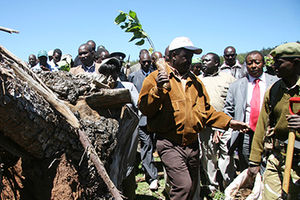
President William Ruto during a tree-planning exercise in Mau Forest on October 27, 2025.
Photo credit: Boniface Mwangi | Nation Media Group
The first eviction was carried out in 2005 under former President Kibaki’s administration, while the latest was in 2018 during former President Uhuru Kenyatta’s tenure. It was spearheaded by former Rift Valley Regional Commissioner George Natembeya — currently the Governor of Trans Nzoia County.
President Kenyatta and Dr Ruto (then serving as Deputy President) were seen as having turned against the affected families for political expediency, while supporting them whenever it was politically convenient to do so.
Before their election in 2013, Mr Kenyatta and Dr Ruto had assured residents that they would ensure the affected families were resettled, a promise that has not been fulfilled to date.
Cabinet Secretary for Interior Kipchumba Murkomen had an altercation with police officers and administrators in July 2018 when he, alongside Members of Parliament, was barred, while serving as Elgeyo Marakwet Senator, from delivering iron sheets and other construction materials to families evicted from the Mau Forest.
The materials were detained by administrators, and the MPs were denied access to the area as tensions mounted.
At the height of the evictions, former Lands Cabinet Minister Amos Kimunya referred to land title deeds held by affected families as “a mere piece of paper that could be revoked at will by the government.”
Former Prime Minister Raila Odinga took a vocal position on the matter during the Kibaki administration, advocating for the protection of the Mau Forest Complex, eviction of families, and rehabilitation of the resource, a stance that cost him a key voting bloc in the Rift Valley.
The late former Prime Minister Raila Odinga during a tree-planting exercise in Kiptunga, Mau Forest in Molo, January 16, 2010.
Photo credit: File | Nation Media Group
During the evictions, more than 15 schools funded by the government were closed and abandoned, with teachers redeployed by the Teachers Service Commission (TSC) and administrators transferred to other regions.
While President Kenyatta was initially a strong proponent of resettlement and compensation ahead of the 2013 General Election, his administration later turned against the same families he had repeatedly promised to compensate.
Instead, the Jubilee government evicted the families in 2018, creating a humanitarian crisis as the Mau Forest Complex was demarcated and fenced, sparking public outcry.
Dr Ruto also promised compensation, but only 2,000 families have received Sh300,000 each from the government, according to the President.
It appears the matter will again be a major issue in the 2027 election cycle, with President Ruto stating that the families will be resettled by August this year—an ambitious plan, but a recurring promise as he seeks a second term.
“My administration will resettle 12,000 families affected by the eviction in Mau Forest so that they can live a dignified life,” Dr Ruto said on March 6, 2026, during the funeral service of Emurua Dikirr MP Johana Ng’eno and four others who perished in a helicopter crash in Nandi County on February 28.
Internally displaced persons
Dr Ruto clarified that 2,000 families had earlier been given Sh300, 000 each as compensation, leading to the dismantling of internally displaced persons (IDP) camps.
However, the number of affected families remains disputed, as there are no clear records—many lacked title deeds, having purchased subdivided land whose ownership remained with original owners, including group ranches.
Former Rift Valley Regional Commissioner George Natembeya, who led the 2018 eviction, said 61,000 people were targeted as part of a government programme to rehabilitate the Mau Forest Complex.
But during a recent registration exercise, more than 28,000 people turned up at Olmekenyu trading centre in Narok South, overwhelming administrators as the government signalled plans to resettle victims.
“The government is in talks with the family of former Provincial Commissioner Isaiah Cheluget to buy 5,000 acres of land to resettle the landless in Narok, and we will also buy 1,500 acres in Angata Barikoi,” Dr Ruto said in Emurua Dikirr.
The President said funds would be available in August after the close of the 2025–2026 budget cycle, paving the way for the 2026–2027 financial year.
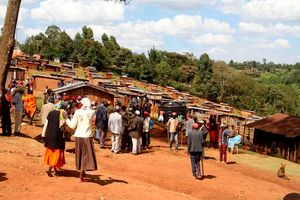
Mau Forest evictees at one of the internally displaced persons' camp at Saptet on January 10, 2022.
Photo credit: File | Nation Media Group
This is not the first time Dr Ruto has addressed the issue, which has left families living in makeshift structures and enduring harsh conditions without adequate food or medication, with some experiencing depression.
In the run-up to the 2022 General Election, Dr Ruto promised resettlement, but after taking office on September 13, 2022, he said families living along the forest must be evicted.
“The government’s top officials need to be serious about compensation and resettlement of Mau Forest evictees. How can one be given Sh300, 000 as compensation yet they lost 5–10 acres of land and property, including houses?” said Nairobi-based advocate Sigey Bett.
Mr Bett added: “Some families have had to bury loved ones who succumbed to disease and harsh weather on land that is not theirs, which goes against Kipsigis culture and traditions.”
Many victims have been accommodated by relatives as they try to rebuild their lives, with children dropping out of school due to lack of fees.
“You can imagine a person who had three to five acres, was actively involved in farming, with livestock, equipment and houses, losing everything and then being paid Sh300,000 as full compensation,” said Cheruiyot Kiptanui.
Mr Kiptanui added: “How much land can that buy, and how will they build homes? We are talking about people whose children have dropped out of school and cannot afford medication.”
He said the government should have allocated land to affected residents who lost property during the eviction.
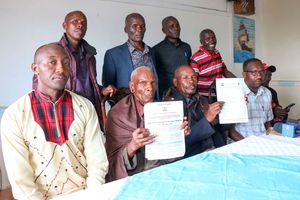
Members of the Myoot Kipsigis Council of Elders, led by Mzee Christopher Bore, a former senior chief in Narok County, appealed to leaders to keep politics out of the Mau resettlement process.
“We are confident the President will resolve the matter before the 2027 General Election so it does not become another political issue,” Mzee Bore said at Mulot Hossana Church in Narok West Constituency.
He added: “The Mau eviction, compensation and resettlement question has unfortunately become a recurring political issue in every election cycle for over 20 years.”
Narok Governor Patrick Ntutu, together with governors Hillary Barchok (Bomet) and Erick Mutai (Kericho), as well as senators Ledama Ole Kina (Narok), Hillary Sigei (Bomet) and Joyce Korir (nominated), and several MPs, urged the President to oversee resettlement.
Emurua Dikirr Member of Parliament Johana Ng’eno during an event in Embu County on November 12, 2023.
Photo credit: Joseph Kanyi | Nation Media Group
The leaders had earlier called for the resettlement in honour of the late Johana Ng’eno, who was passionate about land rights and compensation.
Governor Ntutu said resettlement would enable families to contribute to national development, boost food security, and educate their children.
“I was actively involved in planning and implementing the eviction of families from Mau Forest to pave the way for conservation. But the landless families should now be resettled since the forest has been secured,” said Senator Ledama Ole Kina.
Mr Ng’eno, 54, who died in the February 28, 2026 helicopter crash, was known as a vocal advocate for the rights of the evictees.
Former Bomet Governor Isaac Ruto, now Vice Chairperson of the Judicial Service Commission (JSC), and Mr Ng’eno were among the most prominent leaders advocating for resettlement.
“Eviction of families from the Mau Forest Complex—spanning Nakuru, Narok, Kericho and Bomet—was an issue Mr Ng’eno fought for until his death,” said Bomet East MP Richard Yegon.
Mr Yegon added: “Some families have buried loved ones near the forest in violation of Kipsigis customs because they have no land after being dispossessed.”
Ms Chepkorir said: “It is unfortunate that past governments have failed to address land rights and resettlement of families whose land was forcibly repossessed despite repeated demands.”
“We are grateful that President Ruto has directed demarcation of land in the larger Trans Mara region following pressure from Mr Ng’eno. We hope the process will be extended and fast-tracked,” she added.
Konoin MP Brighton Yegon said issuance of title deeds would enable residents to access loans and engage in commercial agriculture, boosting food security and employment.
The government has erected an electric fence around parts of the Mau Forest Complex to ward off illegal settlers and land speculators.
It remains to be seen whether compensation will be completed before 2027—or whether it will remain another political promise.