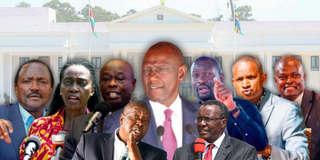
The race to identify the politician who will carry the opposition’s flag against President William Ruto in the 2027 General Election is increasingly taking on a generational dimension, with younger politicians and technocrats seeking to break into a field long dominated by familiar names.
On one side are politicians such as Nairobi Senator Edwin Sifuna, MPs Ndindi Nyoro (Kiharu), Babu Owino (Embakasi East), George Natembeya (Trans Nzoia Governor) and Godfrey Osotsi (Vihiga senator) who are seeking to present themselves as part of a new political generation.
On the other are seasoned politicians including Wiper Patriotic Front’s Kalonzo Musyoka, Martha Karua (People’s Liberation Party), Rigathi Gachagua (Democracy for the Citizens Party (DCP) and Siaya county boss James Orengo, whose careers span several decades and who have built national political networks over successive election cycles.
A third group is also emerging of those who identify themselves as technocrats and professionals seeking to turn careers outside conventional electoral politics into presidential bids. They include Jubilee presidential candidate Fred Matiang’i and former Chief Justice David Maraga. Supporters say the fact that they have never held political office signals a fresh start.
The result is an increasingly crowded opposition field even before parties begin the formal process of settling on a single presidential candidate to challenge President Ruto.
Political analysts say the competition is not simply about age but also about political experience, organisational reach, regional support, professional credentials and the ability to appeal to a generation of voters increasingly seeking a break from established political formulas.
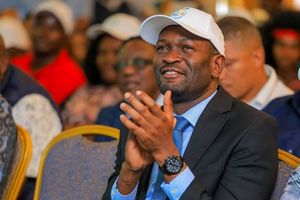
Nairobi Senator Edwin Sifuna at Stanley Hotel in Nairobi on October 4, 2026, during the unveiling of The Equitable Party.
Photo credit: Pool
The generational question has been particularly evident in the emergence of Mr Sifuna, who has launched The Equitable Party (TEP) which is expected to be rebranded as the Linda Mwananchi Movement.
The Daily Nation has established that Mr Sifuna’s team is under pressure to present a ticket led by youthful politicians that can resonate with its supporters a move that could complicate broader opposition negotiations over a single presidential candidate to face President Ruto next year.
Mr Sifuna’s camp is increasingly projecting the contest as an opportunity for a new generation to take charge, potentially setting up a generational contest with more established opposition figures.
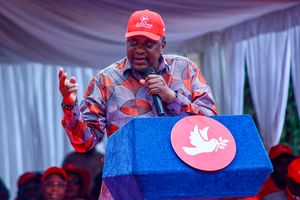
On the other side, Mr Musyoka, who is leading the Ukombozi Alliance, has stepped up his national mobilisation efforts as he positions himself to carry the opposition banner in next year’s election.
But the technocrats and professionals are also making their case. Dr Matiang’i, and Mr Maraga are pursuing their respective bids seeking to turn their administrative, professional, economic and public-service records into alternatives to both the incumbent and the established political class.
“It is time for the youth. The youth of this country are usually told that they are the leaders of tomorrow. We are now saying we are the leaders of today and this is our time,” MP Babu Owino said, throwing his weight behind Mr Sifuna’s candidacy.
Wiper Patriotic Front party leader Kalonzo Musyoka.
Photo credit: File | Nation Media Group
The push for a youthful ticket, however, faces the reality of an opposition coalition whose constituent parties have their own presidential ambitions.
Kitui Senator Enoch Wambua, an ally of Mr Musyoka, has remained unequivocal in his support for the Wiper leader while insisting that this does not rule out cooperation with Mr Sifuna’s camp.
“A closer look at the Linda Mwananchi team will answer your question. It has members drawn from all parties in the United Alternative Government. The two teams are focused on a single mission to make President Ruto a one-term president, and they will do it together,” Mr Wambua told the Daily Nation.
Youthful presidential hopefuls
The emergence of youthful presidential hopefuls has, however, not been without controversy, with some of their moves triggering suspicion and rivalry within opposition ranks.
Mr Gachagua’s DCP has raised concerns over the political direction of Mr Nyoro, with some of his allies questioning whether the lawmaker’s new party could undermine efforts to consolidate Mt Kenya’s opposition support under the DCP.
DCP Secretary-General John Methu has accused the newly launched People’s Progressive Party (PPK) of being a “green wheelbarrow”, a reference to its colours and what he described as an attempt to confuse voters and dilute DCP’s influence in the region.
Kiharu MP Ndindi Nyoro when he announced that he had defected from UDA to the People's Party of Kenya at Safari Park Hotel, Nairobi on August 17, 2026.
Photo credit: Lucy Wanjiru | Nation Media Group
The remarks have revived the politically charged “wheelbarrow” that is the party symbol of the ruling UDA.
Political analyst Javas Bigambo, however, says Mr Nyoro has every right to pursue his presidential ambitions, arguing that no individual or political formation can claim exclusive ownership of a region’s political support.
“Any Kenyan can run for any office,” Mr Bigambo said, adding that no politician or political formation has a “paternalistic right” to control an entire region.
The growing rivalry highlights one of the opposition’s central challenges ahead of the 2027 elections. While its leaders acknowledge the need to unite behind a single candidate to challenge President Ruto, several are simultaneously establishing their own parties, cultivating grassroots networks and positioning themselves for the top seat.
Mr Nyoro has sought to reassure fellow opposition leaders that establishing his own political vehicle does not shut the door on cooperation or a possible united opposition front.
Dr Matiang’i has struck a similar tone, cautioning opposition politicians against turning competition for the presidency into accusations that some leaders are government moles or political projects.
“We are a multi-party democracy. Even as Jubilee, we want that seat (presidency), and others are also looking for it, but we are not enemies,” Dr Matiang’i said.
Former Interior Cabinet Secretary Fred Matiang’i speaks during the handover of leadership of the Jubilee Party at the party headquarters in Nairobi on September 22, 2026.
Photo credit: Wilfred Nyangaresi | Nation Media Group
Mr Musyoka remains one of the longest-serving figures in opposition politics and has positioned himself as a unifying figure capable of bringing together competing political interests.
Mr Gachagua, President Ruto’s former deputy, has also emerged as a major player particularly in the contest for Mt Kenya support.
His DCP has pushed the message of “One Mountain, One Agenda, One Party”, seeking to consolidate the region around a single political vehicle.
Ms Karua, a former Justice Minister and leader of the People’s Liberation Party has also declared her interest while Mr Orengo is also eyeing the top seat.
For this group, the advantage lies largely in experience, established networks and familiarity with national politics.
But analysts say the emergence of younger candidates suggests that experience alone may no longer determine who eventually emerges as the opposition flag bearer.
Former Chief Justice David Maraga addresses journalists at the United Green Movement (UGM) offices in Nairobi on August 18, 2026.
Photo credit: Evans Habil | Nation Media Group
Dr Matiang’i, and Mr Maraga have backgrounds that distinguish them from career politicians.
Dr Matiang’i served in different Cabinet portfolios before becoming Interior CS where he developed a reputation for a highly centralised and administrative style of government.
His presidential pitch is built around restoring integrity, fixing the economy and investing in human capital.
Mr Maraga, meanwhile, has presented his candidature largely through the lens of constitutionalism, the rule of law and accountability.
His campaign is centred on constitutional reform and what he describes as the need to dismantle the imperial presidency and strengthen Parliament’s control over public finances.
For these candidates, the challenge is translating professional credentials and policy propositions into the grassroots political machinery traditionally required to win a presidential election.
The contest is also evolving beyond traditional rallies, roadside declarations and party mobilisation.
Some candidates are increasingly turning to professional campaign consultants, public relations specialists, pollsters, digital strategists and foreign firms to build their images and shape their political messaging.
The growing involvement of foreign firms marks a significant change in the way presidential campaigns are being organised.
Busia Senator Okiya Omtatah addresses the press at his office in Kilimani, Nairobi, on May 29, 2026.
Photo credit: Wilfred Nyangaresi | Nation Media Group
“Rather than relying exclusively on local political brokers and party structures, some aspirants are seeking professional expertise in branding, international lobbying, communications and voter research,” says Geoffrey Mboya.
The trend points to an increasingly sophisticated campaign environment in which a candidate’s public image, digital footprint and international profile are being deliberately managed alongside traditional grassroots mobilisation.
“For candidates such as Dr Matiang’i and Mr Maraga, this professionalised approach could complement their attempts to present themselves as alternatives to conventional political leadership,” Mr Mboya adds.
For younger politicians, meanwhile, social media and digital mobilisation provide an avenue to reach voters without depending entirely on the established political machinery of older parties.
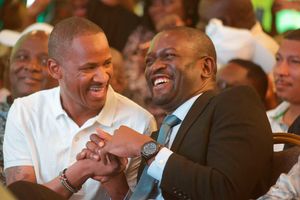
Mr Methu, meanwhile, could become an important figure in the emerging younger generation, particularly given his position within DCP and his increasingly prominent role in the opposition debate.
He has also been mentioned as a possible running mate to Mr Sifuna, should political negotiations eventually produce such an arrangement.
“Ultimately, the generational contest may not be settled by age. The central question will be which politician can build a coalition broad enough to transcend regional bases, political parties and individual ambitions,” argues political pundit Dismas Mokua.
Nyandarua County Senator John Methu speaks during the official unveiling of DCP party’s elected members to the County Assembly at the DCP headquarters in Nairobi on December 3, 2025.
Photo credit: Bonface Bogita | Nation Media Group
Prof Gitile Naituli argues that opposition movements rarely fail because they lack numbers, but because they lack coherence.
“Power thrives not merely on strength but on the inability of its challengers to organise themselves into a single, believable alternative,” he says.
He has called for greater organisation, data-driven mobilisation, turnout strategies and vote protection, arguing that criticism of the incumbent alone will not be enough.
“Shifting from spontaneous protest politics to disciplined organisation, data, turnout and vote protection is key,” Prof Naituli says.
Advocate Chris Omore says the opposition’s challenge is becoming clearer by the day as “it must accommodate a generation of younger politicians demanding space, experienced leaders who have spent decades building political networks and technocrats seeking to convert professional reputations into political capital.”
“At the same time, the contenders must negotiate the competing demands of party structures, regional interests and personal presidential ambitions.”
With the 2027 contest approaching, Mr Omore argues, the battle for the opposition ticket is consequently becoming a contest not only over who can challenge President Ruto, but also over what kind of leadership and political generation should replace him.
“And with so many politicians positioning themselves for the top job, the most difficult battle may ultimately be the one within the opposition itself,” the advocate says.