Nairobi Senator Edwin Sifuna’s Linda Mwananchi Movement has moved closer to formalising its transition from The Equitable Party (TEP) after delegates approved changes to the party’s identity, constitution and electoral rules, even as questions linger over whether the outfit can meet legal and electoral deadlines ahead of the 2027 General Election.
Although the party had issued a notice outlining several agenda items for its National Delegates Conference (NDC), delegates resolved only four substantive matters, approving the proposed change of name, colours, symbol and headquarters, amendments to the party constitution and nomination rules, as well as coalition-building talks with like-minded political parties.
But beneath the resolutions lies a series of unresolved legal and organisational questions that could complicate Mr Sifuna’s efforts to establish the movement as a viable political vehicle for the next General Election.
The conference, held behind closed doors and from which the media were excluded, also raises questions about compliance with the legal requirements governing delegates’ meetings, particularly after the venue was changed from the one indicated in the party’s original notice.
Under Section 38G(1)(c) of the Political Parties Act, a political party is required to specify the date and venue of its delegates’ meeting.
The party had indicated that the conference would take place at The Luke Hotel in Nairobi, but the meeting was eventually held at a different venue.
The change adds another layer of scrutiny to a conference already facing legal challenges, with questions about whether delegates were adequately informed and whether the statutory notice requirements were met.
The Political Parties Disputes Tribunal dismissed an application seeking to stop the NDC, but left the substantive complaint over the selection of delegates and the proposed changes to the party’s structures for a full hearing.
It also retained the power to reverse resolutions if the proceedings establish that the conference was improperly convened.
The ruling was therefore not a judicial endorsement of the process or a finding that the party had complied with its constitution. It merely removed the obstacle to holding the meeting, while leaving the legality of its decisions open to challenge.
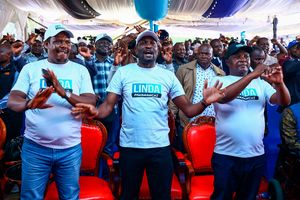
Nairobi Senator Edwin Sifuna (centre) with Bumula MP Jack Wanami Wamboka (left) and Vihiga Senator Godfrey Osotsi during the launch of Linda Mwananchi Movement (LMM) national secretariat in Nairobi on October 30, 2026.
Photo credit: Wilfred Nyangaresi | Nation Media Group
The tribunal’s clearance followed concessions by the Sifuna camp on the conduct of the conference. In a separate challenge brought by party member James Onyango Nyangor, who had sought to stop proposed elections at the NDC, the party assured the tribunal that no elections would be held on November 13. The application was consequently marked as compromised.
The delegates could consider the rebranding and other agenda items, but would not elect or ratify new party officials. The camp thus secured room to proceed with the NDC while accepting a limit on what the meeting would decide about the party’s leadership.
The concession leaves a distinction between approving changes to the party’s identity and giving a fresh mandate to the officials expected to implement them. The NDC did not conduct elections to settle the leadership question, meaning the proposed new political vehicle emerged from the meeting without delegates voting in new office-bearers or formally ratifying a new leadership team.
The dispute over the delegates themselves also remains unresolved. The tribunal dismissed an objection by party members Paul Kiragu Gachoka and Pamela Achieng Simwata, who argued that the conference was unconstitutional because the party lacked a properly constituted electoral college from which delegates could be drawn. However, it directed their substantive complaint to proceed to a full hearing.
The complainants had argued that the National Governing Council had not approved the agenda, as required by the party constitution, and questioned whether the party had appointed a National Elections Board and established the structures needed to constitute the conference.
Their lawyer, Eddy Otieno, warned that substantial institutional changes could be made before the tribunal determined whether the NDC had been properly convened.
There is also the question of whether the resolutions adopted at the conference are sufficient to complete the rebranding process or whether the party must undertake further statutory procedures before it can legally operate under the Linda Mwananchi identity.
Registrar of Political Parties John Cox Lorionokou has clarified that reservation of the Linda Mwananchi Movement name does not amount to registration, revealing that the movement has not obtained a provisional registration certificate.
Mr Lorionokou told the Senate Committee on National Cohesion, Integration and Equal Opportunities on Thursday that, for an existing party seeking to adopt a new identity, the process requires a formal request to the Registrar, alongside the prescribed procedures, including public participation to inform members and other stakeholders of the proposed changes.
Political party registration involves three distinct stages: reservation of the name and identifying features, provisional registration and, ultimately, full registration.
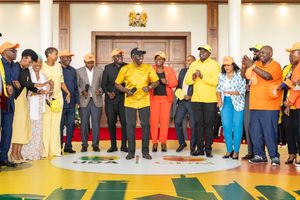
Linda Mwananchi Movement Party leader Edwin Sifuna (second right) with DCP leader Rigathi Gachagua (right), Wiper Party leader Kalonzo Musyoka (second left), LMM deputy party leader Faith Odhiambo at the party headquarters in Nairobi on October 30, 2026.
Photo credit: Wilfred Nyangaresi | Nation Media Group
The provisional registration stage requires the submission of a party constitution, a list of founding members and other statutory documents. Once provisionally registered, a party has up to 270 days to satisfy the requirements for full registration.
The other critical question concerns the electoral calendar. Political parties intending to participate in the 2027 elections have already submitted documentation to the Independent Electoral and Boundaries Commission (IEBC), including details of their nomination rules and other requirements, such as party officials and signatories.
“The question here is: can this process be caught in between the timelines before they start using that party towards the election? Every political party participating in this election has already made submissions of what is required. So, if a rebranding happens, then that becomes an interpretation of the Electoral Commission on whether the rebranded party will be taken as a new, or will they be in the context of the party that submitted either the signatories or the nomination rules,” Mr Lorionokou said.
In an interview with the Daily Nation on Friday, Mr Lorionokou said the NDC resolutions would be scrutinised against the party’s constitution to establish whether the delegates had followed the prescribed procedures before the proposed changes were opened to public scrutiny.
“Should no objections be lodged, the office will proceed with the change of name and issue a fresh registration certificate reflecting the party's new identity. Usually, it's 14 days after the notice,” Mr Lorionokou said.
He stressed that the delegates’ endorsement does not in itself confer legal recognition on the proposed name, adding that the formal approval process can only begin once the relevant documentation reaches his office.
Mr Lorionokou also declined to be drawn into speculation over the omission of a presidential flag bearer from the NDC resolutions, saying political actors understood the procedures governing their activities.
IEBC Chairperson Erastus Ethekon has confirmed that only fully registered political parties were eligible to submit nomination rules, with 105 parties having met the November 6 deadline.
The IEBC review is expected to be completed within 14 days, as provided for under Section 27(2A) of the Elections Act. However, there is a window for amendment and review if a party fails to fulfil certain requirements.
There is also the question of whether the coalition-building mandate approved by delegates can be effectively implemented before the party’s leadership structures are formally ratified.
With the NDC yet to approve the proposed officials who would steer the movement, questions remain over who has the legal authority to negotiate, commit the party to alliances or sign coalition agreements on its behalf.