Backed by an increasingly assertive Gen Z voters, new political faces are emerging as critical forces in the 2027 contest.
The new crop of leaders is already pushing for generational change within their parties by directly challenging the old guards or opting to chat their distinct political path ahead of the next general election.
Their rise to national prominence have placed them at pole position to run for top elective seats, including the presidency. With the changing political landscape, traditional political kingpins are staring at a diminished political influence as the youthful politicians take on them head on.
ODM Secretary-General Edwin Sifuna and Kiharu MP Ndindi Nyoro are among the country’s most visible youthful politicians. Both have been mentioned as potential running mates in the 2027 presidential race.
ODM Secretary General Edwin Sifuna addresses delegates during the People’s Delegate Convention organised by the Linda Mwananchi faction of the ODM at Ufungamano House in Nairobi on March 27, 2026.
Others who have become consequential political players going into the next polls include Embakasi East MP Babu Owino, Nyandarua Senator John Methu, Kirinyaga Woman Rep Njeri Maina, Nyali MP Mohammed Ali and Democracy for the Citizens Party (DCP) deputy party leader Cleophas Malala.
Mr Sifuna is the ring leader of the fast growing Linda Mwananchi, a breakaway ODM faction that is opposed to the broad-based government and the leadership of Dr Oburu Oginga.
Mr Sifuna has been mentioned as a potential presidential candidate for the faction, with his axis seen to be redefining the internal dynamics of ODM and reshaping 2027 race matrix.
The camp, which appears to resonate well with the youthful voters, has been holding a series of rallies across the country, while seeking to awaken civic consciousness, restore constitutional governance and reconnect political leadership to grassroots realities.
“Our plan is to build a movement that will awaken the spirit of the nation. We need to make Kenyans see that things can be different,” Mr Sifuna told Nation .
Kiharu MP Ndindi Nyoro.
Photo credit: Lucy Wanjiru | Nation
Mr Nyoro, on the other hand, has built a reputation as an articulate and policy driven MP. Although still a member of the ruling United Democratic Alliance (UDA), the 40 year-old has emerged as one of the fiercest critics of Kenya Kwanza administration.
The MP, who served as the National Assembly’s Budget and Appropriations chairperson before falling out with Dr Ruto, has been consistent in questioning some economic policy decisions by the administration.
In the run up to the 2022 contest, Mr Nyoro was one of the names Dr Ruto floated as a running mate. His star rose further after Dr Ruto was sworn in on September 13, 2022, with some of his supporters suggesting he was being groomed to replace then Deputy President Rigathi Gachagua as the Mt Kenya kingpin.
He surprisingly declined to participate in the impeachment of Mr Gachagua in October 2024, and later choose to carve a niche for himself as a credible voice on economic matters.
“Leaders such as Sifuna, Nyoro, and Babu exemplify a rising generation of politically agile actors,” says Moi University don, Prof Masibo Lumala.
He says Sifuna, in particular, stands out not just for ambition but for deliberate political craftsmanship as he positions himself to run for the Presidency in 2027.
“Nyoro’s strength lies in technocratic credibility and policy grounding, while Babu Owino commands a high-energy, activist-oriented base that shapes urban political narratives.”
“Collectively, they will influence agenda-setting and mobilisation in 2027. However, Sifuna’s presidential run uniquely tests whether a message-driven, youth-anchored candidacy can convert visibility and resonance into nationwide electoral viability within Kenya’s entrenched political order,” explains Prof Masibo.
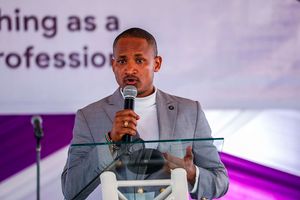
Embakasi East Constituency MP Babu Owino speaks at Sarova Stanley during the Linda Mwananchi forum reviewing the broad-based government’s 10-point agenda report on March 11, 2026.
Photo credit: Wilfred Nyangaresi | Nation Media Group
Mr Owino rose to national prominence during his time as a student leader at the University of Nairobi before transitioning to the country’s main stream politics when he was elected MP in 2017 on ODM.
He is one of the key figures in the Linda Mwananchi faction, and has been in the fore front in challenging Dr Oginga’s leadership. He has repeatedly said that “we will respect Oburu as our elder but not our leader.” He has created an image of a confrontational leader, an attribute that has endeared him, particularly to the youth.
Nyandarua County Senator John Muhia Methu during the press conference at Parliament buildings Nairobi on Thursday, February 20, 2025.
Photo credit: Dennis Onsongo| Nation Media Group
Senator Methu has also built his name through his fierce criticism of President Ruto. Mr Methu has emerged as one of Mr Gachagua’s key ally and defender, an image that has endeared him to locals in the populous Mt Kenya. Equally, Ms Maina and Mr Malala are emerging as key planks in Mr Gachagua’s DCP.
In Mombasa, Mr Ali has transformed himself into the region’s most prominent political outlier by going against the grain to oppose Dr Ruto’s re-election. He has positioned himself as a lone dissenting voice at a time the region’s top leadership seem to rally behind President Ruto. He has since declared his interest for Mombasa governor.
“Kenyans are relentless in their pursuit of good governance, accountability and social justice. The determining factor will ultimately be how we translate our passion for change at the ballot box when the time comes,” said Mr Ali.
Kakamega deputy governor Ayub Savula reckon that the youthful politicians have a promising political future. He, however, cautioned them to be strategic in choosing political camps.
Mr Savula, who is supporting Dr Ruto’s re-election, argue that the leaders stand a better chance working with the President while position themselves for higher positions in 2032.
“Anyone who wants to be a leader in this country should work with Ruto now and build their brand in readiness to succeed him in 2032. They will destroy their careers if they join the opposition, because those people would need 10 years in office,” said Mr Savula.
Frankline Mukwanja, Executive Director at Centre for Multiparty Democracy (CMD-Kenya) notes that young politicians who are ‘progressive and issue-oriented have a genuinely bright future heading into 2027 and beyond.’
He observes that the country’s demographics, which is largely made up of Gen Zs, are favouring the youthful politicians.
“Based on current population trends, if voter registration were maximized, citizens aged 18 to 40 would make up roughly 57 per cent of the electorate. That is a decisive majority, meaning candidates who understand and address youth concerns stand to gain significant political ground,” says Mr Mukwanja.
He says that some of the emerging leaders are beginning to demonstrate awareness of the real challenges facing young people and the courage to counter political opponents.
He, however, notes that trust from young voters will ultimately depend on how effectively the youthful politicians articulate solutions, and ultimately how they perform when elected.
“Kenya already has a substantial base of relatively young leaders. Many of these leaders are now gaining experience and visibility. Their challenge is being able to independently organize and mobilize away from the political structures and machinery of the established political leaders,” he observes.
He says with the rising star of youthful politicians, President Ruto could represent the tail the tail end of leadership rooted in the independence generation and its immediate successors.
Prof David Monda – a US-based university lecturer and political analyst –says that the youthful leaders have to continue motivating the Gen Zs not to get siloed into the country’s ethnic cocoons.
“Youth need to feel their vote counts. This will be the challenge of youthful politicians. Getting the critical mass of new voters to vote but also keeping that energy up till 2027.”