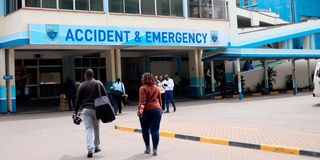
Public hospitals are now demanding upfront cash payments from patients, effectively barring millions of Kenyans from accessing critical medical services
Referral hospitals are turning away patients and demanding cash-only admissions, a policy that has locked out millions of patients from accessing essential healthcare services.
An internal memo from the management of Kenyatta National Hospital (KNH) dated July 22, 2025, and obtained by the Daily Nation , reveals the extent to which public healthcare facilities are prioritising immediate payment over patient care.
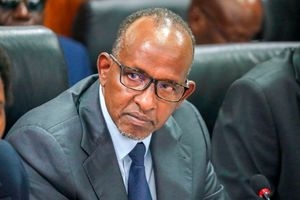
The memo, signed by acting CEO William Sigilai and addressed to the Director of Diagnostic and Health Information, states: "Effective today, all patients presenting for admission without valid health insurance membership must be required to pay the admission deposit fee or the equivalent surgical package cost before receiving service, unless it is an emergency case."
Kenyatta National Hospital CEO Dr William Sigilai.
Photo credit: Bonface Bogita | Nation Media Group
The directive explains that "this deposit ensures the hospital can cover initial costs and reduce risks of unpaid bills," prioritising institutional financial health over patient welfare.
This policy is being implemented at a time millions of Kenyans, who frequent these hospitals, lack proper health insurance coverage. Official data shows while about 18.5 million Kenyans are registered with the government's health insurance scheme, only 3.5 million are from the formal sector.
Even more troubling is the fact that of the 4.6 million who underwent means testing, only 1.2 million have ever made payments, and a mere 500,000 Kenyans remain active contributors.
The annual payment structure particularly affects informal sector workers, who comprise about 83 per cent of Kenya's workforce. These workers struggle to make large upfront payments despite having steady monthly incomes from small businesses, farming, and casual employment.
Previously, they could manage monthly contributions of Sh500 to Sh1,000. Now, they find themselves unable to pay annual fees ranging from Sh6,000 to Sh12,000 in a single payment.
At Jaramogi Oginga Odinga Teaching and Referral Hospital in Kisumu, the policy implementation has been stark. Patients without insurance registration are required to pay cash upfront before admission.
Jaramogi Oginga Odinga Teaching and Referral Hospital in Kisumu.
Photo credit: Alex Odhiambo | Nation Media Group
Hospital officials report advising uninsured patients to either register immediately for health insurance or prepare to pay significantly higher cash rates.
"Without insurance, you pay cash. With insurance, you pay through the scheme," a hospital administrator said, adding that patients whose registration becomes active during their admission must pay cash for the period before the activation.
Strict cash-only policies
"If you were admitted before your insurance became active, you will pay cash for the period when your cover was not active. Once it becomes active, then your bill will be covered," the administrator said.
At Moi Teaching and Referral Hospital in Eldoret, a different but equally concerning approach has emerged. While patients aren't immediately turned away, those without cash or insurance coverage are admitted to a "credit wing" where they remain until payment is secured.
The Moi Teaching and Referral Hospital in Eldoret City, Uasin Gishu County.
Photo credit: File | Nation Media Group
Hospitals have complained of late remittances and millions in unpaid reimbursements from the government health scheme, forcing many facilities to implement strict cash-only policies to maintain operations.
The Rural Private Hospitals Association (RUPHA) has reported its members borrowing money from banks to continue providing services as they wait for government payments.
The crisis has been compounded by the failure to attract meaningful participation from Kenya's informal sector, with only 10 per cent of workers who completed means testing remaining active contributors.
Referral hospitals act as a bridge between other levels of healthcare facilities, managing complicated cases that lower-tier hospitals cannot handle. If these institutions are implementing cash-only directives for the millions being referred from other facilities, the implications are bound to be severe.
The memo from KNH, with its emphasis on reducing "risks of unpaid bills," reflects a healthcare system keen on protecting institutional financial interests.
As more public hospitals implement similar policies, access to medical care increasingly depends entirely on the immediate availability of cash, regardless of one's ability to pay. Data shows enrolment from the informal sector has dropped since the annual payment requirement was implemented, with many previously registered members abandoning the system.