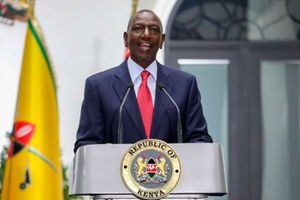
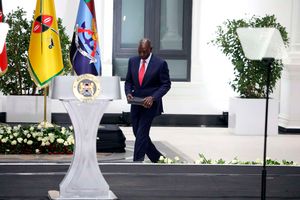
President William Ruto will on Wednesday, August 12, 2026 throw open the doors to a national conversation on Kenya’s future, inviting experts and citizens to help shape a long-term blueprint at a politically charged moment when the country is already looking beyond the 2027 elections.
The challenge will be to create a development plan that rises above the familiar cycle of changing governments and competing political priorities and instead commands enough public ownership to endure for generations.
The Head of State is seeking to craft a development blueprint that can take Kenya beyond Vision 2030 and put it on the path to high-income status.
Dr Ruto will launch what could become the most consequential exercise in defining Kenya’s economic future since the adoption of Vision 2030, with experts arguing that the country’s route to becoming a high-income economy will depend not just on mega-projects, but on the power, skills and productivity of its people.
Among those shaping the debate is Japanese economist Prof Hiroyuki Hino, who believes Kenya can follow the road travelled by Asian economic success stories such as Singapore, South Korea and Vietnam.
Prof Hino, an international economists invited to contribute to the debate, in an exclusive interview with Daily Nation on Monday urged the country to look beyond the traditional obsession with roads, railways and other big infrastructure projects.
A former International Monetary Fund (IMF) official who has worked with Kenya since the 1990s, Prof Hino believes the country's greatest asset in its quest to become a prosperous, high-income and globally competitive economy is its people.
He believes Kenya can make the journey to Singapore, but the transformation must be people-driven.
For Prof Hino, the lesson from the Asian economic miracle is not simply that countries such as South Korea, Vietnam and China invested heavily in infrastructure.
It is that they built systems in which productive people were supported by institutions that worked and were rewarded for their efforts.
“The main argument is the strength of Kenyans as individuals,” he says. “As in East Asia, a lot of the Asian miracle was driven by the strength of people. And what economists call human capital.”
It is an argument that gives a different perspective to today's launch, coming as Kenya prepares to move beyond Vision 2030 and develop a new national blueprint intended to guide the country for years to come.
Prof Hino is not a stranger to Kenya's economic and political story. He first worked with the country in the 1990s as an IMF chief negotiator.
He says that in 2008, following the post-election violence, he was invited to Kenya by then Prime Minister, the late Raila Odinga, who sought his assistance at a time when the country was grappling with a major crisis.
“The Japanese government subsequently sent me to Kenya as an adviser,” he says.
His engagement with Kenya later evolved from macroeconomics to the everyday economic struggles of ordinary citizens.
“I became much closer to the social issues, socio-economic issues, and developmental issues,” he says, explaining why he now describes himself as a developmental economist rather than simply a macroeconomist.
Prof Hino was also involved in discussions around a recent proposal prepared by a team associated with Prof Anyang’ Nyong’o. He says the exercise was not about drafting detailed policies but about developing a broad framework for thinking about what Kenya could become in the future.
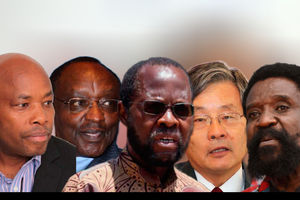
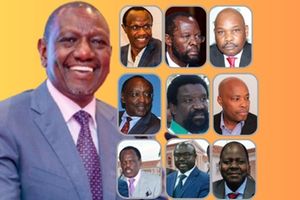
Prof Hino, alongside Prof Nyong’o, Prof Karuti Kanyinga, Prof Michael Chege and Prof Peter Wanyande, is now among the experts President Ruto has asked to participate in the broader conversation around Kenya's future.
He is quick to stress that the process is still at an early stage and that, as far as he knows, there was no established team working on the final vision at the time of the interview.
Rather, the President wants independent experts to contribute ideas before the final document is developed from views by Kenyans themselves.
Prof Hino's assessment of Vision 2030 is equally significant. He credits the programme with some achievements, particularly major infrastructure projects and a period in which Kenya sustained growth rates of between five and six per cent.
But he says the central weakness was that the benefits of that growth did not sufficiently reach ordinary Kenyans.
“The benefit of growth did not trickle down,” he says, arguing that inequality widened in some respects despite economic expansion.
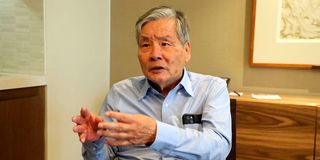
Professor Hiroyuki Hino during an interview on Monday, August 10, 2026.
Photo credit: Dennis Onsongo | Nation
For Prof Hino, the measure of success should not simply be GDP growth or the size of infrastructure investments. It should include whether Kenyans have access to clean and safe water, clean cooking, basic healthcare and higher incomes.
His proposed “people-driven road to Singapore” therefore puts human welfare and human capital at the centre of the development equation.
He believes the journey will be “very, very difficult” and “extraordinarily challenging”, but ultimately achievable.
Having spent part of his IMF career dealing with debt issues, Prof Hino argues that the country needs to think differently about financing development. A Sovereign Wealth Fund alone will not solve Kenya's problems, he says, but neither should poor and small enterprises be assumed to depend indefinitely on government support.
His bigger point is that the constraint can be expanded through productivity, private investment and innovative financing mechanisms.
As Kenya embarks on a process that President Ruto says should involve citizens and experts, Prof Hino believes ownership will be crucial.
Unlike previous national plans that could lose prominence when governments changed, he argues that the new vision should belong to Kenyans themselves.
“If everybody is involved in the process, something that's very close to… ownership of the process, and after, ownership of the product,” he says.
Below, Prof Hino speaks about Kenya's road to high-income status, the lessons from Asia, the shortcomings of Vision 2030, the country's debt and financing constraints, and why Kenyans themselves must become the engine of the next transformation.
A: I developed a career as an economist working for the IMF. I was a macroeconomist, talking about the big picture. After I retired, I went back to Japan and became a professor of economics at Kobe University.
Then, in 2008, a few months after the post-election violence, the former Prime Minister Raila Odinga asked me to come to Kenya. I had worked with Kenya in the 1990s as a chief negotiator for the IMF.
He asked me to come and help because his country was in crisis. He requested the Japanese government to send me here as his adviser, and I accepted.
A: I became much closer to the daily issues that Kenyans faced. Not about inflation and big figures, but the cost of living and how that affects people.
I became much closer to the social, socio-economic and developmental issues. So I now call myself a developmental economist rather than a macroeconomist.
I am interested in the daily lives of ordinary people, why they face challenges and what can help them.
A: It was a diverse team of intellectual heavyweights. The effort was led by Professor Nyong'o. He spoke with me and we exchanged ideas, but in terms of actually putting the document together, that was his team here in Nairobi.
This was not really about detailed policies. It was more about broad discussions of what Kenya can be in the future. It was about putting the framework together.
A: President Ruto asked me to come and participate, and my expertise is in overall economic development, international exposure and experience. I will contribute that.
But as far as I know, there is no team to work on the vision yet. The final document is to be generated over the next several months, and the President would like independent experts to come together and discuss it.
What we produced is just guidelines for discussion, not a final document.
The indicators I use include basic services, access to clean drinking water, access to clean cooking, access to health and basic healthcare. Income is also important — what a common person earns.
I pick three or four indicators as benchmarks for judging whether Kenya can reach Singapore's level or the levels of high-income countries.
A: It is very, very difficult. It is extraordinarily challenging. But it is achievable.
My main argument is the strength of Kenyans as individuals. In East Asia, a lot of the Asian miracle was driven by the strength of people — what economists call human capital.
Macroeconomists tend to forget the importance of people power, the soft power, the brain power. That is one aspect I would like to highlight.
Q: What lessons can Kenya draw from countries such as South Korea, China and Vietnam?
A: From my perspective as a Japanese East Asian, how productive individuals are, how hard they work and how the institutions work are important.
Big investment, infrastructure investment and all that are important. They are necessary.
But having institutions that work, and having people who work hard and are rewarded for it, is an important lesson that can be drawn for Kenya.
Professor Hiroyuki Hino.
Photo credit: Dennis Onsongo | Nation
A: Vision 2030 had some good things. The big infrastructure projects worked. Kenya should also be proud of having maintained five to six per cent growth.
But that benefit was not shared by ordinary people. The benefit of growth did not trickle down. That is why inequalities, in some ways, have widened in the country.
A: When President Uhuru Kenyatta came, Vision 2030 was not so much highlighted. I don't think people spoke too much about Vision 2030 after that period.
So to say now why Vision 2030 did not work over the last 10 years, I don't know how to answer.
I did not think that the country's policies were really guided by Vision 2030 over that period. That is my impression.
A: It is certainly difficult for the government to raise more tax revenue. The country has already borrowed so much money.
The question is how much more can be raised from citizens if they have more confidence. It becomes easier for the government to raise money from the market.
The President is talking about a Sovereign Wealth Fund and using institutional money. Again, it is money that Kenyans have. If you access and use those domestic resources well, they can finance development without raising taxes too much.
A: Having the Sovereign Wealth Fund alone, I don't think, would solve the problem.
But people tend to assume that low-income, small informal firms cannot raise money. They can.
There are ways of expanding the constraint. The constraint is there, but it is not fixed. It is not zero-sum.
It can be expanded if enterprises become more productive. My research shows that small Kenyan companies and poor companies can grow, and they have grown. There are ways of helping them.
A: The key is to help enterprises become more productive and to think differently about how they can access finance.
Instead of continually thinking that poor, small companies have to rely on government, they have ways of getting money. That is the kind of new thinking I would like to inject.
Team of scholars crafting Kenya's post-Vision 2030 development blueprint (from left) Prof Karuti Kanyinga, Prof Michael Chege, Prof Anyang’ Nyong’o, Prof Hiroyuki Hino and Prof Peter Wanyande.
Photo credit: Nation
A: The idea is to listen to the people and understand how issues can be remedied, then build policies from the insights and experiences that people share through the dialogue.
If everybody is involved in the process, there will be ownership of the process and ownership of the product.
A: Once it is owned, the document survives a change in government.
Kenyans have had Mwai Kibaki and other governments, but every time the government changed, there would be a new document.
What President Ruto, as I understand it, wants to establish is a document that transcends the government — from this government to the next government and the next government.
The basis for that is the ownership of all Kenyans in the product itself. Not something that was given to them, but something they participated in building.
Q: What is your message to Kenyans as the country begins this process, especially with political temperatures rising ahead of the 2027 elections?
Criticising the government is good. It is necessary. But they can also participate in finding solutions.
The more they can come up with good ideas — saying, “This is a problem we have, how can we solve it?” — the better the policies of the government will be.
Q: Finally, what is the biggest lesson Kenya should take from the countries that successfully transformed their economies?
A: If there is an institution, the views of people can be picked up in institutions and brought up. You need a process of collecting their views.
Here, there is a disconnect in the government in the process.
When we have more time, more properly, and other people who may disagree with me, it is always good. Then we can discuss it. But it takes more rigorous deliberations.