Members of Parliament have backed a petition by the Kenya Network of Cancer Organisations (Kenco) seeking to enhance packages for treatment of cancer, which were significantly reduced under the Social Health Authority (SHA).
The move is a major relief for thousands of cancer patients who had complained to the House that under SHA, they have suffered as they cannot access quality treatment that they used to enjoy under the defunct National Hospital Insurance Fund (NHIF).
Under NHIF, patients received an individual oncology benefit of Sh680,000 per year. Under SHA, this has been re-organised into a household-based benefit of Sh550,000, comprising Sh400,000 under the Social Health Insurance Fund (SHIF) and Sh150,000 under the Emergency and Critical Illness Fund.
For households where more than one member requires treatment, this shift from individual to household coverage significantly reduces the financial protection that was previously available.
The committee, in its adopted recommendations to the House, wants the oncology individual benefits increased to a minimum of Sh830,000 per beneficiary per year.
“The direct cost of comprehensive treatment for this patient easily exceeds Sh3.8 million. This demonstrates beyond any doubt that the current SHA cancer cover of Sh550,000 per year is grossly insufficient to provide equitable access to care. Reducing the oncology package is not just a technical policy change. It is a life-and-death decision for thousands of Kenyans,” reads the report.
A recent survey of 118 cancer patients and caregivers found that 60 per cent had exhausted their SHA cover before the end of the year, with 35.8 per cent exhausting their benefit in less than three months and another 34.5 per cent within three to six months.
National Assembly committee on Health chairperson and Seme MP James Nyikal.
Photo credit: Jared Nyataya | Nation Media Group
The health committee, chaired by Seme MP James Nyikal, also wants the Ministry of Health to strengthen digital and administrative systems for claims approval and increase budgetary allocations to both the Primary Health Care Fund and the Emergency, Chronic and Critical Illness Fund.
In its report, the committee also called on the Ministry of Health to improve awareness among patients and providers, and to commission an independent forensic audit of SHA disbursements since its inception.
“In addition, the Committee calls on the Ministry of Health and the SHA to undertake widespread civic education on cancer care benefits and report back within four months,” reads the report.
The committee also directed SHA to reimburse all facilities within 90 days in line with existing regulations and to establish a dedicated fast-track digital platform for cancer pre-authorisations in partnership with the Digital Health Authority.
Funyula MP Wilberforce Ojiambo said the country was told a great story on how SHA would be the panacea to all medical problems, but the opposite has come to fruition.
“We were told that, with free primary health care and the Emergency, Chronic and Critical Illness Fund (ECCIF), we would safeguard all Kenyans. However, this petition has unmasked a package of lies and has revealed that the current provisions amount to a direct ticket to death in the event of a cancer diagnosis,” Dr Ojiambo said.
“The coverage for cancer is insufficient. If you are diagnosed with cancer, you must seek alternative funding to see through your treatment,” he added.
Buuri MP Mugambi Rindikiri at a past event.
Photo credit: Dennis Onsongo | Nation Media Group
Buuri MP Mugambi Rindikiri termed cancer a national crisis that requires urgent attention and said the government should take its treatment seriously.
“Cancer is a very serious disease in this country. It has impoverished families, caused separation, and shattered livelihoods. It has also contributed to the loss of foreign exchange, as many people travel abroad seeking treatment. In some areas, it has depleted human resources,” Mr Rindikiri said.
Wajir North MP Ibrahim Saney said cancer has placed a heavy burden on households, and it is time the government addressed the treatment cost.
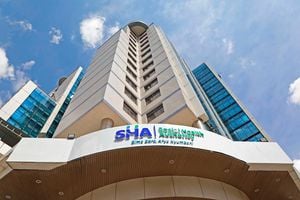
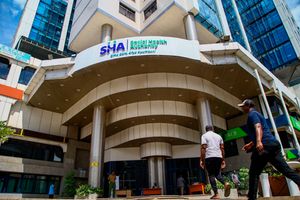
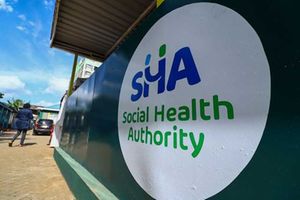
The Social Health Authority building in Nairobi.
Photo credit: File | Nation Media Group
“Cancer is a prevalent disease globally and has left many patients terminally ill, placing a heavy burden on households. When illness persists for years and treatment costs are prohibitive, the economic consequences for families, particularly in developing countries, become severe,” Mr Saney said.
The Kenya Network of Cancer Organisations (Kenco), representing over 70 civil society groups and thousands of cancer patients, had last year petitioned the National Assembly over the cost of cancer treatment.
The petition raises several challenges encountered by cancer patients under SHA, including the reduction and inadequacy of the cancer benefits package, bureaucratic delays, system failures, poor communication, lack of transparency, suspension of services due to pending bills, and emotional and mental strain.
The country records approximately 44,000 new diagnoses and over 29,000 cancer-related deaths annually. Breast and cervical cancers affect women, while prostate cancer is the leading diagnosis among men.