More than half of buildings inspected countrywide between July 1, 2025, and April 2, 2026, are not structurally sound, a government report has revealed, raising fears over public safety. The quality assurance report by the State Department for Public Works, tabled in Parliament, shows that 57 per cent of the 21,282 buildings assessed were non-compliant and at risk of collapsing.
Only 9,264 buildings, representing 43.53 percent, were found structurally sound, while 12,018 did not follow the construction guidelines provided for in law.
The former Western Province led in compliance at 77 percent, with 1,183 of the 1,520 sites inspected found compliant.
Mount Kenya came second at 65 percent, with 807 of 1,225 sites compliant and 418 suspended.
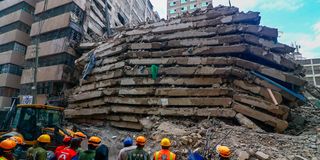
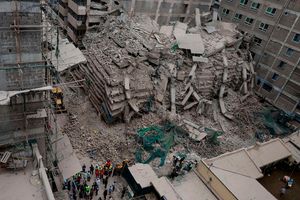
Nairobi, which recently witnessed a building collapse in Eastleigh, had 57 percent of ongoing buildings fully compliant, with 2,261 of 3,908 sites inspected cleared.
North Eastern had the lowest compliance level at five per cent. Only 11 of the 220 sites inspected were given the green light to proceed, while 209 ongoing works were suspended.
Upper Eastern was second-worst at 14 percent, with only 53 of 355 sites inspected found structurally sound.
Other regions with low compliance among ongoing projects were Central Rift at 18.38 per cent, Coast at 20.25 per cent and Central Nyanza at 20.68 per cent.
North Rift stood at 29.64 percent, Central Eastern 32 percent, Kiambu 43 percent and Kajiado 48 percent.
The report shows the country has witnessed 100 building collapses since 1996, with 2026 recording the highest number so far, at eight.
Structural failures remain the main challenge in the construction industry and the leading cause of collapses in most parts of the country, according to the report.
It says problems begin with poorly done structural designs by developers who are only interested in saving costs, sacrificing quality to maximise profits.
“Some developers in an effort to minimize construction costs on weak soil conditions, compromise on the quantity and quality of concrete and reinforcement thereby increasing the risk of structural failure and building collapse,” reads the report.
It notes the involvement of unqualified persons, including “unlicensed individuals posing as engineers and architects” who prepare and sell drawings to developers, who end up implementing them without questioning their validity.
Incomplete and defective architectural and engineering drawings, it adds, “contribute significantly to structural deficiencies and potential building failure”.
Poor workmanship is another cause, with rogue contractors failing to follow approved plans, using unskilled workers and taking shortcuts.
“Contractors use improper construction building techniques such as mixing incorrect proportions of concrete, not observing correct compaction and curing method of concrete in terms of the period required and regular watering,” reads the report.
Under Sections 5(2)(g), 23A and 23(2) of the National Construction Authority (NCA) Act, the authority is mandated to inspect construction sites.
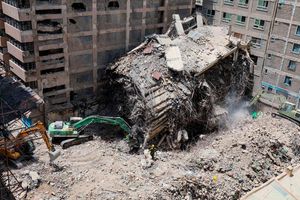
An aerial view of the site of the collapsed building in Eastleigh, Nairobi as excavators clear debris on October 30, 2026.
Photo credit: Bonface Bogita | Nation Media Group
It includes whether contractors on site are NCA-registered, whether there is an NCA compliance certificate and whether a signboard showing all approvals is displayed.
Other requirements are the types of professionals engaged, safety signs, personal protective equipment, sufficient hoarding and fencing, and accredited NCA-skilled workers and site supervisors. The NCA is mandated by law to issue a suspension notice to a developer whose active site fails to comply with the seven requirements, halting all works until compliance is achieved.
Investigations are launched and the developer is given 14 days to comply. The developer may also be charged in court.
The NCA must give all information on the offence to the officer in charge of a police station, who will issue a warrant of arrest for the developer.
If the developer addresses the issues raised, the authority lifts the suspension once satisfied the site is compliant.
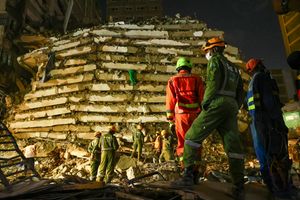
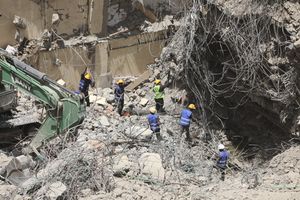
Day 4: Rescue teams search through rubble of collapsed building in Eastleigh
The authority has an enforcement unit of 15 police officers who support site inspections in areas where non-compliance has been reported.
Under Section 23(3A) of the NCA Act, a person found guilty of wilfully failing to comply with an investigating officer’s order risks up to three years in jail, a fine of up to Sh1 million or both.
As at March 31, 2026, the authority had secured 15 successful convictions across various counties, but the report shows few investigations are concluded and lead to prosecutions.
“This has encouraged impunity by investors, unethical professionals and weak institutions that regulate the construction industry,” the report says, calling for stronger capacity in oversight, regulation and investigative arms.
All construction projects must also comply with the National Building Code 2024, which prescribes improved standards in building design, construction and maintenance to promote quality, safety, health and environmental standards.
Rescuers at site of a collapsed building in Eastleigh, Nairobi, on October 23, 2026.
Photo credit: Wilfred Nyangaresi | Nation Media Group
“A person who engages in construction works or a person who owns or occupies a building shall comply with the code,” reads Regulation 5.
Regulation 6 restricts the preparation of designs and supervision of works to professionals in the respective field of specialisation.
They include a physical planner, architect, engineer, land surveyor, building surveyor, quantity surveyor, accredited site supervisor and accredited skilled worker, all of whom must be registered under the relevant laws.
Any breach of the code attracts a Sh1 million penalty, imprisonment and revocation of licences for professionals and contractors.
Building collapses are extensively investigated by the Directorate of Criminal Investigations (DCI) from a criminal perspective, according to the report.