The National Treasury has been dragged into the fight between the National Police Service (NPS) commanders and the National Police Service Commission over the Sh60 billion salaries budget.
This even as a ceasefire promised by Interior Cabinet Secretary Kipchumba Murkomen is yet to take effect, with the warring factions clashing over the commission’s attempt to seek the Treasury’s intervention.
The commission CEO Peter Leley wrote to Treasury Principal Secretary Chris Kiptoo asking that the funds for police salaries be wired to the commission.
In the letter dated July 29, Mr Leley cited a directive by the National Assembly’s Public Accounts Committee (PAC) that the payroll system should be transferred from the NPS to the commission, which is mandated by the constitution to oversee human resource functions.
Chief Executive Officer of the National Police Service Commission, Peter Kiptanui Leley.
Photo credit: File| Nation
“The purpose of this letter is to request of National Treasury to facilitate the movement of the PE budget under vote 1045 to the National Police Service Commission vote 2101 in compliance with article 246(3) of the constitution and the resolution of the National Assembly Public Accounts Committee,” reads the letter in part.
Presently, police budgets are handled by the accounting officer Bernice Sialai on behalf of the Inspector General of Police Douglas Kanja.
The police IG is the designated accounting officer for the NPS in line with an executive directive by President William Ruto who granted police financial autonomy.
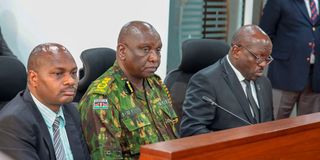
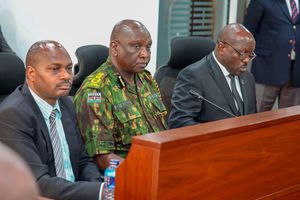
But the commission’s letter to Treasury has infuriated uniformed commissioners, who include the police chief and his two deputies, who have also petitioned Treasury not to hand over the money until the standoff is resolved.
On August 12, at the height of the protracted fight pitting the IG and his deputies, on one hand and the civilian commissioners of NPSC, on the other, Mr Murkomen announced that he had convened a meeting to resolve the impasse that now threatens the upcoming police recruitment.
"There have been previous debate regarding the role of the Commission and the NPS, in so far as recruitment of officers is concerned and sometimes payroll issues are included. We will always strike a balance on what the two can do," Mr Murkomen said.
“Identification of able men and women to serve in the NPS requires a certain level of expertise. We cannot, therefore, wish away the role of police officers themselves in terms of identification, scrutinising and hiring police officers. Neither can we wish away the role of the commission in retaining overall oversight authority," the CS added.
After the parliamentary committee’s directive that the IG hands over the police payroll, Mr Kanja vowed to defy the decree he said was a violation of the constitution.
“Am not ready to violate the constitution, “ Mr Kanja told the Nation .
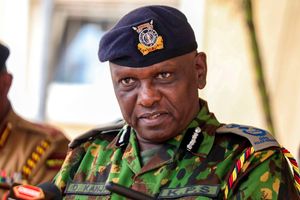
Inspector-General of Police Douglas Kanja.
Photo credit: File | Nation Media Group
Separately, Sheria Mtaani, a Mathare-based non-governmental organisation, and city lawyer Shadrack Wambui, moved to court seeking intervention on the conflict between NPS and the commission.
At the weekend, a highly placed source familiar with the matter told Nation that the CS was yet to meet the warring parties as he had promised.
A meeting is scheduled later in the month when the commission chair Dr Yuda Komora, who has been vetted by parliament, is expected to have assumed office once cleared for the position.
Last week, Mr Murkomen argued that the commission can put in place the policy framework and standards for police recruitment, while identification can be done by the NPS.
"As the CS I don't see any fights as I will be the one to look at the regulations and transmit them to Parliament. Before I am satisfied the regulations can be taken to Parliament for adoption, I will ensure we strike a balance between the commission and the NPS. This is what happens in the Public Service Commission and some cadres. Some have been delegated to ministries even though the PSC retains the overall responsibility," stated the CS.
When Dr Komora appeared for vetting, he told MPs that differences within NPS should not be allowed to escalate to the public.
Dr Komora said issues like the custody of police payroll should have been resolved internally at the commission meetings.
If approved, he said, he would strike a balance between the police service and the commission to make sure that the two institutions work in harmony and should not be seen to be competing.