A legal dispute has erupted over government’s plan to charge motorists Sh8-per-kilometre to use the Nairobi–Nakuru–Mau Summit and Rironi–Maai Mahiu–Naivasha highways under a proposed 30-year public-private partnership tolling framework.
Lobby group Consumer Federation of Kenya (Cofek) has asked the High Court to stop the rollout, arguing the government cannot impose mandatory tolls on the existing taxpayer-funded highway without first providing a practical toll-free alternative route.
The highway is the main transport corridor linking Nairobi to the North Rift, Western Kenya and the wider East African region, and serves as the principal route for the movement of passengers, fuel, agricultural produce, manufactured goods and other essential commodities.
“Any mandatory user charge imposed upon the said corridor is likely to affect millions of consumers, motorists, transporters, farmers, traders, manufacturers and members of the public who rely upon the corridor daily,” Cofek says in court papers.
The legal dispute took a procedural turn on Monday after Milimani High Court Judge David Mburu declined to issue an instant order halting the government’s decision and transferred the petition to the High Court in Kisumu, where similar cases challenging the same tolling framework are already pending.
"Since there is consensus from the parties, this matter is transferred to the Kisumu High Court, which is handling similar petitions dealing with the same subject matter. The matter shall be mentioned before the Presiding Judge at Kisumu on July 30 for further directions," Justice Mburu said.
The road expansion project covers 233 kilometres, comprising roughly 175 kilometres between Rironi and Mau Summit and 58 kilometres between Rironi and Naivasha through Maai Mahiu.
The Kenya National Highways Authourity (KeNHA) previously said the roads will be upgraded, expanded and operated under a Design-Build-Finance-Operate-Maintain-Transfer model with motorists paying tolls under a user-pay system.
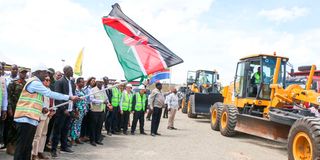
President William Ruto launched the project in November 2025 and later split into two sections after negotiations with one consortium failed.
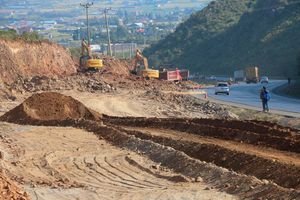
Construction of a section of the Rironi–Mau Summit Road at Gilgil on July 2, 2026.
Photo credit: Boniface Mwangi | Nation Media Group
The project, implemented through a Public-Private Partnership between China Road and Bridge Corporation (CRBC) and the National Social Security Fund (NSSF), is set to be constructed over two years at a cost of $863 million (Sh111.7 billion).
Cofek, however, says the proposed mandatory user-pays tolling framework raises constitutional questions over transparency, consumer protection and equality before the law.
It argues the government has not publicly explained how it arrived at the proposed Sh8-per-kilometre tariff and cannot compel motorists to pay to use an existing public highway without offering a genuine toll-free alternative.
Cofek also says the tolling framework could add road users financial expenses, including higher consumer prices and a rising cost of living.
“The resulting financial burden is likely to cascade throughout the supply chain, leading to increased transport costs, higher consumer prices and a corresponding rise in the overall cost of living,” says Cofek's Secretary-General Stephen Mutoro in an affidavit.
The petition names KeNHA, the Roads Cabinet Secretary, the National Treasury Cabinet Secretary, the Public Private Partnerships Directorate and the Attorney General as respondents.
“Unless this court intervenes, the respondents are likely to continue undertaking further approvals, negotiations, contractual engagements and other implementation measure capable of creating binding legal, financial and commercial obligations before the constitutional questions raised in the accompanying Petition are determined,” argues Mr Mutoro in asking the court to grant interim orders halting the tolling.
The government has already challenged the petition through a preliminary objection, arguing the case is sub-judice because similar issues are pending before the High Court in Nakuru in a suit filed by the Motorists Association of Kenya and others.
It also argues Cofek failed to exhaust dispute-resolution procedures established under the Public Private Partnerships Act before moving to court.
“The Petition offends the principle of separation of powers in that the Petitioners invite the court to interfere with the Executive's mandate concerning development/infrastructure policy, national budgeting and the implementation of Public Private Partnership frameworks. Such matters fall squarely within the exclusive mandate of the Executive,” says the KeNHA and the Ministry of Roads. They want the petition struck out.