Kenya has spent more than a century arguing about the bottle. The next round deserves a sober hearing.
Unfortunately, the proposal to raise the drinking age from eighteen to twenty-one risks continuing an old habit: announcing a fresh restriction before convincingly explaining why earlier controls have proved inadequate.
Nearly 80 years ago, in 1947, the law changed to permit Africans to drink bottled beer, previously denied to them under racial restrictions. Spirits remained subject to separate controls. The Alcoholic Drinks and Drugs Control Laws (Amendment) Bill, 2026, therefore enters a crowded historical field. Successive governments have experimented with who may drink, what they may consume and where they may obtain it.
What we may not have seen is that this proposal would draw a fresh boundary through adulthood. Citizens constitutionally recognised as adults would remain old enough to vote and, subject to recruitment requirements, serve in the military or police, yet be deemed too young to buy alcohol. Parliament should demand a stronger explanation for that distinction than the familiar assertion that young people need protection.
Legislators must also confront the possibility that demand will survive the prohibition. Excluding adults aged 18 to 20, a group that includes many college students, could push some towards unlicensed sellers, where age checks and product safeguards may be weaker. A law intended to protect young adults could instead expose them to greater risks. Before moving the age limit, Parliament must explain how it intends to prevent that outcome.
History gives us reason to be sceptical of official certainty. Successive generations have experimented with alcohol controls while presenting their preferred arrangement as the answer to disorder, indiscipline or failed development. Their policies have often revealed more about whom they distrusted than about the particular harms they could demonstrate.
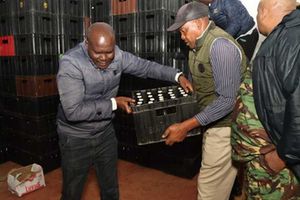
The government Bill, which seeks to amend the Alcoholic Drinks Control Act (Cap 121), is the latest in a series of moves to confront the illicit alcohol and drinking problem across the country.
Photo credit: Pool
I am going to draw from history and not from emotions. It all started with colonial administrators who distrusted Africans of all ages with drinking. The colonial worry was about labour, gatherings beyond official supervision and people whose livelihoods gave them some independence from wage employment. Alcohol regulation offered a means of intervening in all three.
At the Coast, “drunkenness” was used as the excuse for restricting the palm-wine economy that frustrated colonial demands for Giriama labour. Income from mnazi gave producers an alternative to working for settlers, and the only way to impoverish them was to restrict the palm-wine trade. Controlling the trade therefore weakened their livelihoods and pushed them towards wage employment. Thus, beneath the language of sobriety lay questions of labour, profit and power. The lesson is that the reason publicly advanced for an alcohol restriction may tell only part of the story.
Historian Justin Willis records that a Native Liquor Ordinance passed in 1915 contained provisions for licensing palm trees. These were considered impracticable during wartime, and the ordinance was never brought into force. It appears that the administrative imagination had outrun the practical means of implementing it. As the colonial government found, legislating about drinking was easier than governing it. And Kenya might find itself with the same dilemma when policing that age bracket, considered adults by the Constitution and children by the liquor rules.
Even as we discuss the age, we should recall that at one point, women became another target of administrative ingenuity. Under the 1921 ordinance, African women in urban areas were excluded from holding licences and could not sell or buy drink in townships. Further restrictions in 1927 and 1930 prohibited women from making alcoholic beverages in towns even when they were not intended for sale. The paradox of that law was that women could, in practice, make grain beer while working for a male licensee. It was a regulatory experiment that restricted women’s independence while preserving the usefulness of their labour. When you look at it today, you see the gender discrimination.
Racial rules in colonial Kenya produced a striking contradiction. In April 1936, British Labour MP Reginald Sorensen asked why Africans could work behind bars, even taking sole charge of them, while anyone supplying those same workers with intoxicating liquor faced severe penalties. Colonial Secretary J. H. Thomas declined to intervene, citing a committee’s earlier review of the arrangement.
The proposed age restriction raises a different but related question about consistency. Would adults aged 18 to 20 still be permitted to serve alcohol, manage stocks and check customers’ ages while being prohibited from buying a drink themselves? If so, Parliament must explain why they possess sufficient judgment to enforce the rules governing other adults’ purchases but insufficient judgment to make their own. If the restriction extends to employment, legislators must also account for the livelihoods it would close off.
Today, it is no longer the gender or colour. It is the age. The colonial government thought that Africans could not be trusted to drink without supervision – and now we think that adults between eighteen and twenty-one should also be locked out. Anxiety about drinking may justify legislation, but it cannot, by itself, establish which restriction will work. We might think that we shall solve all the drinking problems by raising the age.
Today’s proposal singles out adults aged 18 to 20. Before excluding them, Parliament should establish what is distinctive about their risks, why 21 is the appropriate threshold and what measurable improvement the change is expected to produce.
Eighteen has a political history. Kenya lowered its voting age from 21 to 18 in 1974. The 2010 Constitution defines adulthood at 18 and protects adult citizens’ electoral rights. While that does not create an express constitutional right to drink, it makes the proposed exclusion a distinction between adults that government must defend. But, it will find its test under Article 27, which guarantees equality and includes age among prohibited grounds of discrimination. Article 24 requires limitations on rights to be reasonable and justifiable, considering their purpose, extent and whether less restrictive alternatives exist.
The constitutional question cannot be answered by repeating that alcohol is harmful. Parliament must examine whether this particular restriction is justified and proportionate.
The practical questions are equally pressing. If sellers already disregard age checks, how would changing the number improve compliance? If inspection is weak, who will enforce the new threshold? What safeguards would prevent selective enforcement?
A sober debate would begin with an account of enforcement. Parliament should require officials to explain how the present threshold is checked, how violations are investigated and what resources a higher threshold would require. Young adults should be heard as citizens whose choices are being restricted. Their views cannot determine every public health decision, but their exclusion from the conversation would repeat the paternalism that runs through this history. Protection requires listening as well as prohibition.
Nor should the debate become a contest between those supposedly defending families and those supposedly defending drunkenness. One can oppose this age restriction while supporting firm action against dangerous products, unlawful supply and harmful drinking.
Parliament must assess the measure on its evidence. The intensity of public anxiety, however understandable, does not demonstrate that twenty-one is the correct answer or that the enforcement will deliver its promise.
The government should answer these questions before asking young adults to surrender an existing lawful choice.
Families harmed by drinking deserve more than another numerical experiment. They need protection from dangerous products, effective enforcement against unlawful sales and accessible help for dependence. Manufacturers and sellers must also account for their products and marketing.
The eighteenth birthday is not a guarantee of judgment. Neither is the twenty-first. Policy must address harmful conduct and demonstrable risk without pretending that maturity arrives through legislative arithmetic.
Kenya was hardly short of policy. Each generation produced another rule, another licensing condition or another campaign promising to restore order. Today’s legislators should therefore ask a harder question: are the shortcomings in the law, or in the institutions entrusted with enforcing it?
Where bribery buys protection and policing becomes an opportunity to collect payments, another prohibition merely gives corrupt officials another bargaining chip. A higher age limit will achieve little if sellers can purchase immunity from inspection or prosecution. Before adding restrictions, Parliament should demand accountability for how existing ones are enforced. The test of alcohol policy is what happens when an inspector enters a bar—and whether the law or a bribe determines what happens next.
Kenya’s history offers plenty of experiments and too much misplaced certainty. Parliament should resist adding another restriction whose political appeal exceeds its demonstrated value. A government asking citizens to drink responsibly must first show that it can regulate responsibly.
John Kamau is a PhD candidate in History, University of Toronto. Email: [email protected]