The five-month-old baby did not understand why his mother would not wake up.
Ms Eunice Jerop lay lifeless in her Sesia village home in Baringo Central after allegedly being beaten by her husband following an argument. By morning, she was dead, leaving seven children, including the underweight, severely malnourished infant.
Ms Jerop’s brother, David Kipkemoi, said the family had previously intervened over domestic violence fuelled by a reportedly alcoholic husband. Police arrested her husband for processing on murder charges.
Ms Jerop’s death is among the scars residents, health officials, regulators and security agencies associate with cheap, illicit and unregulated alcohol in Baringo and across Kenya.
The Nation examined alcohol abuse in several regions, revealing lost income, broken homes, violence, illness and death.
Photo credit: Nation Media Group
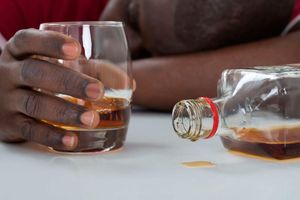
Across Turkana, Uasin Gishu, Baringo and Trans Nzoia, some types of alcohol can cost as low as Sh5. Widespread addiction and the quest for resources to fund the habit have led to depleted businesses, neglected children, insecurity, shattered marriages among other vices.
Ms Sophia Apem, 38, began drinking at eight after dropping out before Class One.
“I was introduced to cheap alcohol by a close friend after dropping out of school even before joining Class One. It started little by little before becoming a daily routine,” she said.
In 2013, she moved from Lodwar to Eldoret for casual work and settled in King’ong’o, where she said alcohol costs as little as Sh5.
A mother of four, she said addiction destroyed her finances and health. She has spent a year in rehabilitation with support from trader Rebecca Nyang’au, known as Mama Jere.
“Before I embarked on the rehabilitation journey, I was just but a filthy skeleton with protruding bones,” said Ms Apem.
Ms Sarah Kerubo, 44, lost a marriage of more than 20 years and her business to alcohol and drugs. Four months into rehabilitation, the mother of eight said she faces a “double recovery” from addiction and financial ruin.
Ms Rose Peneti, 34, said alcohol consumed resources meant for her four children. She could buy enough second-generation alcohol for Sh10 to become blackout drunk, leaving rent and basic needs unpaid.
In Turkana, Sh80 is enough to get half of a 250ml bottle of a popular gin or vodka brand. Drinking can begin at 6am, and bottles sell for Sh150 to Sh160 in Lodwar, up to Sh200 in Kakuma and Lokichogio, and Sh250 in remote centres such as Kibish.
Some outlets allegedly hide stock during security operations or operate behind disguised rental houses and shops. Boda boda rider James Esekon said he can drink six half-bottles daily.
Human rights defender John Alemu said counterfeit batches of the locally popular gin and vodka brands are frequently seized.
Turkana’s female alcohol consumption rate is 14.8 per cent, the country’s highest, according to Kenya Demographic and Health Survey data.
County Health Executive Joseph Epem said some mothers neglect children or sell nutritional products to buy alcohol. The county wants treatment centres in Lodwar and Lokori, while the National Authority for the Campaign against Alcohol and Drug Abuse (Nacada) said Turkana lacked an accredited rehabilitation facility.
In Trans Nzoia, spot checks in Saboti, Kiminini and Endebess found allegations that youths, including students, access cheap illicit alcohol and drugs.
Nacada chief executive Anthony Omerikwa said in August 2025 that Trans Nzoia led Kenya in alcohol and drug abuse, yet it had no rehabilitation centre. It was followed by Kakamega, Kisumu and Nairobi.
“The menace is really worrying and we are engaging a multi-agency approach to deal with those involved in production and sale of second-generation liquor and drugs,” he said.
Interior Cabinet Secretary Kipchumba Murkomen recently identified Trans Nzoia as a production and distribution hotspot and warned officers accused of protecting cartels.
The Trans Nzoia County Director of Medical Services, Dr Babu Kisiangani, said alcohol and substance abuse affect health service delivery.
“In a place where we need to have 10 nurses, you only find about five are functional to serve patients. This is very alarming,” he said, adding that the absentee workers were reportedly unable to work because of mental disorders that are mostly linked to alcohol and drugs.
In Uasin Gishu, Alcoholic Drinks Control Board Director Koiya arap Maiyo described King’ong’o as a hotspot for manufacturing, distributing and consuming chang’aa and dangerous smuggled spirits.
County Commissioner Eddy Nyale called illicit brew a threat to family stability and national security and said authorities were working to eliminate it.
“Government officers in this county have done a good job in the fight against illicit brew and we are hopeful that we will win this war,” he said.
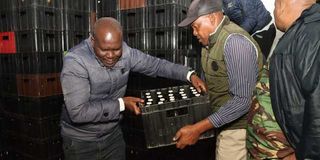
In early August, Directorate of Criminal Investigations (DCI) officers dismantled an alleged industrial-scale distribution network in Oletepesi, which is on the outskirts of Eldoret, arresting prime suspects and recovering fake KRA excise stamps.
In Pioneer Estate, a multi-agency team intercepted 1,525 cartons of counterfeit alcohol valued at Sh7.6 million.
Rehabilitation advocate Rebecca Nyang’au said enforcement is insufficient, calling for more supporters to help people in recovery rebuild financially and resist relapse.
“We need more well-wishers to save a generation in this estate [Pioneer] by coming up with mechanisms to help struggling addicts to recover financially and empower them in the fight against relapse,” she said.
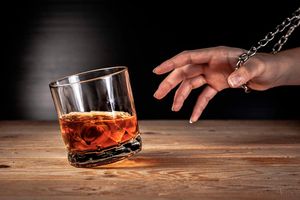
Alcoholism kills the soul before the body.
Photo credit: Shutterstock
In April, a Nacada-led multi-agency team dismantled a counterfeit alcohol network in Nyeri. Inside an upmarket Hekima home, officers seized thousands of fake bottles, more than 260 litres of ethanol, bottling machines, counterfeit tax stamps and a vehicle, worth over Sh10 million. An aspiring Nyeri MCA was arrested, charged and released on bond.
The raid exposed an organised supply chain serving Central Kenya, but illicit alcohol continues reaching consumers and may feature in the 2027 election debate.
In Murang’a, Kirinyaga, Nyeri, Meru and Tharaka Nithi, cheap brews in plastic packaging are secretly sold in licensed bars and towns including Kerugoya, Kagio, Kutus and Sagana.
Previous seizures included counterfeits of at least four known vodka and gin brands as well as copied packaging for established brands.
In April 2025, three people were hospitalised after consuming suspected poisonous brew in Kangai, Kirinyaga. Residents accuse police and county officials of inaction and corruption.
“Illegal brews are being sold in bars and the police as well as county officials are doing nothing to discourage the unlawful business which is a threat to human lives,” said Mr Dennis Murimi, a Kirinyaga resident.
In Murang’a, consumers use names such as Mugondora Itina, Gathuri Ngui, Kaana, Saitan, Kadaya, Machozi ya Simba and Mucocori to identify illicit drinks.
Former Deputy President Rigathi Gachagua has previously accused the government of complicity, saying illicit brews are openly manufactured, transported and sold.
Keroche Breweries owner and Nakuru senator Tabitha Karanja has previously indicated that authorities know legitimate and fake manufacturers, adding that there is no shortage of laws to deal with the problem while Lands Cabinet Secretary Alice Wahome placed primary responsibility on counties because they license bars.
“The bars that deal in illicit brews are known but the licensing authority are the county governments. The owner of Liquor Licensing Boards are the governors,” she said.
Murang’a Deputy Governor Stephen Munania said denied or revoked operators obtain court injunctions and continue trading.
“Most bars operate by the force of court orders, not county licences,” he said.
Former Provincial Commissioner Joseph Kaguthi said a 2015 community-policing report showed brewers refilling mainstream bottles, using fake KRA and KEBS stickers and bribing inspectors.
Nacada chief executive officer Dr Anthony Omerikwa has described enforcement operations as a breakthrough and urged the public to continue providing information on illicit alcohol networks.
Security officers in Embu County seize alcohol suspected to be laced with poisonous chemicals at Kianjokoma town in a past operation.
Photo credit: File
In Mombasa, consumers increasingly fear that familiar brands may be counterfeit.
Mr John Kabundu became suspicious after a second bottle of a famous whiskey bought near Tononoka Stadium lacked the expected screw cap and tamper-proof seal.
Two bottles obtained from the store appeared to bear the same code associated with UDV, part of East African Breweries Limited. Mr Kabundu said the encounter would make him more careful.
“I have been reading on social media regarding counterfeit drinks but today I encountered the situation,” he said.
On August 24, Bonavista M Kinyua raised an alarm after a Nacada raid in Kongowea and claimed residents had fallen sick or been hospitalised after drinking cheap liquor allegedly sold through unlicensed Bamburi outlets. Another resident urged the Kenya Bureau of Standards (kebs) to intensify checks.
Legitimate operators are also suffering. Mombasa Bar Owners Association chairman Kennedy Mumbo said licensed businesses cannot compete with cheaper unlicensed sellers.
“Many are going for cheaper products. So we are asking authorities to check and address the issue,” he said.
Governor Abdulswamad Sheriff Nassir said about 3,000 of nearly 3,800 alcohol outlets operate illegally, compared with about 800 properly registered, worsening addiction and public health problems.
The Anti-Counterfeit Authority (ACA) estimates that counterfeit goods make up 19 per cent of Kenya’s market and receives nearly 300 complaints from intellectual-property owners yearly, about 15 per cent involving alcohol.
The World Health Organisation (WHO) says alcohol is associated with more than 200 diseases, injuries and health conditions. Informally produced alcohol may contain methanol, causing severe illness, blindness or death.
In Nyanza, Lake Victoria is increasingly becoming a route for illicit liquor across Kisumu, Migori, Siaya, Homa Bay and Busia. Smugglers and distillers package cheap, toxic blends in counterfeit bottles. Sorghum and millet provide raw materials, while lakeside communities offer a market.
Boats travel at night, exploiting the lake’s size, unmarked routes and limited surveillance. Some wooden vessels are disguised as fishing boats.
On Ringiti Island near the Kenya-Uganda border, contraband mixes with legitimate trade. Beach Management Unit chairman Barnabas Odhiambo said criminals bypass officers and dock at isolated points. Island police lack boats and can act only on land.
“There are people tasked with ensuring what is sold is not illegal. But the lake is too big and the routes too fluid. Sometimes, traders simply bypass them,” he said.
Ringiti Island has a police station, but officers stationed there can only operate on land.
“They do not have boats which they can use to move across the lake. This makes them unable to respond when their services are needed in water,” said Mr Odhiambo.
Homa Bay Police Commander Lawrence Koilem said the Kenya Coast Guard Service is responsible for lake security but faces logistical constraints, including limited fuel.
Migori, with land and lake access, is a major entry zone for smuggled alcohol and industrial ethanol. Ethanol in 200-litre drums or 20-litre jerricans is concealed under animal feed, cereals or ballast. Sachet spirits, cheap plastic-bottled liquor and Ugandan brands also cross because they cost less than Kenyan equivalents.
In May, a National Assembly committee recommended more funding for the Coast Guard to improve safety and security on Lake Victoria.
On June 30, the Kenya Revenue Authority (KRA) and other agencies destroyed illicit alcohol, cigarettes and bottled water worth about Sh100 million.
Besides porous borders, the region’s climate supports sorghum and millet, while a major ethanol manufacturer in Muhoroni makes a key ingredient accessible. Misuse creates cheap brew that is ravaging villages while enforcement remains concentrated on roads rather than the lake.
-Reporting by Gitonga Marete, Mwangi Muiruri, George Munene, Anthony Kitimo, Brian Ocharo, George Odiwuor, Rushdie Oudia, Titus Ominde, Florah Koech, Sammy Lutta and Evans Jaola