The battle for the Deputy President's position is emerging as one of the most consequential political contests ahead of the 2027 General Election, with competing ambitions within President William Ruto's camp and the opposition alliance led by former Deputy President Rigathi Gachagua threatening to complicate efforts to assemble cohesive presidential tickets.
While the presidential contest is gradually attracting attention, politicians from different political formations are increasingly positioning themselves for the running mate slots, recognising that the choice of deputy could determine the strength, geographical reach and political balance of the competing coalitions.
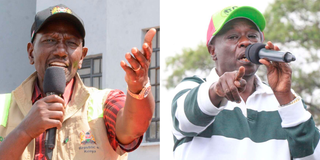
President William Ruto (left) and Democratic Citizens Party (DCP) leader Rigathi Gachagua.
Photo credit: Boniface Mwangi and Bonface Bogita | Nation Media Group
In the ruling camp, Deputy President Kithure Kindiki is facing growing pressure from politicians eyeing his position, with Kirinyaga Governor Anne Waiguru, Ndia MP George Kariuki, National Assembly Majority Leader Kimani Ichung’wah as well as The Service Party boss Mwangi Kiunjuri, all from Mt Kenya region, emerging as possible alternatives.
The contest is also attracting interest from UDA Party’s broad-based partner, ODM, which is seeking a bigger role in the emerging electoral partnership.
ODM chairperson Gladys Wanga, Cabinet Secretaries Hassan Joho (Mining) and Wycliffe Oparanya (Cooperatives) are also mentioned among other leaders.
On the opposition side, the question of who should deputise the eventual presidential candidate is equally complicated by competing regional interests, the ambitions of coalition principals and the need to accommodate influential political figures as the leaders negotiate their electoral future.
Insiders in the Gachagua-led outfit told Sunday Nation that there “appears a general consensus to narrow down the ticket to three key leaders – Wiper leader Kalonzo Musyoka, Linda Mwananchi Movement chief Edwin Sifuna and Jubilee presidential candidate Fred Matiang’i, then rally all principals to the fold.”
“The general agreement is to have the three run the ticket, but the elephant in the room still remains who to fly the flag, who to take up the running mate slot, and what role will the third principal play among other play,” the source said.
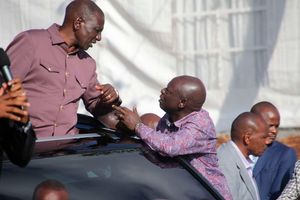
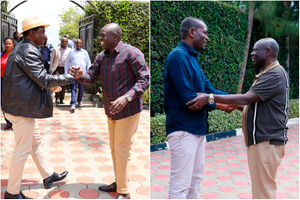
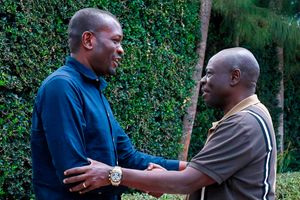
Wiper Democratic Front leader Kalonzo Musyoka (left) and Former Deputy President and Democracy for the Citizens Party leader Rigathi Gachagua at Gachagua's WAmunyoro residence in Nyeri County on October 26, 2026.
Photo credit: Pool
Mr Sifuna has stated that; “We cannot give the ticket to somebody just because he says he has been in the cold for so long. That should not happen because we are not going into government to look for comfort.”
What is emerging is a contest in which the deputy presidency is no longer being viewed merely as an appointment to be made after negotiations over the presidential ticket, but as a central bargaining instrument in the struggle to consolidate political support ahead of the next election.
Ndia MP George Kariuki, a member of president Ruto’s camp, argues that the position of deputy president should be subjected to competition alongside other elective offices rather than being treated as the preserve of the incumbent – Prof Kindiki.
“There is no seat that will not be vacant in 2027, including the President's seat. He will come back to the people to seek a fresh mandate to lead the country and the Deputy President's position will be vacant as well,” Mr Kariuki told Sunday Nation .
The legislator wants the ruling party to allow internal democracy to determine who eventually gets the ticket, arguing that the President should have the freedom to choose a running mate capable of delivering votes.
“On the position of deputy president, for example, we should allow internal democracy to prevail. The person who will be able to marshal more votes for the ticket should be given that opportunity to be DP,” he said.
Mr Kariuki has also cautioned against choosing a running mate merely to satisfy individual political interests, insisting that the decision should be informed by the ability to strengthen the President's electoral fortunes, particularly in the Mt Kenya region.
“The President should not shy away from replacing any of us, including the DP, MP or anybody else. The party leader should be given a free hand. It is his prerogative to decide who his deputy is,” he said.
The lawmaker questioned the growing defections of Mt Kenya legislators from the ruling UDA to Mr Gachagua’s DCP, saying the exodus signals weaknesses in the leadership of the Mt Kenya region.
He said the movement of MPs from a governing party, which has access to State power and resources, to an opposition outfit led by a former deputy president was an indication that something was amiss within the ruling camp.
“We have a sitting Deputy President and a former Deputy President. If MPs are shifting from the camp where we have a sitting Deputy President to the camp of a former Deputy President who is not in power, then it means there is a serious weakness,” he said.
He argued that the political trend should ideally be the reverse, with opposition leaders seeking to join the government rather than legislators abandoning the ruling party.
Mr Kariuki's challenge is unfolding against a campaign by Prof Kindiki's allies to shut down speculation about a change of guard.
Nakuru Governor Susan Kihika and Nakuru Town East MP David Gikaria on Friday endorsed the Deputy President, arguing that he should remain Dr Ruto's running mate in the 2027 elections.
‘Stop being greedy,’ Susan Kihika tells Mt Kenya leaders
At Kiratina Grounds in Nakuru East, Ms Kihika said the county stood behind Prof Kindiki and dismissed calls to replace him as personal ambition.
Mr Gikaria cited his performance, nationwide engagements and efforts to bring leaders together, saying he could be positioned for the presidency in 2032.
The endorsements expose competing regional claims within Mt Kenya: politicians from the East back Prof Kindiki, while some from the West argue their larger voter numbers should count.
Ms Waiguru's claim rests on her Kirinyaga governorship and networks; Mr Ichung’wah and Mr Kiunjuri are also mentioned.
Polling has added another layer, with two recent surveys producing different pictures of whom voters would prefer Dr Ruto to pick.
A TIFA Research survey conducted between October 26 and November 5 found that 55 per cent of president Ruto supporters preferred Prof Kindiki.
Homa Bay Governor Gladys Wanga came second in the TIFA survey with 12 per cent, followed by Mining Cabinet Secretary Hassan Joho at nine per cent. ODM Party Leader Dr Oburu Oginga, Prime Cabinet Secretary Musalia Mudavadi and National Assembly Speaker Moses Wetang'ula each scored four per cent.
A Swiss Poll International survey released on October 28 placed Waiguru at 43 per cent, ahead of Prof Kindiki at 30 per cent and Ms Wanga at 13 per cent. Mr Oparanya received six per cent and Joho four per cent.
Political analyst Stephen Ngari says the figures make the deputy presidency a central political issue.
He describes Prof Kindiki's 55 per cent in TIFA as a strong statement among President Ruto supporters, but not one that ends other regions' bargaining claims.
Mr Ngari says the choice will weigh loyalty and continuity against a running mate's capacity to mobilise votes and manage coalition interests. The poll is an indicator, he argues, but the eventual decision will depend on negotiations and voter sentiment.
The ODM factor is particularly significant. Treasury Cabinet Secretary and former ODM national chairperson John Mbadi says the party intends to negotiate with Dr Ruto through a formal agreement, arguing that Raila Odinga's legacy is the ODM party and that the Luo community should remain organised under its banner.
Mr Mbadi said President Ruto has agreed to sign an agreement with ODM before February 2027, describing it as a UDA-ODM deal.
He challenged sceptics to take his assurance seriously, saying he would not make the claim without confirmation when it could cost him his Cabinet position.
ODM leaders demand a signed pre-election deal with UDA
The demand signals that the party's cooperation with the administration could extend beyond supporting Dr Ruto's re-election, placing Prof Kindiki's incumbency within a wider negotiation over executive power and political reward.
But Ugenya MP David Ochieng', leader of the Movement for Democracy and Growth, has rejected the prospect of replacing DP Kindiki with a Luo politician. He said the community should not pursue the presidency or deputy presidency in the coming election, and backed a Ruto-Kindiki ticket.
Mr Ochieng' invoked president Ruto's support for Raila in 2007 and urged Luo leaders to concentrate on their responsibilities. "There is only one Deputy President in the country, his name is Abraham Kithure Kindiki and he will not be changed. We shall go with Ruto-Kindiki to the ballot," he said when he hosted Prof Kindiki in his constituency on Thursday.
The remarks expose differing positions within the broad-based arrangement: some ODM figures see the deputy presidency as a legitimate negotiating demand, while others favour continuity. The disagreement, analysts say, could complicate efforts to translate cooperation between UDA and ODM into a settled electoral pact.
The opposition camp faces a different calculation. Mr Gachagua's alliance is still taking shape, without a settled presidential ticket or running mate. Names mentioned include; Mr Musyoka, Mr Sifuna, Dr Matiang'i, Martha Karua, Eugene Wamalwa and Justin Muturi.
The choice, insiders say, will depend partly on who secures the presidential nomination.
“If Kalonzo becomes flag bearer, the coalition must consider how to accommodate Mt Kenya, an important electoral constituency and Gachagua's political base. If Matiang'i or another leader emerges as candidate, the regional and party calculations will change.”
Pundits warn that the opposition must balance regional representation, avoid alienating coalition principals and identify a running mate who can contribute votes without deepening internal rivalries.
Mr Gachagua's influence in Mt Kenya and the ambitions of leaders seeking a place in the coalition, they say, will shape the negotiations.
For Dr Ruto, the dilemma is how to retain Prof Kindiki while responding to demands from Mt Kenya West and ODM.
Analysts warn that replacing him could unsettle the current arrangement; retaining him could disappoint politicians who believe their regions or parties deserve a greater share of the ticket.
With campaigns taking shape, both camps face a choice between clarity and prolonged bargaining.
Prof Kindiki has incumbency and a strong showing among president Ruto supporters; Ms Waiguru's poll result and Mr Kariuki's declaration keep the Mt Kenya West question alive while ODM's demand adds another front.