In 1974, Ol Kalou was the political headquarters of JM Kariuki, the fiery Nyandarua North MP who had become one of the boldest critics of Jomo Kenyatta’s government and the powerful Kiambu establishment around it.
The old Nyandarua North constituency covered much of what is today Ol Kalou, Ol Jorok and Ndaragwa. From his base in Ol Kalou, JM built a formidable political network and cultivated the image of a politician who could speak directly to the poor, the landless and those left behind by independence.
As the 1974 General Election approached, the State moved to weaken him. JM was denied permits to hold campaign rallies and political meetings. While his rivals criss-crossed the constituency, addressing voters and mobilising support, he was effectively silenced.
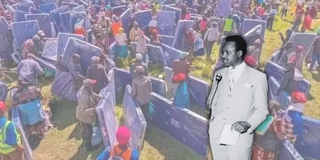
Beneath his portrait were the words: “If this man has done nothing for you, do not vote for him.”
The late politician Josiah Mwangi (JM) Kariuki.
Photo credit: File | Nation Media Group
It was both a manifesto and a dare. Unable to speak from public platforms, JM placed his record before the electorate and asked the voters to judge him. His wife and supporters distributed the posters across the constituency while he remained locked out of the campaign trail.
When the ballots were counted, the government’s strategy had collapsed. JM won by a landslide, reportedly polling about 16,000 votes against roughly 3,000 for his rivals. Nyandarua North had defied the provincial administration, the licensing machinery and the political forces determined to remove its MP.
That victory was more than JM’s personal triumph. It established a tradition of electoral defiance in Nyandarua: the State could deny a politician a platform, deploy its officials and support a preferred candidate, but it could not always command the voter.
The people had discovered the power of the secret ballot. They could listen to the government, receive its promises and watch its machinery at work—and still vote as they pleased.
Fifty-two years later, that spirit returned to Ol Kalou.
On July 16, 2026, residents went to the polls in a by-election that had become a contest between the enormous machinery of the government and the new Democracy for the Citizens Party. The ruling United Democratic Alliance backed Samuel Muchina Nyaga. The DCP fielded Sammy Douglas Kamau Waweru, popularly known as Kamau Ngotho.
For weeks, Ol Kalou appeared to have become the temporary capital of Kenya.
Cabinet secretaries, principal secretaries, MPs and government officials descended on the constituency. Projects that had waited for years suddenly sprang to life. Electricity poles appeared. The railway stirred. Boats and fishing equipment arrived. Gas cylinders, mattresses, bedsheets, shoes and seedlings were distributed. Roads were launched, title deeds issued and promises made. It was a replica of the 1974 general election promises to residents of Nyandarua North if they voted out JM Kariuki.
There were also widespread allegations of cash handouts. The electoral commission acknowledged receiving reports of voter bribery, the misuse of public resources, violence and the mobilisation of gangs. One government MP publicly spoke of receiving hundreds of thousands of shillings for campaign meetings and spending Sh1.2 million in a single day. Residents were reportedly paid between Sh1,000 and Sh3,000 to attend rallies.
Government officials, led by Energy Principal Secretary Alex Wachira, pose for a group photo with some residents of Ol Kalou who were presented with six-kilogram gas cylinders each on July 7, 2026.
Photo credit: Boniface Mwangi | Nation Media Group
When the votes were counted, Kamau had secured 35,440. The UDA candidate received a partly 5,450. It was not merely a defeat; it was a rout of nearly seven to one. Turnout stood at 57 per cent, with 41,656 ballots cast from 73,480 registered voters.
It appears that Ol Kalou had taken the development and rejected the political invoice. The result recalled JM’s 1974 victory because Ol Kalou was not just another part of his former constituency. It was his political headquarters.
His Kanyamwi Trading Company operated from a building he owned in Ol Kalou town. The premises housed his constituency office, wholesale shop, bar and restaurant. Nearby was his Riverside Farm, overlooking the township. Ol Kalou was where his business empire met his political organisation; it was the centre from which he maintained his Nyandarua North network. It appears that the JM spirit has continued to define politics of defiance in Nyandarua. JM had taught the electorate an important lesson: a voter could judge power without seeking permission from the State.
That spirit crossed the old constituency boundary into Kipipiri, an area carved out of the former Nyandarua South.
In 1995, President Daniel arap Moi and Kanu entered the Kipipiri by-election determined to prove that the return of multiparty politics had not weakened the ruling party. The seat had fallen vacant following the death of Lavan Muchemi, the FORD-Asili MP elected in 1992.
Kanu fielded Joe Maina, while the Democratic Party backed Paul Githiomi Mwangi. What followed was one of the most highly charged by-elections of the era, heavily bankrolled by the government and the Central Province Development Group—a network of tenderpreneurs, parastatal chiefs and wealthy political brokers from central Kenya.
The State poured its full weight into Kipipiri. Electricity poles were hurriedly planted in areas that had remained without power. Money, projects and promises flowed into the constituency. Moi’s calculation was simple: development delivered during an election campaign would create a political debt, payable at the ballot box.
Githiomi Mwangi received 14,858 votes, 82.5 per cent of the valid ballots. Joe Maina, despite the State’s investment, managed 3,144. Kipipiri had converted the government’s show of strength into public humiliation.
The Taifa Leo headline captured the political sting: “Kanu yaonja pilipili Kipipiri”—Kanu tastes the pepper of Kipipiri.
The electricity poles later became part of the legend. Accounts claimed that some were removed after Kanu’s defeat, as if the government was repossessing a rejected campaign promise. Whether every detail of that folklore is exact matters less than what the story came to represent: voters had refused to allow State generosity to determine their political choice.
The parallels with Ol Kalou are striking. In both contests, electricity poles became campaign symbols. In both, government officials flooded the constituency with projects and inducements. In both, the opposition candidate won by an overwhelming margin. The 2026 Ol Kalou campaign itself revived memories of the Kipipiri humiliation.
A portrait of Nyandarua MP Josiah Mwangi Kariuki, popularly known as JM Kariuki.
Photo credit: Francis Mureithi | Nation Media Group
Nyandarua has also produced individual politicians who carried this rebellious tradition beyond election day.
After JM came Kimani wa Nyoike, the trade unionist elected to represent the old Nyandarua South in 1979. He entered Parliament as a relative radical at a time when conformity was becoming the price of political survival. His trade union background had already placed him at odds with authority. He would endure suspension from Kanu, detention and political persecution, but remained associated with the struggle for pluralism. He later contested the presidency in 1997.
Muriuki Karue followed in Ol Kalou. He entered Parliament on a Democratic Party ticket in 1997, when Kanu still controlled the State, and later became known as the father of the Constituency Development Fund. His proposal challenged the old system in which development flowed from Nairobi at the discretion of ministers and presidential loyalists. CDF sought to move a portion of national resources directly to constituencies—not as a gift from the government of the day, but as an entitlement belonging to citizens.
A portrait of the late JM Kariuki. 40 years ago, on March 2, 1975, the charismatic MP for Nyandarua North was brutally murdered.
Photo credit: Illustration | J Nyagah
JM’s persecutors believed that without meetings he could not campaign. Moi believed electricity poles would deliver Kipipiri. The architects of the Ol Kalou campaign apparently believed that mattresses, gas cylinders, boats, roads, money and the presence of the State’s most powerful officials would overwhelm the opposition. They also brought goons during the voting to cause fear.
The 2026 Ol Kalou result was therefore not simply a victory for Kamau or a defeat for UDA. It was the latest chapter in a longer argument between the State and the people of Nyandarua over who owns the vote.
The answer first thundered through Nyandarua North in 1974, when a silenced JM Kariuki placed his portrait before the electorate and asked to be judged by his record.
It echoed in Kipipiri in 1995, when voters accepted the arrival of electricity poles but rejected Kanu. And it returned to Ol Kalou in 2026, when residents received what the government brought, entered the polling booth alone and voted as they pleased.