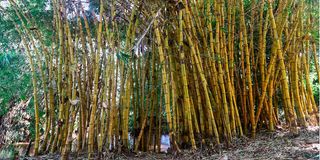
Yesterday, the world marked World Bamboo Day, celebrating one of nature’s most remarkable gifts: a plant that grows fast enough to rebuild economies, strong enough to build homes and resilient enough to restore ecosystems. Few resources offer such promise for livelihoods, economic development and environmental restoration.
That promise matters more than ever. As a country and continent, we stand at a crossroads and must pivot towards ways of building that honour both the planet and the people who depend on it.
A recent UNEP report, Limiting Overshoot, makes the urgency clear. The world is likely to cross the 1.5°C warming threshold within the next few years. We have already glimpsed what this means in extreme weather and the disruption caused by melting glaciers. These are not distant warnings but present realities.
Yet the story is not over. UNEP says it remains possible to limit the scale and duration of the overshoot and eventually return to below 1.5°C. The window is narrowing, but it has not closed. What we do next therefore matters enormously.
For Africa, the challenge is especially stark. The continent accounts for less than 10 per cent of global greenhouse gas emissions, yet is among the least able to cope with the impacts of climate change.
Even as we confront this reality, we must build, live and create jobs. This is where bioproducts such as bamboo present enormous opportunities.
We have seen the role of bamboo in the built environment in India, China and Indonesia. A recent learning journey to the Brazilian Amazon also showed us how the bioeconomy can help communities flourish while preserving the environment.
China offers another important lesson. It has demonstrated how bamboo can be connected to economic development while generating knowledge and technologies that can be shared with other developing countries. Its bamboo industry now has an annual output value of about $74.4 billion and supports more than 29 million jobs across the value chain.
A 2020 report by the United Nations Office for South-South Cooperation noted that technologies for climate change adaptation and mitigation developed in developing countries can be more suitable and cost-effective for others facing similar geographical, climatic, cultural and socioeconomic conditions.
This creates an opportunity for countries in the Global South to leapfrog some of the costly pathways taken elsewhere by learning from one another.
For Kenya, the bamboo revolution is gathering momentum. In September 2020, bamboo was classified as a cash crop. In 2022, the country developed the National Bamboo Policy to promote the sustainable management and commercialisation of the resource.
The policy momentum is real, and now is the time to seize it.
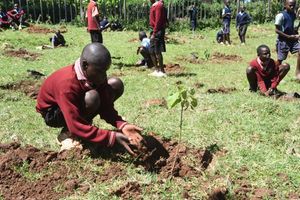
Bamboo offers a genuine alternative. It can substitute for timber, create livelihoods and restore degraded land. It can also help us build stronger, more climate-resilient structures using local materials.
Last month, at Toolkit Skills & Innovation Africa, we explored bamboo’s bioeconomy and asked whether we could connect the sector’s many pockets of success into stronger local and regional supply and demand, while unlocking new value chains.
The ingenuity of people building with bamboo made the opportunity feel within reach. Entrepreneurs said, “Buy from us,” so demand can grow. Architects said they would use bamboo if the material were available in the forms they need.
And we do not have to start from zero. In India, China, Indonesia and the Philippines, partners are ready to engage African artisans, exchange knowledge and train the next generation of skilled bamboo builders. This is South-South collaboration at its best. Our task is to connect these experiences, adapt them to our contexts and scale them.
Bamboo shows us that solutions already exist. We need to build the markets around them and learn from those who came before us. The question is whether we are willing to learn — and act.
Last week, the world lost one of its most earnest bamboo enthusiasts. My husband, Lars R. Lindkvist, saw the future long before many of us caught up.
Fifteen years ago, through Waterstone, he partnered with the Green Belt Movement to demonstrate that local communities could lead bamboo production and processing themselves, from the ground up.
His foresight and unwavering belief in a community-led bamboo economy are now bearing fruit. They will remain a living legacy of the work we built together.
Ms Mathai is the MD for Africa & Global Partnerships at the World Resources Institute and Chair of Wangari Maathai Foundation