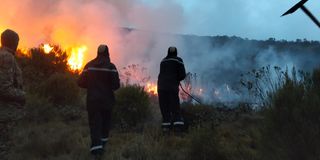
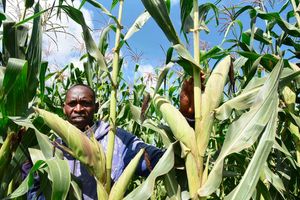
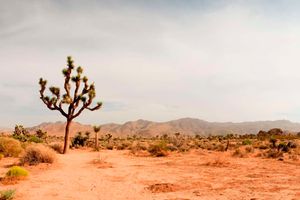
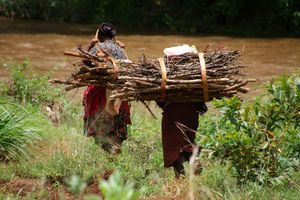
Change is everywhere now. Ice sheets are getting thinner and thinner, the timing of seasons is becoming more and more unreliable, and scientists warn of tipping points that, once crossed, cannot be uncrossed.
Almost daily now, we hear another story of El Niño sweeping across the globe re-writing everything we knew about storms and how we prepare. The same planet that is testing us is also reminding us how deeply we are connected: one warming current in the Pacific can touch a farmer in Kenya and Ethiopia, a fisherman in Peru, a family in Indonesia. If the world is changing, then so must we, with greater awareness, stronger compassion, and the courage to build a future that can weather whatever tides may come.
The truth is actually that the planet is shifting faster than most of us can absorb, and it is easy to feel that the pace of loss is challenging our ability to answer it. Working on nature protection and restoration as we do at the World Resources Institute, there was some good change recently. For more than a decade, the World Resources Institutes’ Global Forest Watch has made open-source data on forests real at planetary scale, putting free, satellite-powered data on the world’s forests into the hands of governments, journalists, rangers, and ordinary citizens. Since 2014, more than nine million people, from every country on Earth, have used it to watch trees.
Now the watcher is changing. On September 21, 2026, the World Resources Institute announced that Global Forest Watch is now Global Nature Watch, a new name for an expanded scope. Global Nature Watch will carry that same open transparency into other ecosystems beyond forests. Forests will remain at the heart of the mission of the tool. I was excited about this change because in the midst of the uncertainty of climate change, this is one change that brought some light! In an era when the planet is changing faster than we can cope, the tools we use to see that change must evolve just as fast.
In our work on the conservation and restoration of nature, one thing that has always been clear is that we constantly have to measure and monitor our progress. Trees grow and die. Wetlands expand and contract. Grasslands degrade and recover. The rhythm of nature keeps playing. In addition, climate change is accelerating and distorting that rhythm, and extreme weather events are becoming increasingly consequential for communities and ecosystems.
For years, WRI’s Global Forest Watch provided an online platform which facilitated the management, monitoring, and exchange of forest-related information. It was a centralised hub where various stakeholders such as government agencies, researchers, NGOs, and local communities could access and contribute to forest-related data, knowledge and resources. The value of this information was that we could look at a map and see where forests were disappearing, where change was occurring, how quickly and, importantly, where action was required.
This expansion comes at an important moment. We are in an era where technologies available to monitor nature are changing or becoming better. Satellites can observe Earth at increasingly high resolution. Sensors can collect information in places which were previously difficult to reach, and artificial intelligence can help analyse enormous amounts of information and identify patterns that would take humans considerably longer to detect.
Global Nature Watch is embracing some of these possibilities. Its new Horizon platform uses artificial intelligence alongside geospatial data and satellite observations to make environmental information more accessible and easier to interrogate. With the simplification of information, it can help more users to understand what is happening to landscapes across the globe. We have the tools we need to meet the challenge of a changing planet.
And Africa is embracing change too. We have already seen tech innovators working in this space. Nairobi-based Amini AI, founded by Kate Kallot, builds data and AI infrastructure for governments and enterprises across the Global South. In addition, at the Wangari Maathai Hackathon last year, I was impressed by the monitoring tools created by young people who showed that the continent can combine both technological skills and a love for the environment into a system that can help monitor and conserve it. In the future, this means African-owned data systems, climate and environmental intelligence, and computing capacity that belongs to us.
For a continent facing some of the most significant consequences of climate change, this is particularly important. This does not mean that new technologies such as artificial intelligence are flawless. This is exactly why expert knowledge and the knowledge of people living within that local landscape are still important, as they help us come to a correct conclusion.
Technology can show us what is changing and where, but only political will can decide what we do about it. A map of vanishing forests means little if no one acts on what it reveals. Global Nature Watch, Horizon, and Africa’s young innovators give us sharper eyes, yet sight without courage changes nothing.
We need leaders who treat data as a mandate: enforcing protections, funding restoration, and investing in African-owned systems that put knowledge in local hands. The tools are ready, and the evidence is open to all. What remains is the resolve to match innovation with action, and to ensure that the planet’s changing story is one we choose to shape.
Ms Mathai is the MD for Africa & Global Partnerships at the World Resources Institute and Chair of Wangari Maathai Foundation