Today, we celebrate World Cities Day under the theme “Regenerating the City: Adequate Housing for All”. The theme speaks directly to the challenges facing Nairobi and other rapidly growing African cities.
Africa has a housing shortage of at least 50 million units, with the financing required to bridge the gap estimated at more than $1.4 trillion.
Millions live in informal settlements, and Africa’s urban population is projected to reach 1.5 billion by 2050, further straining housing supply. As cities expand, safeguards must ensure homes are affordable, safe and durable. This requires appropriate building codes, effective inspections, secure land tenure and certified builders.
Housing deficits continue to widen: Nigeria has an estimated shortfall of 17 million units, Kenya two million, Angola nearly two million, while Cameroon and Côte d’Ivoire each face deficits exceeding 700,000 units. Rapid urbanisation, driven by the search for jobs and better opportunities, is intensifying the pressure.
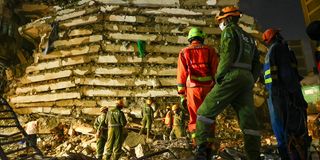
But increasing housing supply must not come at the expense of quality. A home must offer more than shelter; it must guarantee safety, dignity and access to essential services. The Eastleigh tragedy raises serious questions about how our cities regulate and monitor construction, and how deeply corruption has infiltrated building practices. Building permits, structural assessments and inspections are not bureaucratic hurdles designed to frustrate developers. They are safeguards for occupants and surrounding communities.
When developers disregard them, lives are put at risk. When enforcement authorities fail to act, the consequences can be devastating. If an earthquake struck Nairobi today, how many buildings would remain standing? How many meet the highest safety standards?
These questions demand more than investigations that eventually fade from public attention. Developers who flout building regulations must face consequences, as must public officials who neglect their responsibilities. Architects, engineers, contractors and their professional bodies also have a duty to uphold required standards. This calls for transparent approval processes, regular inspections and accountability at every stage of construction.
At the same time, we must acknowledge that the housing crisis requires urgent attention. With affordable housing scarce, land expensive and demand rising, the pressure to build quickly, sometimes at the expense of safety, is immense. We cannot simply demand stricter regulations while ignoring the circumstances that make decent housing inaccessible to millions.
This is where urban regeneration becomes important. It should not simply mean replacing older buildings with taller ones or transforming neighbourhoods to attract investment. It should improve living conditions through the rehabilitation of unsafe buildings, upgrading of underserved neighbourhoods and provision of reliable water, sanitation, transport and other essential services.
We must also guard against regeneration fuelling gentrification. It should not price original residents out of their neighbourhoods but improve their livelihoods. The process must be participatory, involving local communities at every stage.
Environmental considerations must also inform how we build. Poorly planned construction can overwhelm drainage systems, increase exposure to flooding and strain infrastructure. As climate change intensifies these risks, cities must prioritise resilience alongside housing provision. Safe, affordable homes must form part of a broader vision of sustainable urban development.
As we mark World Cities Day, the Eastleigh tragedy should remind us that building a city is not merely about expanding its skyline. It is about creating places where people can live, work and pursue their ambitions safely. Africa’s housing deficit is real and addressing it is urgent. But so is our responsibility to ensure that the homes we build do not threaten the lives they are meant to shelter.
What is the value of development if it comes at the expense of human life? The victims of such tragedies deserve answers, accountability and meaningful reforms. Every resident deserves the assurance that institutions entrusted with their safety are doing their jobs. The true measure of a city is not how high its buildings rise, but whether the people living beneath their roofs can trust that they are safe.
Ms Mathai is the MD for Africa & Global Partnerships at the World Resources Institute and Chair of Wangari Maathai Foundation