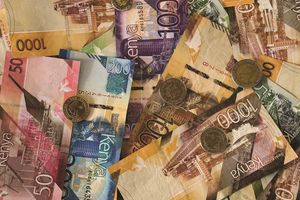
The going rate, in Homa Bay, was betweenSh2,000 and Sh4,000. You would get a little more if you were ferried in from Migori. For that sum, on the weekend of August 16, young men were handed machetes, clubs, and a purpose: to stop a political rally in a county supposed to belong to everyone. Roughly 500 youth were mobilised, the intelligence services say. Five hundred machetes were distributed. A human being can now be rented to commit organised violence in this country for less than a decent pair of shoes.
It tells you there is a reliable supply of young Kenyans desperate enough to sell a day of their conscience for pocket change. That someone has the money, the logistics, and the confidence to organise them. And that whoever organised it expected, quite reasonably, to face no consequence worth the name.
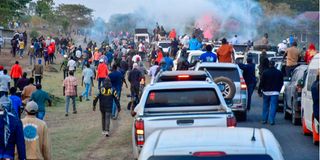
What happened in Homa Bay was not a riot since it was not spontaneous. This particular case was surgically put together. Meetings around the deployment of violence against the opposition ranks began weeks in advance. Youths were instructed, days before anyone arrived, to block the visiting politicians and check the hotels for them. A Homa Bay hotel was stormed, 21 rooms ransacked, the guests forced out, the CCTV destroyed so there would be no record. Roads were sealed with boulders and logs. Goons attacked a hospital, hunting for injured opponents among the patients. Journalists were beaten and their equipment stolen. A police constable died when a stone struck him as he drove. A Ugandan woman was run over. Dozens lay injured with various wounds, and at least one was left needing an amputation.
This is the part we must all refuse to look away from: none of this was improvised. Every element- the recruiters, the transport, the weapons, the cash, the target list, the instruction to search the hotels- required planning and money and a belief that it could be done in the open. And it was. People do not organise 500 machetes and hand them out at roadblocks unless they have concluded that there is no consequence on the other side of these actions.
And I think it’s extremely important that we are honest about where that confidence comes from. For two years, Kenyans have watched hired and irregular violence become an ordinary feature of political life. We watched goons infiltrate the Gen Z protests to discredit them. We watched unmarked men take people off the streets. We watched the state treat organised muscle as a tool to be wielded, deployed when useful and disowned when inconvenient. When those who govern normalise the renting of violence, they cannot feign surprise when it spreads. A weapon introduced into a system does not stay in the hands that introduced it.
And so the instrument has metastasised. The goon is no longer an aberration in Kenyan politics. He has become an institution, a standing capability any sufficiently funded actor can summon. Homa Bay was intra-party, Nyanza turned on itself, and the regime will be tempted to shrug at it as someone else's quarrel. That would be a convenient misreading. The pathology on display- that access to a stronghold can be denied by paid steel, that an opponent can be flushed from a hotel, that a rally can be cancelled by ambush- is a national inheritance now. It was modelled at the top and has trickled down to a roadblock outside Ndhiwa.
This, as the country is less than a year from a general election. If a faction can be met at the county line with machetes and hospital raids in August 2026, what will 2027 look like when the prize is the presidency itself? Every episode that passes without accountability is a lesson absorbed by the people planning the next, and the lesson is always the same: it works, it is cheap, and no one important pays for it.
The official response follows the same, same script. Arrests were made, thirty-seven or so, mostly foot soldiers caught holding the weapons. A pistol was recovered. Warrants were issued for a mobiliser or two. The cohesion commission summoned a politician over his recorded remarks, and he asked for a postponement. None of it reaches the disease.
The young man arrested with a panga is the most disposable link in the entire chain. He is not the one who wired the money, drew the target list, or promised, by word or knowing silence, that there would be cover. Until the financing is traced and the organisers named, the arrests are theatrical, and everybody involved knows it.
There is a version of Kenya where a party can walk into any county, hostile or friendly, and hold a rally under the protection of a neutral state. That version is written plainly into the Constitution, in the freedoms of assembly and movement and speech. The version we are living in is one where those freedoms extend precisely as far as the better-funded side permits, and no further. The difference between those two countries is enforcement, a choice someone in authority keeps declining to make.
Sh4,000 — that is what it currently costs to help cancel a Kenyan's constitutional rights for a day. The figure will keep falling, and the violence rising, for as long as the people who set the price remain anonymous.