The plan to import a 540,000-tonne maize consignment from Zambia has triggered a court battle, with questions now being raised over how the deal was authorised, whether it was part of the government's maize import programme and whether the Kenyan importer was promised special tax or regulatory concessions.
The case, filed at the High Court in Mombasa, has put under scrutiny a deal that would see about six million 90-kilogramme bags of maize enter Kenya in phases.
Mr James Mwikabi is seeking to stop the importation, accusing the government of taking steps to facilitate the massive consignment before the legality of the deal is determined.
The petitioner wants the court to intervene urgently, arguing that the importation is imminent and could be completed before the petition is heard and determined, thereby defeating the purpose of the case.
“Pending the inter partes hearing of this application, this Honourable Court be pleased to issue an interim conservatory order restraining the respondents, whether by themselves, their servants, agents, officers or any person acting under their authority, from implementing, facilitating, approving, clearing, releasing, or otherwise giving effect to the proposed importation of approximately 540,000 metric tonnes of maize by Baita Trading Company Limited, whether under the Government’s maize-import programme or otherwise,” Mr Mwikabi says in the application.
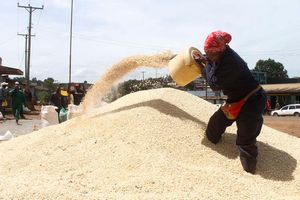
Farmers dry maize in Elburgon town, Nakuru County.
Photo credit: File | Nation Media Group
He is also seeking orders stopping any special treatment the importer may receive, including allocation of a maize quota, duty-free treatment, customs exemption, remission, preferential tariff, or any other fiscal or regulatory concession connected to the consignment.
On October 5, the High Court in Mombasa certified the case as urgent. It directed that the court documents be served on Agriculture Cabinet Secretary Mutahi Kagwe and his Treasury counterpart, John Mbadi.
The documents are also to be served on the Commissioner General of the Kenya Revenue Authority, the Kenya Plant Health Inspectorate Service, the Kenya Bureau of Standards, the Attorney-General, the Kenya Ports Authority and Baita Trading Company Limited, among other respondents.
“I have read the application. I am satisfied that the application is urgent and it is certified as such,” the court said.
Mr Mwikabi says his challenge is not directed at maize imports or lawful international trade, but at the exercise of public power in facilitating the particular transaction.
He wants the government to disclose whether Baita Trading Company Limited was allocated any portion of the national maize-import programme and whether the firm has been granted or promised duty exemption, remission, preferential tariffs, customs concessions, regulatory exemptions or special clearance.
“The petitioner’s concern is the exercise of public power by the respondents in relation to the transaction, including whether the 9th Respondent has been allocated any portion of the Government’s maize-import programme,” he says.
The petitioner says the government announced on August 19 its intention to facilitate the importation of about 25 million 90-kilogramme bags of maize to address an anticipated national deficit, increase availability and protect consumers from rising prices.
On August 28, Baita Trading Company Limited announced that it was prepared to purchase large quantities of maize from Zambia for supply to Kenya.
According to Mr Mwikabi, the company subsequently engaged officials in Zambia and entered into an agreement with the Food Reserve Agency of Zambia for the purchase and export to Kenya of about 540,000 metric tonnes of white, Grade A, non-GMO maize.
The quantity, equivalent to about six million 90-kilogramme bags, represents a substantial portion of the government’s stated import requirement and has raised questions about the relationship between the private transaction and the national import programme.
“The precise relationship between the firm’s transaction and the Government’s 25-million-bag maize-import programme has not been adequately disclosed to the petitioner,” he says.
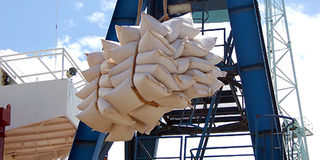
A Kenya Ports Authority crane offloads some of the 8,177 tonnes of maize imported from Malawi at the port of Mombasa on August 08, 2011.
Photo credit: File
Mr Mwikabi says he has also not been furnished with the administrative records showing whether Baita was allocated a share of the government programme or offered special treatment to facilitate the imports.
He argues that the relevant information is largely in the custody of the government agencies named as respondents, leaving him unable to establish the legal basis upon which any concessions may have been granted.
The petitioner has also raised queries about public revenue to be lost. Mr Mwikabi says any decision to waive or vary taxes must comply with the constitutional safeguards under Article 210, warning that revenue could be lost if the maize is cleared under a disputed fiscal arrangement.
“If the firm is to benefit from any waiver, remission, preferential tariff or other fiscal concession, the petitioner believes that the legal basis, conditions and criteria governing such benefit must be disclosed and demonstrated to be consistent with the Constitution and applicable legislation,” he says.
He has also raised concerns over the impact of the imports on Kenyan maize farmers, given the sheer volume involved.
Mr Mwikabi wants the government to produce any maize balance-sheet analysis, economic assessment, food-security assessment, stakeholder consultations or other material it relied upon in determining the quantity and manner of the imports.
He says the court is not being asked to determine the appropriate market price of maize or substitute its judgment for that of the government, but to establish whether the potential consequences for farmers, domestic production, food security and the maize market were considered before the transaction was facilitated.
The petitioner has also clarified that he is not alleging that the maize is unsafe or that any regulatory authority has unlawfully cleared it. His concern, he says, is whether all mandatory quality, food-safety, plant-health and standards requirements will be met before the consignments are released.
He warns that allowing the imports to proceed could make it difficult to reverse the consequences if the court later finds that the government’s actions were unlawful.
“Once the maize is cleared, released into the Kenyan market, distributed, milled and consumed, it may be practically impossible to restore the original position,” he says.
Mr Mwikabi maintains that the case is a constitutional challenge over the exercise of public power and is not an attempt to interfere with Baita’s private commercial activities.
“The petitioner is therefore not seeking a blanket prohibition against maize imports or against the company’s lawful commercial activities, but seeks temporary protection of the subject matter pending the Court’s examination of the legality of the governmental actions complained of,” he says.
He wants the court to preserve the status quo pending determination of the dispute, arguing that this would protect public revenue, farmers and consumers while ensuring that the court retains the ability to grant effective relief if the petition succeeds.