Five Kenyan-based clean cooking energy firms are seeking $43 million (Sh5.56 billion) from investors amid the recent collapse of peer start-up Koko Networks, which operated in the same sector.
The firms—Ignis Innovations, Faith Engineering, Burn Manufacturing, Feion and EcoBora—are part of a broader pipeline of projects contained in Kenya’s official investment projects catalogue, through which the government and private sector are jointly pitching opportunities worth $15.5 billion (Sh2.004 trillion) to global investors.
Data from the catalogue shows Faith Engineering and Ignis Innovations are seeking the largest share of funding at $15 million each (about Sh1.94 billion) to scale up their operations.
Burn Manufacturing is eyeing $10 million (Sh1.29 billion), while Feion and EcoBora want $2 million (Sh258.7 million) and $1 million (Sh129.3 million), respectively, for scaling up.
The combined $43 million funding requirement points to the growing interest in clean cooking as Kenya pushes to transition millions of households to safer and more sustainable energy sources. The sector is also attracting attention due to its potential to generate carbon credits.
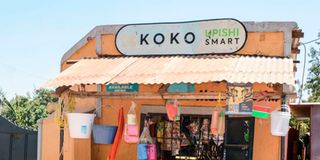
However, the recent collapse of Koko Networks—a high-profile player that had attracted significant capital to roll out ethanol-based cooking solutions—has raised concerns about business model sustainability and regulatory risks.
Koko filed for administration on the brink of bankruptcy on February 1 this year after Kenyan authorities refused it a letter of approval to sell carbon credits.
Ignis, which designs, finances, deploys, and operates modern institutional steam kitchen infrastructure that replaces traditional firewood-based cooking systems, says the technology cuts fuel costs by up to 60 percent. It is targeting 400 institutions by 2027 and more than quadrupling that number by 2030.
“The investment will scale infrastructure deployment, expand manufacturing and installation capacity, and support national rollout through blended finance (senior debt + concessional capital),” says the firm.
Faith Engineering, which manufactures the Meko Friendly Steam Cooking System for institutional kitchens, says securing the $15 million investment will support manufacturing scale-up, working capital, and regional expansion across institutional markets.
Another player, Burn Manufacturing, which produces the ECOA Pro institutional stove, says fresh funding will support institutional scale-up, fuel supply expansion, and carbon project financing infrastructure.
Women- and youth-led clean energy manufacturer Feion designs and manufactures locally made electric pressure cookers called Jiko-Kul EPCs for institutional kitchens. It is seeking funding to scale up and deliver the innovation on a national scale.
EcoBora, a Kajiado-based manufacturer of solar- and grid-powered institutional cookstoves, says in the catalogue that fresh investment will support its expansion plans and monetisation of its carbon infrastructure. The firm owns a 20,000-square-metre factory with a production capacity of approximately 250 stoves per month.
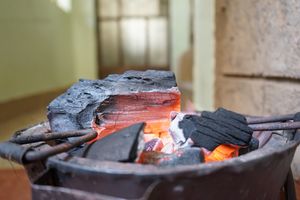
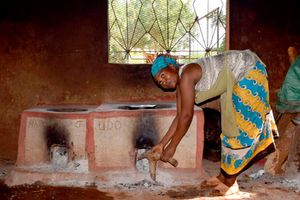
Countries worldwide are making strides in adopting clean cooking technologies
Photo credit: FILE | SHUTTERSTOCK
The inclusion of the five firms in the national investment catalogue, despite the collapse of Koko, signals continued confidence by policymakers in the sector’s long-term prospects.
Clean cooking has been identified as a priority area within Kenya’s broader push toward renewable energy and climate-aligned investments.
The projects are being marketed to investors alongside opportunities in infrastructure, manufacturing, agriculture, and technology, as Kenya positions itself as a regional hub for sustainable and impact-driven investments.
Millions of households are yet to transition to modern cooking solutions, making the sector critical in Kenya’s energy transition.
The projects, outlined in a catalogue prepared by the Kenya Investment Authority, formed part of the country’s pitch at the recently concluded two-day summit in Nairobi, which attracted deep-pocketed investors, including Africa’s richest man, Aliko Dangote.
The catalogue contains about 59 key projects, including those seeking funding under the public-private partnership (PPP) model and those in the hands of private sector companies.
Peter Scott, founder and chief executive of Burn Manufacturing, which makes Jikokoa, an energy-saving charcoal stove at the company in Ruiru, Kiambu County on August 13, 2020.
Photo credit: Sila Kiplagat | Nation Media Group
The projects seeking funding span diverse sectors, including infrastructure, energy, agriculture, manufacturing, and real estate, with the amounts being sought ranging between $3 billion (Sh388 billion) and $1 million (Sh129.3 million).
“Kenya offers a diverse set of investment opportunities across sectors where market demand is expanding, competitiveness is strengthening, and scale can be achieved,” reads the project dialogue.
“These priority sectors reflect where value is being created today and where investors can build sustainable businesses aligned with Kenya’s role as a regional and global investment platform.”