Kenya’s inflation rose to 7.3 per cent in October, the highest since July 2023, as costlier fuel pushed up transport and food prices and squeezed household incomes.
The Kenya National Bureau of Statistics (KNBS) said on Friday that the rate was up from 6.8 per cent in September. It is now close to the top of the government’s target range of five to 7.5 per cent.
The reading piles pressure on the Central Bank of Kenya, which weighs the cost of living and the exchange rate when setting its benchmark lending rate.
Transport was the biggest driver, with prices up 17.1 per cent in the year to October, the fastest rise among the 13 categories used to compute the Consumer Price Index (CPI).
Food and non-alcoholic beverages rose 10.2 per cent, while housing, water, electricity, gas and other fuels rose 3.7 per cent. On the month, transport costs rose 1.7 per cent and food 0.9 per cent.
In the mid-October pricing review, the government dropped the fuel subsidy for the first time since August 2025, and prices of kerosene, petrol and diesel rose by Sh28.49, Sh12.93 and Sh9.90 per litre respectively.
The higher costs have spread to public transport fares and freight. KNBS said boda boda fares from Siaya town to Awelo rose 40 per cent between September and October, while matatu fares from Westlands to Kangemi rose 25 per cent.
Businesses are likely to pass higher freight and operating costs on to consumers, amplifying pressure across the economy.
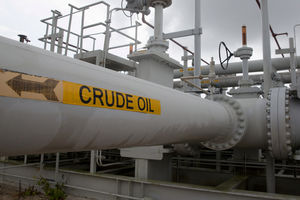
The fuel price surge tracks higher global crude oil prices since the US-Israel attack on Iran in February.
The conflict disrupted shipping through the Strait of Hormuz, a key oil route, and there is no clear sign of its end.
Inflation was 4.3 per cent in February and 4.4 per cent in March, before jumping to 5.6 per cent in April.
Food remains the largest contributor to the overall cost of living because of its weight in household spending. It accounts for 32.9 per cent of the CPI basket and contributed 3.1 percentage points to October’s inflation.
Transport added 1.7 percentage points, and housing, water, electricity, gas and other fuels 0.6. The figures also point to a widening gap between core and non-core inflation.
Core inflation, which tracks less volatile items such as manufactured food, health, education and communication services, rose to 4.3 per cent.
Food price increases were uneven. Fresh packeted milk rose 4.7 per cent to Sh64.13 for 500 millilitres, cabbages 4.1 per cent to Sh82.38 per kilogramme, and Irish potatoes 2.5 per cent to Sh125.06 per kilogramme.