Cereal farmers in the North Rift region who have been hoarding maize in anticipation of a shortage have been thrown into uncertainty following a government ultimatum ordering them to release grain to the market, even as more than 2.5 million Kenyans face starvation.
The Ministry of Agriculture has issued a 30-day ultimatum to farmers to release their stocks after admitting that limited maize supplies could force the government to allow duty-free imports to stabilise flour prices.
Maize prices have surged, with a 90-kilogramme bag now retailing at Sh4,400, up from Sh4,000 just two weeks ago.
The increase has been driven by stiff competition between animal feed manufacturers and maize millers for human consumption amid dwindling grain stocks.
This spike has pushed prices up by about 26 percent, dealing a heavy blow to households that depend on maize as a staple food.
Agriculture Cabinet Secretary Mutahi Kagwe has urged farmers to comply with the directive to avoid losses that could arise from duty-free maize imports.
He said the National Cereals and Produce Board (NCPB) is struggling to purchase enough grain for the national strategic food reserve due to competition from millers, despite revising its buying price from Sh3,500 to Sh4,000 per 90kg bag.
Agriculture Cabinet Secretary Mutahi Kagwe.
Photo credit: Boniface Mwangi | Nation Media Group
“We are offering Sh4,000 per bag and we have Sh1.7 billion for payments. We must stock our strategic reserves and be prepared for emergencies. Our priority is not to import but to buy from farmers,” said Mr Kagwe.
So far, the NCPB has purchased fewer than 200,000 bags of maize against a target of two million bags for the National Strategic Food Reserve. This shortfall has been blamed on intense competition from millers and traders offering up to Sh4,400 per bag to secure supplies.
The government is required to maintain emergency reserves equivalent to either four million bags of grains, including maize, rice and beans or their cash equivalent.
However, some farmers in the North Rift, Kenya’s grain basket, have dismissed the ultimatum, insisting that maize prices should be determined by market forces in a liberalised economy.
“The ultimatum to release maize is not a solution to the recurrent shortage. The government should instead offer incentives such as attractive producer prices in addition to subsidised fertiliser to encourage farmers to expand acreage and boost productivity,” said Jackson Kemboi, a farmer from Ziwa in Uasin Gishu County.
Most farmers interviewed said the government should offer at least Sh5,200 per 90kg bag to enable them to break even and invest in the next planting season.
“The government should fast-track reforms to make agriculture profitable by lowering input costs and offering attractive prices, instead of issuing ultimatums,” said Samuel Too, a farmer from Moi’s Bridge in Uasin Gishu County.
The Ministry of Agriculture has projected a maize harvest of 70 million bags this season, attributing the bumper crop to favourable weather and subsidised fertiliser.
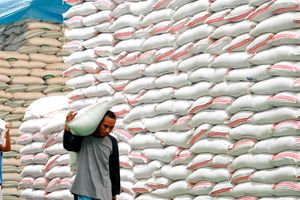
A worker offloads bags of maize at the Nakuru NCPB depot on January 31, 2024.
Photo credit: File | Nation Merdia Group
“The country targets to harvest 70 million bags of maize this season, up from 44 million bags in 2022 and 67 million bags in 2024,” President William Ruto said during the recent State of the Nation address.
“The price of a two-kilogram packet of flour has fallen from Sh250 in 2022 to as low as Sh130 today. For millions of households, this is meaningful daily relief,” the President added.
However, doubts have emerged over the government’s production estimates, with unstable maize supply in the market raising concerns of an impending shortage, even as 2.5 million Kenyans face food insecurity.
Agriculture experts and farmers have questioned the accuracy of the projected 70 million bags, terming it impractical and warning that a shortfall could push unga prices beyond the reach of many households.
“What is emerging is that the maize harvest is far below the anticipated 70 million bags. This could be due to substandard fertiliser, fake seed, repeated disease outbreaks and heavy rains during the harvest period,” said Robert Kemboi, an Eldoret-based agricultural expert.
According to the Early Warnings on Acute Food Insecurity Outlook, Kenya has re-emerged as a hunger hotspot due to poor rainfall forecasts, high food prices and intensifying conflict over scarce resources.
An estimated 2.1 million Kenyans are projected to experience acute food insecurity by early 2026. The report also estimates that about 742,000 children under five and more than 109,000 pregnant and breastfeeding women will require treatment for acute malnutrition between April 2025 and March 2026.
Experts have also warned of declining maize and wheat production as farmers in the North Rift diversify into cash crops and real estate investments.
In Uasin Gishu County, acreage under wheat has dropped from 40,000 hectares to 18,000 hectares as farmers shift to maize, horticulture and dairy farming.
“There has been a sharp decline in wheat acreage over the last decade, which has negatively affected consumption and driven up wheat product prices,” notes an annual agriculture report by the county government.
According to the Kenya National Bureau of Statistics, Kenya imports an average of 295,092 tonnes of maize annually. Imports from Uganda rose from 2,629 tonnes to 34,590 tonnes in the 2022/2023 marketing year, while imports from Zambia increased from 10,728 to 88,050 tonnes.
Imports from South Africa rose from 2,782 to 64,512 tonnes, while imports from Tanzania fell from 708,978 to 412,755 tonnes due to export restrictions.
Kenya produces an average of 365,600 tonnes of wheat annually against the consumption of 8.4 million 90kg bags, forcing the country to import the deficit. The Rift Valley produced about 4.5 million bags of wheat last season from 127,825 hectares.
Despite reports of increased production in the 2025/2026 season, experts warn that continued diversification away from cereals in traditional grain-producing counties such as Uasin Gishu, Nandi and Trans Nzoia could worsen food insecurity.