The penalties were revealed in an audit of 17 projects where the National Treasury received Sh206.86 billion from donors for the projects.
Contractors slapped Kenya with a Sh4.88 billion bill as penalties for delayed payment on donor-funded projects in the year to June 2024, highlighting the steep price that taxpayers are paying for poor financial management by State officials.
The penalties were revealed in an audit of 17 projects where the National Treasury received Sh206.86 billion from donors for the projects but ended up utilising Sh197.23 billion, raising questions on possible diversion of Sh9.63 billion as contractors grappled with payment delays.
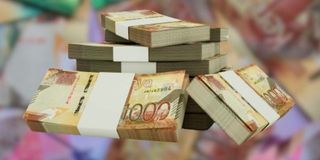
State officials and agencies have come under increased scrutiny over poor utilisation of both taxpayer funds and donor aid, which has triggered hefty penalties and delays of the projects.
“During the year under review, the audit revealed that avoidable interest payments amounting to Sh4,882,803,834 were incurred across seventeen (17) donor-funded projects,” said Auditor General Nancy Gathungu in the review.
“These instances reflect weak contract oversight, which undermines value for money and effective donor fund utilisation.”
The highest interest charges that Kenya incurred were Sh930.59 million on payments made by the African Vaccine Acquisition Trust to a vaccine manufacturer for unshipped 13,333,333 doses, followed by a Sh856.73 million fine for the Mombasa-Mariakani Highway Project.
Kenya was also fined Sh657.02 million as interest charges for delayed payment for the Sirari Corridor Accessibility and Road Safety Improvement Project.
Other donor-funded projects with huge fines due to delayed payments to the contractors include Sh615.79 million for the Northern Corridor and the Tanzania-Kenya-Sudan Road Corridor project, and Sh383.13 million for the Thwake Multi-purpose dam.
The Thwake Multi-purpose dam is jointly funded by the African Development Bank and the Exchequer, while the Mombasa-Mariakani Highway Project is financed by the European Investment Bank, the German Development Bank, and the European Union-Africa Infrastructure Trust Fund.
AfDB is also funding the Sirari Corridor Accessibility and Road Safety Improvement Project. The bank, jointly with the World Bank and other financiers, has funded the Northern Corridor and the Tanzania-Kenya-Sudan Road Corridor project.
Kenya has for years relied on donors to fund capital-intensive projects, given the inability of the Exchequer to fund some of these projects, most of which are capital-intensive.
But the steep penalties raise more concerns about the government’s ability to prudently manage critical phases of the projects, notably payments to contractors and speedy completion of the ventures.