The red, fertile soils of Bumbani, located in the heart of Tsimba Golini Ward in Kwale County, support a wide range of crops thanks to their deep, well-drained nature.
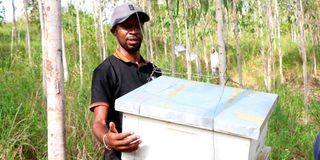
It is here that Seeds of Gold meets members of the Ushirikiano Youth Initiative, who are busy setting up beehives in order to better manage swarming activities.
Gabriel Righa, the group's founder, says that beekeeping is important for economic empowerment and environmental conservation.
So far, they have reached 98 young people through groups of 10 to 15 members each. There are currently eight groups, though the target is to reach 20 youth groups (200 youths).
Righa adds that most young people in Kwale County face a scarcity of economic opportunities due to a high unemployment rate, inadequate land, limited skills, and a lack of start-up capital.
"Although Kwale is richly endowed with fertile soils, many youths lack the practical knowledge of agribusiness, modern farming equipment, and market linkages needed to make agriculture a viable livelihood option," he explains.
These challenges, coupled with low exposure to mentorship and innovation, often leave young people vulnerable to poverty, idleness and negative social influences, leading many into crime and drug abuse.
The apiculture initiative began last June with just one hive, launched by the area chief who serves as the group’s patron.
The members have demonstrated profound dedication through their year-round commitment to their work, which often involves long hours and resilience against unpredictable challenges. Over time, their hives have multiplied to more than 15.
Joseph Maloba (right), the Project Officer from Jamii Action Centre (JAC) Community-Based Organisation, with Juma Rashid, a member of Ushirikiano Youth Initiative in Kwale county on November 19, 2025.
Photo credit: Richard Maosi |Nation Media Group
Righa adds that, depending on management, location and market demand, beekeeping can be lucrative, with each group successfully earning significantly from their daily operations, generating between Sh50,000 and Sh70,000 per season.
The harvest comes every three months, with a single hive producing 5–10 kilos of honey, selling at Sh1,000 per kilo.
He explains that beekeeping requires dedication. Once obtained, the hives are sanitised using local herbs and lemongrass.
After two weeks, the hives are serviced again to remove cobwebs and ants that could threaten the bees.
Then, frames and brood boxes are fitted into the hives.
"Cleanliness is essential to ensure the health and survival of the colony," he adds. "A clean environment prevents the spread of harmful bacteria, pathogens and pests that can cause disease and eventually lead to colony collapse,” he adds.
Righa adds that bees begin producing honey depending on the flowering plants in their immediate environment. After that, the main task is supervision until harvest time.
One major challenge is the lack of harvesting equipment, such as ventilated beekeeping suits, gloves and high-top boots, the latter of which are usually tucked into trouser legs to prevent bee access. They also lack a centrifuge and honey extractors to add value.
Rashid Juma, another group member, says that he previously relied on odd jobs after failing to secure formal employment.
For him, beekeeping offers a sustainable and profitable alternative to charcoal burning, which is a common activity for many households in the region.
“The presence of beehives discourages people from cutting down trees to make charcoal, as they are afraid of being stung. This helps to combat deforestation and improve livelihoods,” he adds.
Beekeeping encourages the community to look after trees. It plays a vital role in environmental conservation by supporting pollination, enhancing biodiversity and promoting sustainable land use.
Tumu Nzara, the group's secretary, adds that the young people have been trained in setting up mating yards, queen rearing, record keeping and extracting additional bee products such as royal jelly and bee pollen.
They have also been empowered by visiting the Agricultural Society of Kenya (ASK) in Kwale County to benchmark and learn about horticulture, with the aim of boosting their incomes.
She adds that, to boost their incomes, the group is planning to venture into extracting beewax, propolis, royal jelly, and bee pollen— valuable by-products used in pharmaceuticals, cosmetics, and nutrition.
Joseph Maloba, the project officer at the Jamii Action Centre (JAC), a community-based organisation, says that the goal of starting the initiative was to build a just, peaceful and inclusive community through dialogue and economic training by working with young people at the grassroots level.
The programme has already reached several notable milestones, including equipping young people with agribusiness skills, providing farm tools and resources, increasing incomes, promoting youth-led agribusiness practices, and boosting confidence, purpose, and innovation among young people.
Through these groups, the young people also receive farm inputs and equipment, as well as chicks for poultry farming and poultry products. Support includes vegetable seeds (collard greens, aubergines, mchicha and tomatoes), beehives, vaccines and pesticides. These inputs are provided according to the unique needs of each group.
Additionally, the group plans to venture into sunflower cultivation to attract more bees, as well as starting to produce oil.