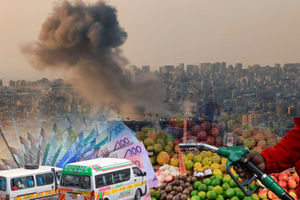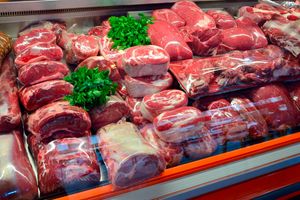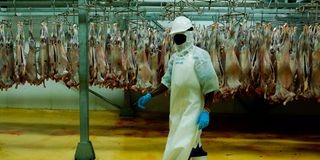
A worker inside a cold room with goat meat to be exported using a chartered plane, after disruptions of fresh chilled meat exportation, due to the ongoing US-Israeli conflict with Iran, at the Juja International Abattoir in Kiambu County.

Kenya’s livestock and meat exporters are losing Sh250 million weekly due to disruptions caused by the US-Israeli war with Iran, the Treasury has revealed, underlining the impact of the conflict that has so far dragged on for a month.
This means that livestock and meat exporters have so far lost about Sh1 billion due to disruptions in the main Gulf Cooperation Council (GCC) market bloc, which accounts for about 85 percent and 68.9 percent of the country’s livestock and meat exports, respectively.
“Disruptions to these markets have led to an estimated revenue loss of about Sh250 million per week, with Kenya’s six licensed export slaughterhouses operating at near-zero capacity,” Treasury Cabinet Secretary John Mbadi told the National Assembly’s Finance and National Planning Committee.
“Domestically, the loss of export outlets has resulted in livestock oversupply, driving down farm-gate prices and compressing producer incomes, particularly among pastoralist communities,” he added.
CS Mbadi said the situation has also triggered significant job losses across the value chain, including in slaughterhouses, transport, and processing.
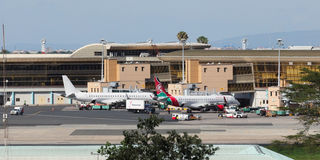
Planes are parked after airspace disruptions, causing a delay in exportation of fresh chilled meat, due to the ongoing US-Israeli conflict with Iran, at the Jomo Kenyatta International Airport, Nairobi, Kenya, March 12, 2026.
He said to address the emerging challenges, urgent policy responses are required, including diversifying export markets to the European Union (EU), China, the US, and other African markets.
CS Mbadi told lawmakers that interim measures should include negotiating temporary cargo arrangements on alternative routes to maintain some export flow.
“In the medium term, investment in cold chain infrastructure is critical to reduce logistical vulnerability,” he said.
The Iran war deals a double blow to Kenya, which has been struggling to maximise opportunities in the Gulf market.
Follow our WhatsApp channel for breaking news updates and more stories like this.