From the soil beneath farmers’ feet to the fish ponds that feed communities around Lake Victoria and the tractors driven by female entrepreneurs, not to mention the digital platforms that connect farmers with markets, a new generation of agricultural leaders is changing the way Kenya thinks about food security.
These innovators are part of the fifth cohort of the African Food Fellowship, a 10-month Food Systems Leadership Programme which brought together 23 professionals from across the country's agricultural value chain.
The fellows were recognised for developing practical solutions, known as Food Systems Actions (FSAs), which are aimed at addressing some of the deep-rooted challenges that limit Kenya’s food systems.
Unlike conventional approaches that focus solely on increasing production, the fellows are tackling interconnected issues affecting food, including climate change, access to finance, market linkages, technology adoption, soil health, sustainability, and the inclusion of women and young people.
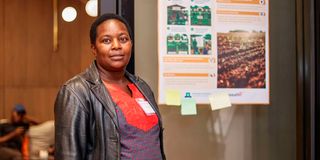
Gacoki Kipruto, the Kenya Lead for the African Food Fellowship, says the programme was designed to nurture leaders who understand that food systems challenges cannot be solved in isolation.
“Food systems are about moving from complex to simple. It's about diagnosing problems properly and bringing together different stakeholders because the challenges are interconnected,” she says.
Founded in 2020 by Wageningen University and Research in partnership with Wasafiri, the fellowship focuses on developing leaders capable of addressing the underlying causes of food system challenges. The programme targets three key impact areas: horticulture, blue foods, and agri-finance.
According to Ms Gacoki, the fellows are concerned not only with producing more food, but also with ensuring that what is produced is nutritious, accessible, affordable and sustainably grown.
Among the fellows is Dr Janeth Chepkemoi, a soil scientist from Greenfarm Solutions whose work focuses on restoring soil health through agroecological practices.
Dr Chepkemoi describes soil as the foundation of the food system, as everything produced begins with healthy soil. “When we talk about food systems, soil is the starting point. Without healthy soil, the food we grow will be problematic,” she said at the graduation ceremony for the Food Systems Leadership Programme Fellows in Nairobi last week.
She is introducing agroecological practices among schoolchildren in Nairobi by creating learning farms where students and the local community can adopt sustainable farming methods.
Dr Chepkemoi expressed regret that Kenya’s soils have suffered due to poor agricultural practices, such as continuous cultivation without crop rotation and the excessive use of fertilisers. This has led to low soil pH levels, affecting nutrient availability and meaning that crops cannot fully absorb fertilisers applied by farmers.
However, she notes that soil health is gradually improving as more farmers embrace regenerative agriculture, including cover crops, agroforestry, and integrated cropping systems. “We are changing bit by bit. Currently, many counties are embracing agroecology, and this is improving soil health,” she says.
Hello Tractor Head of Partnerships, Quinta Onditi, during an interview on the sidelines of the African Food Fellowship (AFF) graduation ceremony at the Hyatt Regency Nairobi, on July 10, 2026.
Photo credit: Wilfred Nyangaresi | Nation Media Group
In the field of mechanisation, Quinta Onditi, Head of Partnerships at Hello Tractor, is working to increase women’s ownership of tractors through innovative financing models.
Hello Tractor provides mechanisation services to smallholder farmers across Africa and operates in 20 countries, with a physical presence in five, including Kenya, Rwanda, Uganda, Ethiopia and Nigeria.
The company’s lease-to-own model allows farmers to acquire tractors without the need for traditional collateral. “Instead, farmers aggregate demand from communities, and a threshold of 1,235 acres must be reached before financing is accessible,” she explains.
Ms Onditi’s work focuses on removing the barriers that prevent women from owning agricultural machinery. Through her collaboration with development partners, she reveals that Hello Tractor is helping 50 women acquire tractors without having to pay the initial five per cent deposit required by the standard financing model. “So far, 12 women have received tractors, and we expect more to join the programme,” she says. She notes that women have traditionally played a significant role in farm labour, yet have rarely owned productive assets. “Women are no longer just involved in weeding and harvesting. They are now behind the wheel, providing mechanised services and building livelihoods,” she says.
Safaricom PLC Agribusiness Manager, Monicah Muriithi, during an interview on the sidelines of the African Food Fellowship (AFF) graduation ceremony at the Hyatt Regency Nairobi, on July 10, 2026.
Photo credit: Wilfred Nyangaresi | Nation Media Group
At Safaricom’s DigiFarm, Agribusiness Manager Monicah Muriithi is using technology to transform the way farmers and buyers interact. Her approach seeks to move agricultural relationships from transactional engagements to trust-based partnerships. “Many farmers and buyers operate without adequate information, which makes it difficult to plan production, access support or forecast markets,” she states.
Digital platforms enable farmers to share information on acreage, crop stages, livestock numbers and expected production, allowing buyers and service providers to offer targeted interventions such as credit, inputs and extension services.
Monicah believes that artificial intelligence (AI) can accelerate this transformation by analysing farm data and providing more personalised support. “For technology to work, farmers need to provide information from the ground. This information helps to provide solutions that are specific to their needs,” she says.
New Content Item (1)
Photo credit: Wilfred Nyangaresi | Nation Media Group
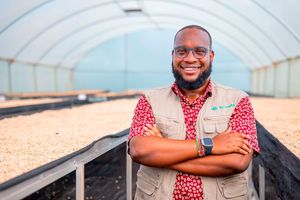
Otiato Phillip Oloo, Director of Commercial Services at the Lake Basin Development Authority and a Fellow of the fifth cohort of the African Food Fellowship, is focusing on developing aquaculture in the Lake Victoria Basin. In an interview with 'Seeds of Gold', he said that his aim is to strengthen the capacity of fishing communities so that they can transition from relying on the capture of wild fish to fish farming.
“Kenya should invest more in aquaculture because natural fish stocks are under pressure from population growth, climate change, and environmental degradation,” he explains. However, he is concerned that billions of shillings invested in aquaculture infrastructure may be wasted if the communities expected to operate the facilities lack the necessary technical skills.
At the authority’s aquaculture training centres, farmers receive practical training in fish production, pond management, hatchery systems and financial management.
Samaky Hub - Founder Proscovia Alando, during an interview on the sidelines of the African Food Fellowship (AFF) graduation ceremony at the Hyatt Regency Nairobi, on July 10, 2026.
Photo credit: Wilfred Nyangaresi | Nation Media Group
Another young fellow, Proscovia Alando, founder of Samaky Hub, is improving resilience among fish farmers through aquaculture insurance. In partnership with GA Insurance, her company helped launch Kenya’s first aquaculture insurance product targeting fish farmers.
“The initiative seeks to protect farmers from losses caused by floods, pollution and other climate-related shocks,” Proscovia said in an exclusive interview.
The young agripreneur is focusing on raising the profile of smallholder fish farmers, particularly women and young people, by documenting their challenges, needs and opportunities, and presenting this information to investors, policymakers and development partners in a way they can understand.
She says collaboration is critical because farmers need more than training. “After training, they still need markets, finance and quality inputs. Lasting impact comes when all these players work together,” she says.
Samaky Hub is a venture builder and ecosystem enabler that promotes inclusive, sustainable and profitable aquaculture in Africa. It connects entrepreneurs, institutions and investors, providing them with the tools, insights and implementation support they need to transform aquaculture value chains.
The innovations of the fifth cohort of fellows also highlighted the growing role of data, artificial intelligence, and collaboration in transforming agriculture.
African Food Fellowship Kenya Lead Gacoki Kipruto speaks during an interview on the sidelines of the African Food Fellowship (AFF) graduation ceremony at the Hyatt Regency Nairobi, on July 10, 2026.
Photo credit: Wilfred Nyangaresi | Nation Media Group
Gacoki Kipruto says that the programme equipped the fellows with foresight skills, enabling them to consider future food requirements and plan for the next few decades. “Transforming the food system is an ongoing process. We eat food every day, so the work of transforming food systems must continue,” she says.
She notes that Kenya’s food future will depend not only on producing more, but also on building a smarter, more inclusive and more sustainable food system.