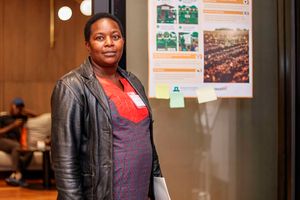
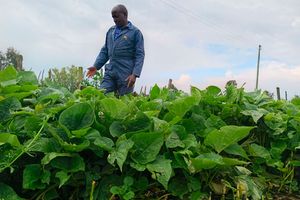
While farmers often judge agricultural performance by what appears above the ground, soil scientist Dr Janeth Chepkemoi is examining the intricate biological world beneath it- hidden network of microorganisms, fungi, insects and organic matter that determines soil vitality, nutrient availability and the productive capacity of farms. She speaks with Margaret Maina of ‘Seeds of Gold’ about why soil should be treated as a living resource, how farmers can restore declining fertility, and the future of agriculture depends on understanding what happens beneath our feet.
Soil is often treated as a foundation for crops rather than a living system. What are we missing?
The biggest misunderstanding is viewing soil as simply a physical material that holds plants. Healthy soil is a complex ecosystem where minerals, organic matter, water, plant roots and living organisms interact continuously. It supports nutrient cycling, carbon sequestration and productivity despite climate variability.
Just one teaspoon of healthy soil can contain billions of microorganisms, including bacteria, fungi, protozoa and beneficial nematodes, that work together to recycle nutrients, suppress diseases and promote plant growth. Ignoring this biological activity means overlooking a major driver of agricultural productivity. We should focus on sustaining the living system that allows crops to thrive, not only on providing nutrients to plants.
Farmers often say their soils are exhausted. What does “tired soil” actually mean from a scientific perspective?
When farmers describe soils as tired, they are observing a decline in the soil’s ability to support strong plant growth. This may result from reduced organic matter, nutrient imbalance, erosion or loss of biological activity.
A soil can still appear productive while losing some of its natural functions. Over time, farmers begin noticing weaker crop performance, increased dependence on inputs and reduced ability to retain moisture. The challenge is that soil degradation often happens gradually, making it easy to overlook until productivity has already declined.
One reason is that soil life is largely invisible. Farmers can see pests attacking leaves or diseases affecting crops, but they cannot easily see microorganisms disappearing beneath the surface. Agriculture has traditionally focused on visible outcomes such as yields and crop varieties. However, many of the processes that determine productivity happen underground.
Recognising soil biodiversity changes the way we understand farming. The organisms beneath the soil are not secondary; they are part of the production system itself.
Can a farmer restore degraded soil, or is soil fertility loss permanent?
Soils can recover when the right conditions are created. Restoration requires rebuilding organic matter, reducing unnecessary disturbance and encouraging biological activity.
Practices such as adding compost, maintaining crop diversity, using cover crops and protecting soil from erosion can gradually improve soil function. The important point is that soil restoration is a process. Farmers need to think beyond a single season and invest in the long-term health of their land.
Research has shown that nutrients applied to degraded soils are often lost through runoff, leaching or volatilisation before crops can use them. Building soil organic matter improves nutrient retention and increases fertiliser-use efficiency. Integrating organic amendments improves nutrient-use efficiency and helps sustain soil biological activity.
If soil structure is poor or biological activity is low, crops may not fully benefit from applied nutrients. This can lead to farmers increasing input use without achieving the expected improvements. A healthy soil allows nutrients to be used more efficiently because the natural processes that support plant growth are functioning properly.
Earthworms are indicators of a functioning soil ecosystem. Their movement creates channels that improve water infiltration and aeration, while their activity helps break down organic materials.
They represent the wider biological community working within the soil. When earthworms and other organisms decline, it often signals that soil conditions have changed. Their presence reminds us that agriculture depends on many forms of life that farmers rarely see.
Some practices can reduce soil quality when applied continuously without proper management. Excessive soil disturbance, removal of crop residues and limited crop diversity can affect soil structure and biological activity.
The issue is not that every practice is harmful in every situation, but that farming decisions must consider their long-term impact on the soil ecosystem. The goal is to create systems where production and soil regeneration happen together.
Is soil health mainly an environmental concern, or is it an economic issue for farmers?
Soil health is both. A degraded soil directly affects farm economics because it can increase production costs and reduce productivity.
When soils lose their ability to naturally support crops, farmers may need more external inputs to achieve similar results. Investing in soil health is therefore not only about conservation. It is about protecting farm profitability and reducing production risks.
Farmers should combine observation with scientific assessment. Their experience remains invaluable because they understand how their land has changed over time. But observation alone cannot reveal critical factors such as nutrient deficiencies, acidity or declining organic matter. Testing provides this information, enabling informed decisions on fertiliser use, soil amendments and crop management.
Where feasible, testing should be carried out every two to three years to monitor changes in nutrient status, acidity and organic matter, allowing more precise and efficient management. The best decisions come from combining practical experience with scientific evidence rather than relying on either approach alone.
Yes. Inputs are important, but they work best when the foundation supporting them is healthy. A productive agricultural system requires balanced investment in seeds, nutrients, knowledge and soil management. Soil should be viewed as a national asset because the country’s food production depends on its condition. Long-term agricultural success requires protecting the resource that makes farming possible.
Researchers have a responsibility to make soil science accessible. The conversation should move beyond laboratories and reach farmers, extension officers and decision-makers. Scientific knowledge becomes valuable when it helps people make better choices. Farmers do not need complicated explanations; they need practical information that connects directly to their experiences.
If farmers adopted one soil-health practice today, what would you recommend?
I would encourage farmers to increase organic matter in their soils. This can be through compost, manure, crop residues or other locally available resources. Organic matter supports biological activity, improves soil structure and helps the soil retain nutrients and water. Small actions repeated consistently can create significant improvements over time.
The greatest hope is that awareness is growing. More farmers, researchers and institutions are recognising that soil is not an unlimited resource. The future of agriculture depends on rebuilding the relationship between people and the land. When we protect soil life, we protect food production, farmer livelihoods and the generations that will come after us. There is also increasing interest in regenerative agriculture, biofertilisers and digital soil mapping across Kenya, providing new opportunities to restore soil health while maintaining productivity.
If the soil beneath Kenya’s farms could speak, what warning and what opportunity would it reveal?
It would remind us that the future of farming depends on how we care for the ground beneath our feet. Soil is not simply a medium for growing crops. It is a living ecosystem that sustains food production, regulates essential ecosystem functions and supports biodiversity. Continued degradation through unsustainable land management risks declining yields, rising production costs and greater vulnerability to climate change.
Restoring soil health offers an opportunity to improve food security, promote profitable farming and protect the resources agriculture depends on. Every decision a farmer makes, from residue management and soil cover to balanced nutrient management, influences the condition of the land. Caring for soil today helps secure productive farms and livelihoods for future generations.