Ms Fatuma Ahmed, a resident of Faza in Lamu County, trembles whenever she recalls what she went through earlier this year as she sought to access justice at the court.
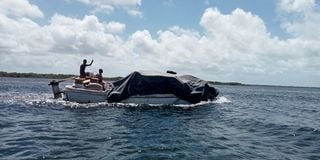
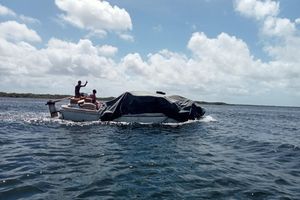
On that fateful day in May, Ms Ahmed was forced to board a crowded dhow from Lamu East to attend a scheduled court hearing at the Law Court in Lamu Island. It was a three-hour journey, and she was a vital prosecution witness in a murder trial.
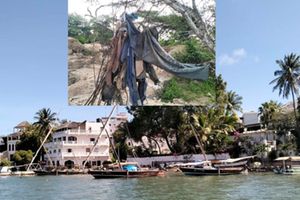
In Lamu East, water is the only transport means available but the vessels plying long distance routes on a daily basis are limited. This usually leaves travellers with little or no options.
As the engines roared to life and the shoreline began to recede, the boat cleared the mangroves and hit the open rough waters of the Indian Ocean. Ms Ahmed looked around and realised she was trapped in a nightmare.
Sitting a few feet away from her was the accused murder suspect in her own case. He was handcuffed and flanked by armed police officers.
“You can imagine sharing the exact same small, tossing vessel with the man I was testifying against. That day, I felt completely trapped, caught between a rock and a hard place. I had to choose between jumping into the sea out of panic or staying on the boat to ensure justice was served. But, of course, I chose the latter,” she said.
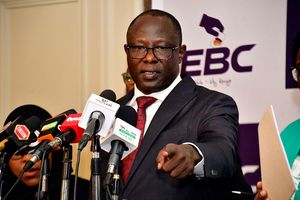
Lamu Principal Magistrate Peter Wasike during a public participation forum on Tuesday, September 22, 2026.
Photo credit: Kalume Kazungu | Nation
She narrated her experience during a public participation forum at the Mwana Arafa Restaurant Gardens in Lamu. The forum for the Judiciary and Judicial Service Commission (JSC) budget and Medium-Term Expenditure Framework (MTEF) was held on Tuesday.
Her distress illustrated the extreme challenges of accessing justice in the region. Such safety challenges, coupled with high transport costs, are faced by both ordinary citizens and judicial officials in their pursuit for justice.
Due to the unique geographical layout of the Lamu archipelago, residents from far-flung islands such as Faza, Pate, Kizingitini, Kiwayu, Mkokoni, Boni Forest, Kiunga and Ishakani on the Kenya-Somalia border, are forced to pay between Sh3,000 to Sh6,000 boat fare to access court services.
On the other hand, judiciary staff are at times subjected to paying up to Sh40,000 for private boat hire travelling to the remote islands like Faza to undertake a single mobile court session.
Lamu Principal Magistrate Peter Wasike acknowledged the difficulties in transport as a major hindrance to effective delivery of judicial services to citizens in the county. Mr Wasike affirmed to have been forced to conduct only one mobile court session in Faza Mobile Court after a span of three months owing to high costs of travel.
“Our department lacks a boat. So, we have a working office arrangement with the Office of the Director of Public Prosecution here in Lamu where we’re required to fuel their boat with Sh30,000 to Sh40,000 to be able to reach Faza in Lamu East to carry out just a single mobile court session.
“With our limited fuel budget of Sh60,000 that means it takes only one or two sessions and it’s over. And that’s why we’re doing only one mobile court session after every three months here,” said Mr Wasike.
He pleaded for increased judiciary funding in the country and suggested that Lamu be prioritised by having government-owned boats for transporting inmates and judicial staff separately from the public.
Mr Wasike stressed that adequate funding will also enable the judiciary to conduct more physical courtrooms and mobile court sessions, especially in the far-flung and hard-to-reach islands and remote villages.
He noted that it is normally uncomfortable sharing transport among complainants, accused persons and witnesses during court circuits in Lamu.
Residents participating in a public participation forum for the Judiciary and Judicial Service Commission (JSC) Budget and Medium-Term Expenditure Framework (MTEF) at Lamu's Mwana Arafa Hall on Tuesday, September 22, 2026.
Photo credit: Kalume Kazungu | Nation
“In fact, it undermines the integrity of the judicial process altogether by creating opportunities for intimidation, compromising witness safety, and violating the rights of all parties involved. I believe with increased judiciary budget, the government will ensure that justice in Lamu is not only safe but easily and equally accessed by all residents,” said Mr Wasike.
Mr Mohamed Abdulkadir, a member of the Lamu Court Users Committee, noted that apart from the common challenges in accessing judicial services, the county also lacks juvenile remand cells in Lamu Prison and police stations.
Under global standards like the United Nations Convention on the Rights of the Child (UNCRC), detaining children should always be a strict last resort. When it does happen, juveniles must be kept separate from adults to protect them from harm, abuse, and negative influences.
In Kenya, under Article 53 of the Constitution, children in custody must be held in separate facilities from adults, kept for a maximum of 24 hours before being taken to court, and treated in conditions matching their age and gender.
Mr Abdulkadir expressed sadness that in Lamu, children get mixed with adults in the cells exposing them to harm.
“This infringes on the rights of the minors. We’re supporting increased budgetary allocation in institutions like the Judiciary and JSC, plus the other correctional ministries. Once there’s money, I believe Lamu’s judicial and correctional infrastructure will automatically be upgraded,” said Mr Abdulkadir.
Mr Mohamed Skanda, a youth leader in Lamu, said with adequate funds, the Judiciary can hire more magistrates, establish child-friendly courts, and even run ‘Children Service Months’ to clear backlogs.
During the forum, residents also pushed adequate ICT infrastructure. They said reliable internet connectivity will support e-filing, virtual hearings and case tracking.
Most areas of Lamu, particularly Boni Forest, Mkokoni and parts of Kiunga and Ishakani on the Kenya-Somalia border have continued to suffer mobile phone communication, connectivity owing to poor network coverage. This makes virtual court hearings impossible.
“Keeping on travelling outside Lamu for matters requiring High Court services has always imposed substantial financial and logistical burdens to us,” said Mbwana Shee, an elder.
The Director of Finance and Planning at JSC, Rebecca Kiplagat, said similar engagements will follow in Marsabit, Kajiado, Kericho and Dagoretti. The views gathered will be integrated into strategic documentation to lobby for higher financial budget allocations for the Judiciary and JSC from the national government in the Financial Year 2027/2028.
Over the past three financial years, JSC has maintained an average budget absorption rate of 98.98 per cent. According to Ms Kiplagat, the sustained performance reflects the Commission’s commitment to ensuring that allocated resources are effectively translated into programmes and interventions that support its constitutional mandate.