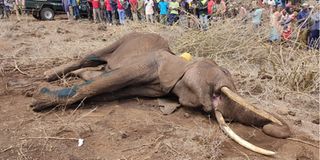
Between June 24 and July 24, 2026, a wave of unexplained elephant deaths swept through the Amboseli ecosystem in Kajiado County, claiming 15 animals and triggering alarm among conservationists in Kenya and across the world.
On Wednesday, July 29, the Kenya Wildlife Service (KWS) broke the silence, revealing that the animals had died from cyanide poisoning, pointing to agricultural chemicals as the likely cause of the deaths.
Speaking to Nation during the Fixing the Nation forum on World Rangers Day at Tsavo West National Park on Friday, KWS Director-General Prof Erustus Kanga said preliminary laboratory analysis of samples collected from the carcasses detected traces of cyanide in their digestive systems.
Prof Kanga said that, according to the post-mortem examination report by KWS veterinarians, the animals had ingested pesticides sprayed on nearby tomato farms within Amboseli National Park, Kimana Sanctuary and the Kuku Ranch area, where the deaths occurred.
He said a multi-agency team had been established, involving different stakeholders, to investigate the root cause of the emerging challenges facing the Amboseli ecosystem amid increasing human activities.
"The area where the animals were poisoned is a wetland. The increase in the human population has come with new challenges, including large agricultural farms within the ecosystem, prompting human-wildlife conflict. A multi-agency team has been established to address the challenges," said Prof Kanga.
Tourism and Wildlife Cabinet Secretary Rebecca Miano also weighed in on the matter, saying conservation dynamics continue to change and calling for a holistic approach that includes increasing the number of rangers.
"Challenges within the conservancies keep evolving. Traditionally, we used to tackle poaching, but now we have seen a glaring challenge involving the use of dangerous pesticides. We must equip our rangers through adequate training on modern trends, including technologies such as drones," said CS Miano.
CS Miano added: "We have over 10,000 rangers countrywide in both state and private conservancies, but that is still not adequate. We will recommend the optimal recruitment of more rangers and increased resources."
Cyanide is a fast-acting and extremely powerful chemical poison consisting of a carbon atom triple-bonded to a nitrogen atom. While cyanide is not a registered or legal active ingredient in modern commercial tomato pesticides, illegal or off-label use of lethal poisons on crops occurs in human-wildlife conflict zones to deter crop-raiding animals.
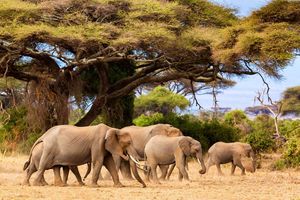
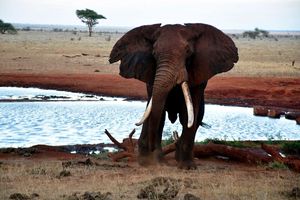
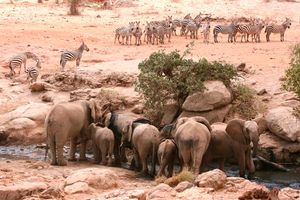
Over the years, Amboseli National Park in Kajiado County, which spans 392 square kilometres, has remained one of the country's premier tourist destinations. It derives its name from the Maasai word Empusel, meaning "salty, dusty place" in the Maa language.
The park remains a major economic artery both nationally and for the local community. At least 80 per cent of the wildlife lives outside the park.
Heartbreaking: Final moments of elephant among 15 poisoned in Amboseli
Before the dust settles on the mass mortality of the 15 elephants, the Nation Investigations sought to establish the untold story behind the deaths—the highest number of elephants to die within the ecosystem over such a short period in a landscape increasingly strained by human activities and human-wildlife conflict (HWC).
The Amboseli ecosystem boasts dozens of private wildlife sanctuaries and major wildlife migration corridors linking Tsavo West National Park, Chyulu Hills and Serengeti National Park in Tanzania through designated natural corridors bordering numerous horticultural farms.
Different sources interviewed by the Nation summed up the mystery surrounding the deaths as "a well-orchestrated plan" by unidentified individuals allegedly linked to the ongoing transition of Amboseli National Park to the County Government of Kajiado. To them, it was a silent protest.
John*, a resident of Kimana Township, challenged KWS to produce a report made by a farmer whose tomato farm had allegedly been invaded by elephants during the period when the animals died. He said there was a possibility that the animals were not poisoned by the farm owners but by outsiders.
"The writing was on the wall. Do animals that roam in both our unfenced community and private lands need to invade a farm to be poisoned?" wondered the source, who spoke on condition of anonymity. "Sometimes it's hard to protect what you don't feel ownership of."
A tomato farmer within the ecosystem's agricultural belt told the Nation that, considering cyanide is not a registered or legal active ingredient in modern commercial tomato pesticides, it simply meant the motive was to eliminate the animals for reasons beyond crop invasion.
"The motive of using such lethal pesticides is to kill. Elephants are strong animals, suggesting the perpetrators might have administered an overdose. Killing a calf has even greater ripple effects on conservation," said the source.
A community ranger privy to the matter, who also spoke in confidence, told the Nation that the deaths of the 15 elephants were a protest by a section of locals who felt short-changed by KWS over the delayed handover of the park to the county government.
"It was to send a message. The adult animals died with their tusks intact. It cannot be mistaken for poaching," he said.
The Nation has also learned that threats against wildlife intensified between April and June as the local community opposed the fencing of part of Chyulu National Park bordering Kuku Ward. In June, KWS officers skipped a highly charged meeting attended by hundreds of locals, citing security concerns.
The ongoing standoff over the transition of the park may have piled more pressure on the restless community, which had reportedly reached breaking point after adjacent ranches surrendered one million acres for wildlife conservation within the Amboseli ecosystem bordering the park.
Local leaders led by Governor Joseph ole Lenku and Kajiado Senator Samuel Seki first raised the alarm over the dying elephants in early July before amplifying it last Saturday, catching the attention of the Nation, which broke the story on Monday.
Since July 1, 2026, a bitter feud has simmered between the Kenya Wildlife Service (KWS), the County Government of Kajiado and the local community over the unfulfilled promise of revenue sharing from Amboseli National Park.
The row stems from KWS's failure to remit 50 per cent of its revenue for the 2025/2026 financial year, which ended on June 30.
According to the three-year Transition Implementation Framework, KWS was to remit 50 per cent of its revenue on July 1, 2026. It would then remit 80 per cent of its revenue during the 2026/2027 financial year before finally surrendering 100 per cent of its revenue in the 2027/2028 financial year.
15 elephant deaths: Tourism CS Miano, DG Kanga speak
On July 13, a last-minute phone call from President William Ruto, coupled with a High Court injunction issued on July 12, dramatically eased tensions and averted what could have been a major confrontation between the community and KWS after residents had vowed to forcefully take over the park.
Two days earlier, ranch leaders had gone to Kimana Gate and demarcated where they intended to set up the community's revenue collection centre if KWS failed to remit the money.
According to available data, KWS collects about Sh3 billion annually from Amboseli National Park, regarded by both local and foreign tourists as the home of the African jumbo.
The President's call came barely a day after the High Court, on July 12, issued an injunction restraining Governor Joseph Ole Lenku, his servants, agents, employees, assigns or any person acting under his authority or on his behalf from entering, taking over, assuming control of, interfering with the operations or management of Amboseli National Park, or implementing the Deed of Transfer dated October 14, 2025, pending the hearing and determination of the case.
During a meeting in the Amboseli ecosystem on Saturday, as he piled pressure on KWS to reveal the cause of the deaths, Governor Lenku reiterated the local community's commitment to wildlife conservation.
"We value Amboseli. We cherish its wildlife. We remain committed to seeing it stay on the right trajectory as a world-class, third-generation park. That calls for timely management from the Kenya Wildlife Service and, as it stands, they are failing terribly," said Lenku.
The poisoning of the elephants came barely six months after the poisoning of six lions and 32 vultures in the Amboseli ecosystem along the Kenya-Tanzania border in January 2026.
KWS said the incident occurred at Kitenden Conservancy on January 7 at a time when human-wildlife conflict (HWC) had intensified due to shortages of pasture and water caused by drought.
Kitenden Conservancy is a vital community-led conservation area protecting a crucial wildlife corridor between Amboseli National Park in Kenya and Mt Kilimanjaro National Park in Tanzania for species such as elephants, lions and giraffes while transforming community-owned land into a sustainable resource through eco-tourism.
The six lions comprised two adult males, two adult females and two sub-adults. The animals were suspected to belong to the same pride, although this could not be confirmed because the carcasses had decomposed by the time they were discovered.