A confidential police report presented to Parliament has detailed allegations of widespread sexual abuse, human rights violations and other misconduct linked to British military personnel training in Laikipia County under the British Army Training Unit Kenya (Batuk).
The report, dated May 19, 2026 and signed by Inspector-General of Police Douglas Kanja, follows a directive by the National Assembly’s Defence, Intelligence and Foreign Relations Committee for an independent investigation into allegations against British troops.
Among the cases documented is that of a 12-year-old girl from Lekiji village in Laikipia North who was allegedly lured with sweets while fishing near a river before being sexually assaulted by foreign soldiers. According to the report, she later conceived and gave birth to a mixed-race child.
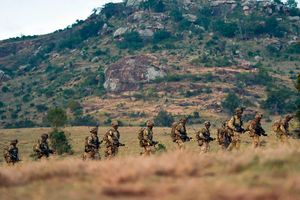
Soldiers troop during a simulated military excercise of the British Army Training Unit in Kenya (BATUK) together with the Kenya Defence Forces (KDF) at the ol-Daiga ranch, high on Kenya’s Laikipia plateau on March 26, 2018.
Photo credit: File | AFP
Investigators say the alleged assaults occurred mainly in villages bordering the Impala military training area, where soldiers were reported to have crossed into neighbouring communities.
Other children, the report says, were allegedly enticed with biscuits, chocolates and soft drinks before being sexually assaulted.
“In one account, a 12-year-old girl reported having been lured with sweets by foreign soldiers while fishing near a river before being sexually assaulted. The victim later conceived and gave birth to a mixed-race child,” the report states.
Police say many survivors were left unconscious after the attacks and were rescued by relatives, neighbours or herders responding to their screams.
In Laikipia County alone, investigators documented 37 alleged gang rape cases, 20 rape cases and two incidents in which victims sustained injuries while escaping attempted sexual assaults.
“The alleged perpetrators were dressed in military camouflage. Survivors described a recurring pattern in which they were ambushed in isolated locations, overpowered and sexually assaulted, often by multiple attackers,” the report says.
Investigators interviewed 40 survivors and witnesses aged between 48 and 90 in Doldol and surrounding areas. They recounted alleged incidents of sexual violence, environmental concerns and other human rights abuses linked to military exercises.
According to the report, many of the alleged attacks occurred in isolated locations, including riverbanks, bush paths and grazing fields, while victims were fetching water, collecting firewood, herding livestock or swimming.
Police say many survivors never received formal medical treatment because of stigma, fear, cultural barriers and poor access to health facilities. Instead, some underwent traditional cleansing rituals or received herbal treatment from relatives.
“It was established that many survivors interviewed were generally able to recount the circumstances surrounding the alleged incidents of sexual violence, including gang rape, which resulted in severe physical injuries, miscarriages and long-term psychological trauma,” the report says.
The report also highlights the long-term impact on children allegedly fathered by foreign soldiers. Investigators traced one mixed-race child in Laikipia whose mother linked the pregnancy to an alleged assault.
Affected children and adults aged between seven and 46 years reported discrimination, social stigma, emotional distress and lack of parental support.
“It was established that many had never met their biological fathers and had not received any support from them,” the report says, adding that DNA samples collected previously had been forwarded to the United Kingdom for comparative analysis.
Police further found that many survivors continue to suffer post-traumatic stress, shame and social discrimination years after the alleged attacks.
The report recommends that the government pursue legal action through Mutual Legal Assistance mechanisms and other international legal frameworks. It also proposes fresh DNA sampling, subject to legal procedures and consent, to establish paternity and identify biological fathers.
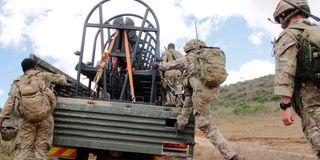
British Army soldiers board a military truck after a battle group exercise during a media engagement at the Lolldaiga training area in Laikipia County on November 14, 2022.
Photo credit: Joseph Kanyi | Nation Media Group
The investigation follows findings by the National Assembly’s Defence, Intelligence and Foreign Relations Committee, which last year concluded that British soldiers had been implicated in sexual abuse, abuse of power, unethical conduct and human rights violations.
Even as the government this week announced the resumption of joint military training with the United Kingdom, Parliament is pushing for changes to the bilateral defence cooperation agreement.
Lawmakers want murder expressly included among offences subject to Kenyan jurisdiction and are also seeking a mandatory corporate social responsibility component for Batuk.
A parliamentary source said the latest announcement was intended to facilitate the deployment of British troops scheduled for September, but negotiations on the proposed amendments to the agreement are still ongoing.
The British Ministry of Defence has previously acknowledged that the presence of its troops in Kenya could present challenges, expressed regret over any proven wrongdoing and pledged to cooperate with investigations.