Before the high-rise buildings, the crowded shopping complexes and the endless stream of traders, Eastleigh was a completely different place.
It was once a swampy area on the outskirts of Nairobi’s central business district, grappling with poor sanitation and a lack of a sewerage network.
And now, what was once a largely residential area has become a regional commercial powerhouse.
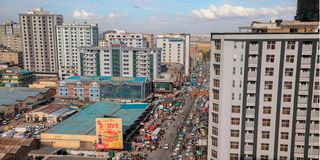
Makeshift market stalls gave way to imposing shopping malls, and now, on every street or avenue, a multi-storey building is rising.
Today, Eastleigh is arguably the region’s most recognisable trading hub, drawing people from across the country and beyond.
The name that has stuck with the neighbourhood was derived from a coastal town in Hampshire, England, and influenced by a British Royal Air Force base in the area. Eastleigh has undergone a metamorphosis, spurred largely by the settlement of Somalis in the area.
However, the neighbourhood can trace its existence to the merger in 1921 of Nairobi East Township (Ngara Plains) – predominantly occupied by Kenyan Somalis – and Egerton Estate to form Eastleigh Township.
The colonial government allotted Nairobi’s residential estates by race and ethnicity. In the early 1900s, Kenyan Asians were allocated the area.
But constant disease outbreaks due to poor sanitation drove the Kenyan Asians away. Kenyan Somalis, who were living in the not-so-far-away Ngara Plains, then started trooping in, slowly changing the face of an area that was initially an enclave of Kenyan Asians and elite Africans who worked as clerks, builders or shoemakers.
However, its transformation from a quiet residential area to the bustling commercial hub it is today began after independence, accelerating with the fall of President Siad Barre’s government in Somalia in 1991.
After independence, many of the Indians left the area, while other Kenyan communities, particularly the Kikuyus, began moving in to acquire the plots, which they would later sell to Somalis.
Towering skyscrapers, modern shopping centres and improved infrastructure are reshaping Eastleigh’s skyline. Picture taken on Thursday, October 29, 2026.
Photo credit: Dennis Onsongo | Nation
With political turmoil in the neighbouring country leading to the arrival in Kenya of thousands of Somali refugees displaced by war, the neighbourhood started transforming from a residential area into a commercial zone.
Drawing on their trading experience, Somali refugees started moving from their camps in northern Kenya into Nairobi after the government gave refugees special passes in 2004 and 2005. The area’s massive turnaround is attributed to the directive by the government.
Known for their enterprising nature, the Somalis took advantage of glaring business opportunities in the area to start transforming the neighbourhood into a bustling market. Tenants at the hotel would turn their beds into makeshift stalls during the day.
Gradually, a once-neglected residential area started changing its face, with the original Garissa Lodge at the heart of the transformation into a vital trading centre.
The traders would supply “low-end” goods, mostly arriving through the Mandera border, with the neighbouring estates, including Bahati, Majengo, Jericho, Mbotela, Makadara and Hamza on one side, and Kariokor, Ngara, Pumwani, Kamukunji, Shauri Moyo and Burma on the other, providing a ready market.
With the war in Somalia raging, the Somali community continued to grow, displacing other ethnic communities, and the area earned the nickname Kambi Somali.
Eastleigh was turning into a vital business hub in the capital, attracting traders from beyond Nairobi with low prices for goods, including electronics, textiles, shoes, household goods and other accessories.
With domestic demand for the cheap products growing and money flowing from the Somali diaspora, Eastleigh was rising.
Now an important regional business hub, its malls are even named after thriving commercial cities across the world, such as Bangkok, Hong Kong and Dubai.
Currently, there are more than 72 malls and over 25,000 shops in Eastleigh dealing in different goods, from wholesale to retail. There are also market stalls and hawkers, with the business zone estimated to account for up to 35 per cent of excise duty collected in Nairobi by the Kenya Revenue Authority.
Eastleigh, which covers Eastleigh North, Airbase, Eastleigh South, California and Kiambiu, is said to be home to close to 500,000 people.
According to Kamukunji MP Yusuf Hassan, whose constituency the bustling neighbourhood lies in, Eastleigh has, over the decades, changed hands, character and its place in Nairobi’s economic life.
Mr Hassan recalls how the neighbourhood developed in sections, each with its own character and community.
Section One, extending from Juja Road towards the area around the building that later collapsed, had a significant Goan Catholic population. Members of the community helped establish St Teresa Church, St Teresa Primary School, St Teresa Girls’ Secondary School and St Teresa High School.
Section Two, meanwhile, had Hindu and Muslim Asian communities, including Pakistani Muslims and Ismailis. A Hindu temple stood along 4th Street.
"The neighbourhood was therefore never defined by one community alone. Its early identity was already a mixture of different groups living, working and trading alongside one another," says Mr Hassan.
A busy street in Eastleigh.
Photo credit: Dennis Onsongo | Nation
"That mix would become even more pronounced as Nairobi grew and the country moved towards independence."
Then came another wave of change. Somalis from Somalia began arriving in greater numbers, including people with experience in the civil service, banking and business. Some bought properties from departing Asian owners, while others purchased buildings or land from African landlords.
The collapse of the Somali State in 1991 accelerated the movement of people fleeing conflict and instability. Drought and famine also displaced pastoral communities in northeastern Kenya, with many seeking refuge and opportunities in Nairobi. Eastleigh became one of their destinations.
For some, it offered a place to rebuild their lives. For others, it offered the chance to trade, invest and establish businesses in a neighbourhood where commercial activity was already taking root.
Over time, residential properties were converted into business premises, new shops opened and demand for commercial space increased.
The transformation was not instantaneous. But over the last 10 to 15 years, Mr Hassan says, the pace has become particularly dramatic.
According to the lawmaker, merchandise comes from Somalia, the United Arab Emirates, China, Singapore, Brazil and Turkey, among other markets.
The neighbourhood covers only about one to two square kilometres but is home to at least half a million people.
Eastleigh, Mr Hassan says, should not be reduced to the story of one ethnic group’s commercial success.
“It's a successful Kenyan story rather than merely a successful Somali story,” he explains.
“It's a cosmopolitan mosaic that is the most cosmopolitan people where people from Ethiopia, from Somalia, from Uganda, from Sudan have come together with Kenyans to create what is undoubtedly the most successful commercial hub in this region.”
“So, it can only go upwards. There's no any other space left,” MP Hassan says.
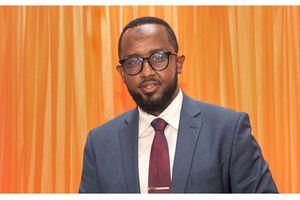
Kamukunji MP Yusuf Hassan.
Photo credit: File | Nation Media Group
The remark captures the direction Eastleigh has taken. With limited room to expand outwards, developers have increasingly built upwards, replacing smaller buildings with taller structures.
The skyline has changed. So, has the value of the land beneath it.
Property in Eastleigh has become a valuable commodity. An 80-by-100-foot plot that might sell for about Sh35 million in another part of Nairobi could fetch more than Sh250 million in Eastleigh, says Mr Hassan.
The rising values reflect the demand for space in a neighbourhood where businesses want to establish themselves and property owners have an opportunity to earn from the commercial boom.
But the ownership story is more complicated than the assumption that the neighbourhood belongs to one community.
Some of the current arrangements involve landowners leasing their properties to Somali investors, who then finance and construct buildings.
Under some joint ventures, he explains, a landowner provides the land for an agreed period, often 25 years, while an investor develops the property. The parties share the benefits under their agreement, and ownership arrangements at the end of the lease depend on the terms reached.
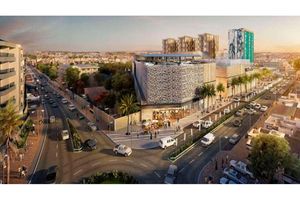
Towering skyscrapers, modern shopping centres and improved infrastructure are reshaping Eastleigh's skyline. A symbol of growth, investment and economic opportunity, Eastleigh is rising toward a brighter future. Picture taken on Thursday, October 29, 2026.
Photo credit: Dennis Onsongo | Nation
But the commercial success has not been matched by a similar transformation of public infrastructure.
The neighbourhood’s roads, drainage and sewerage systems face pressure from the concentration of people, businesses and buildings. Much of the infrastructure dates back to the colonial period and has not been upgraded in proportion to Eastleigh’s growth, according to residents.
The image is of a neighbourhood that looks increasingly prosperous, with modern buildings and thriving businesses, but remains constrained by infrastructure that has failed to keep up.
The problem is not confined to Eastleigh. But Eastleigh’s density makes the consequences particularly difficult to ignore.
A road that must accommodate residents, shoppers, deliveries and commercial traffic is under pressure throughout the day. Drainage and sewerage systems designed for a different era ought to contend with a much larger concentration of people and buildings. That is not the case in Eastleigh.
Rent for a decent two-bedroom house is now estimated to be between Sh65, 000 and Sh80, 000 per month. Still, occupants pay in lump sums, sometimes covering six months or even more.
Beyond the pressure on its roads and public services, residents see Eastleigh as an example of what people can achieve when they find opportunities to work and invest together.
But the neighbourhood’s transformation has come with a difficult question: how can a booming commercial centre be accommodated when the infrastructure beneath it was not designed for the demands being placed on it?
The answer, the Kamukunji MP says, lies in the gap between Eastleigh’s economic ambition and the pace of urban planning.
“The biggest challenge that Eastleigh and in many parts of Nairobi face is that this city, this neighbourhood, this city within a city, has grown rapidly on its own pace. And it has outpaced planning and the development,” Mr Hassan says.
The challenge is particularly visible in the roads, drainage and sewerage systems that must serve a neighbourhood whose population and commercial activity have expanded over the years.
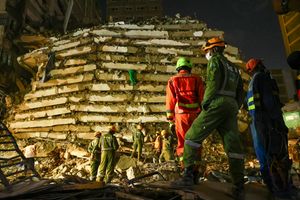
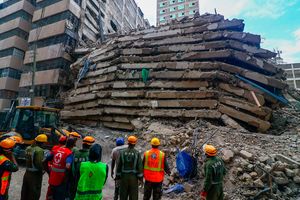
Following the collapse of a building on Eastleigh’s 9th Street, questions about development, oversight and the responsibilities of city authorities have become even harder to ignore.
“This neighbourhood is jammed, congested 24 hours,” a resident who did not want to be named told Nation .
It is a striking description of a place whose economic fortunes have risen dramatically, even as its urban systems struggle to keep pace.
But Mr Hassan questions how a large building could rise without attracting the attention of the authorities responsible for monitoring construction and enforcing planning regulations.
“You cannot believe that a 17-storey building could go unnoticed by the city authorities,” the Kamukunji MP says.
He contrasts the apparent difficulty of detecting such a development with the way county enforcement officers can move quickly against smaller structures such as kiosks.
Eastleigh’s next chapter may depend on whether its physical development can be matched by investment in the infrastructure and planning that sustain a city.