The proposed branding has sparked discontent in Turkana, where residents, professionals and local leaders accuse the government of sidelining the host community by shortlisting names that make no reference to the county or its people.
The Ministry of Energy has shortlisted four names: Great Rift Light, Great Rift Intermediate, Great Rift Blend and Great Rift Sweet. The announcement comes ahead of President William Ruto's planned launch of commercial oil production in the first week of December, when he is expected to flag off Kenya's first commercial consignment of crude oil, a major milestone for the country's petroleum industry.
Locals are unhappy that the oil is heading to the international market "without a trace of its identity." They argue that the proposed names erase Turkana's geographical and cultural identity, even though the oil was discovered in the county 14 years ago.
Energy and Petroleum Cabinet Secretary Opiyo Wandayi, who spoke on Friday during the launch of oil drilling at the Amosing Oil Field in the South Lokichar Basin, said the naming process involved a government team that evaluated proposals submitted by the public.
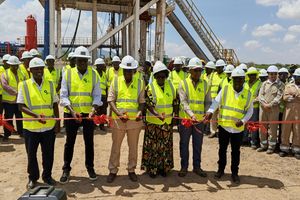
Energy Cabinet Secretary Opiyo Wandayi leads government officials in presiding over Kenya's official oil well spudding ceremony on November 20, 2026, at the Amosing Oil Field in Turkana's South Lokichar Basin.
Photo credit: Sammy Lutta | Nation Media Group
Asked about the controversy, Mr Wandayi declined to pre-empt the President's decision, saying the final choice would be announced by the Head of State.
"A team that encompasses various players within government was put together to work on the naming of our crude oil. The public were invited to bring in their proposals by the State Department of Petroleum. I am happy that we got enough proposals and the team has done enough evaluation of the proposals and sooner than later the name of the crude oil will be availed by the President. Let's hold our horses," he appealed.
The ministry is expected to present the four shortlisted names to President Ruto for selection and unveiling when he launches commercial oil production.
Kenyans invited to submit proposals for names
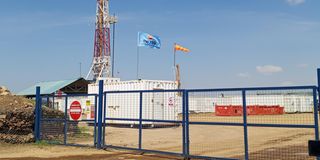
Crude oil drilling rig at Amosing well in South Lokichar Basin, Turkana County.
Photo credit: Sammy Lutta | Nation Media Group
On October 23, the State Department for Petroleum invited Kenyans to submit proposals for a trading name for the crude oil, giving them until October 29. According to an advertisement published in a national newspaper, the public could submit their views through an online portal, by email or by physical delivery in a sealed envelope marked "PUBLIC PARTICIPATION: NAMING OF KENYA'S CRUDE OIL," addressed to the Principal Secretary in the State Department for Petroleum.
The ministry's criteria required a name that was distinctly Kenyan and represented the whole country, conveyed national pride, was easy to pronounce and remember across languages, and was not tied to any county, community or company. It also required that the name carry no political, religious or divisive associations and be available for trademark registration locally and internationally.
The ministry argued that branding was important because every crude oil grade traded internationally has a recognised name.
"Brent speaks for the United Kingdom, Murban for United Arab Emirates, Bonny Light for Nigeria and Pearl Sweet for Uganda. That name appears on cargo documents, international price reports and trading screens and it travels in every barrel the country sells. Kenya's chosen crude name will be the country's commercial identity in the global oil market for decades and it will carry Kenya's story to the buyers globally," the ministry said.
However, residents argue that the national branding ambition should not come at the expense of recognising the host community.
Mr James Namuron, a resident of Nakukulas village, said holding public participation forums in South Lokichar would have given officials an opportunity to understand why locals want their identity reflected in the oil's name.
"The crude oil was discovered in a largely marginalised area and community whose identity with crude oil name can easily attract global support in other sectors like health, water and education," Mr Namuron said.
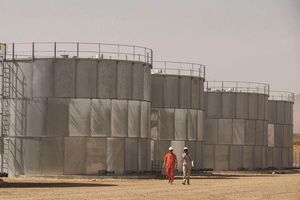
A sample of crude oil at Amosing crude oil development site in Turkana County's South Lokichar Basin.
Photo credit: Sammy Lutta | Nation Media Group
Ms Sylvia Lapur, a local professional and Senate seat aspirant, accused the ministry of shortchanging residents, particularly indigenous communities in South Lokichar who have limited access to national media and rely largely on public barazas to receive information and express their views. She said no public baraza had been organised to give the people whose ancestral land holds the resource an opportunity to influence its naming.
"There was no public baraza that was done for indigenous people who have for decades guided the land where crude oil was discovered to have a say in the name. The name alone with Turkana identity can salvage them from decades of marginalisation related high poverty levels.
"It is a no for names that we have identified with shuttle public service vehicles in Eldoret. It's a no to Great Rift, we need Turkana word in the name for our dignity and heritage be discussed in national and international tables. That oil is the new face of Turkana and not the usual faces of hunger and starvation," Ms Lapur said.
The opposition has now moved beyond public protests, with the Turkana Professionals Association formally petitioning Mr Wandayi to include the county's identity in the branding. In a letter dated November 22, association chairman Jackson Nakusa said the appeal was based on the need to recognise the geographical origin, cultural heritage and identity of communities hosting natural resources.
"Turkana is not merely the location where Kenya's oil was discovered; it is the land whose people, heritage and identity are intrinsically connected to this significant national resource. Across the world, natural resources are often associated with their geographical origins. Such recognition preserves historical identity, establishes geographical distinction and creates a lasting connection between a resource and the community from whose land it originates," he said.
Mr Nakusa argued that recognising Turkana in the oil's branding would be an opportunity to celebrate Kenya's geographical diversity and national heritage rather than undermine the resource's national ownership. He said national development should recognise not only the economic value of natural resources but also the identity and contribution of the communities whose land hosts them.
The professionals have proposed three alternative names: Turkana Oil, which they consider the strongest and most direct expression of geographical identity; Lokichar Basin Oil, which recognises the geological and geographical origin of the resource; and Turkana Sweet Oil, which combines geographical identity with the industry's terminology for sweet crude.
Mr Nakusa also argued that Turkana already has international recognition for its archaeological significance and its contribution to the understanding of human origins.
"The discovery of the famous Turkana Boy and other important fossil remains has placed Turkana prominently on the global map as part of the Cradle of Humankind. It is time that this global recognition is complemented by meaningful appreciation of its natural resources, people, culture and development potential," he said.
The association insists that its demand is not an attempt to claim exclusive ownership of a national resource or promote division, but to secure recognition, dignity and inclusion for the host community.
"Recognising crude oil origin through its name would be a powerful statement of national unity, fairness and appreciation of the communities that contribute to the country's economic transformation. The naming of Kenya's oil presents an opportunity to create a lasting national identity that future generations will proudly associate with their country and its natural heritage," the professionals argued.
Dr Malcolm Lochodo, a Turkana South Constituency aspirant, also questioned the choice of the Great Rift identity, saying it failed to distinguish the specific geographical and cultural origins of the oil. He argued that the Great Rift Valley stretches across several regions and countries and therefore does not adequately identify the people whose ancestral land hosts Kenya's petroleum resources.
"The Great Rift Valley is a geographical feature that stretches across several regions and countries; it is not a specific identity for the people whose land hosts Kenya's oil resources. When the origin and custodians of a resource are completely absent from its name, we risk erasing the very people and places that gave the resource its identity," Dr Lochodo said.
For Turkana residents, the issue goes beyond what will appear on cargo documents and trading screens. They want the name of the oil to tell the story of where it came from, and of the people whose land made its discovery possible.