What is your biggest source of income, and how has that changed over time?
For us, residencies and building the Jukebox brand are more important than working purely as backing musicians for other artistes. Collaborating with other artistes is mostly important for visibility — that's how you build the awareness you need to sustain yourself long-term.
Have you ever had payment disputes with organisers or clients?
There have been cases where an event organiser has tried to shortchange us, even threatening to call the police instead of paying what they owe us. In those situations, you have to handle things carefully: protect the relationship where possible, but also make sure you are not left out of pocket. It's something we're still learning to navigate, but it's worked out well for us overall.
It is commonly believed that it is difficult to earn a living as a musician in Kenya. What is your opinion on this?
The biggest misconception is that there is no money in the industry. There is. Many big companies invest heavily in music. Our director, for example, works as a brand influencer. Companies are investing heavily in this area, but you need to be in the right place, know the right people and take the right approach. There is room for everyone; we even have DJs who specialise purely in morning gigs. It pays well, and this misconception really needs to be debunked.
What do you think needs to change for bands and live music to become more sustainable in Kenya?
Compared to other African markets, the amount of investment going into live entertainment here is still small. You might pitch a proposal and be offered a fraction of what it is actually worth. I wish more people were as invested in the scene as they are elsewhere. There is also a problem with the mindset of instrumentalists themselves.
Many musicians see themselves as background players rather than artists in their own right. They are content to just play the keyboard or drums and hope for the best. That mentality almost affected us too, but we have been actively trying to change it. We were the first band in Kenya to headline our own show; no other band had done that before us.
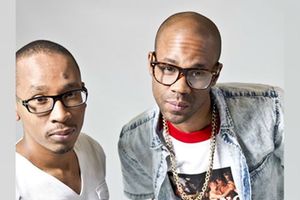
The Jukebox trio — Gavy Mbehero (left), Joe “MJ” Muoka (seated), and Brandon Musalia.
Photo credit: Pool
Have you ever turned down a well-paying gig because it didn't align with your values?
I have many times, and it is never easy. However, we stick to our principles. If something doesn't feel right or doesn't sit well with us, we walk away from it. Respect comes first; we are not purely money-driven, even though gigs are our main source of income. If we sense that someone lacks direction or that the collaboration would be a waste of time, we decline. We also conduct background checks on event promoters before committing to working with them. If someone has a bad reputation or treats people poorly, we won't work with them.
Have you had any opportunities to work internationally?
Our director has performed internationally, and we have also done television work as a group. It's something we're continuing to build on.
Do you have set rates for your performances?
We don't have one fixed rate; it depends on the type of event. For a Jukebox performance, we typically charge around Sh150,000. For corporate events, the price varies considerably depending on the client's budget, usually ranging from Sh150,000 to Sh200,000.
What do you hope people will remember about Jukebox years from now?
They should think of us as a household name, like Sauti Sol. Even people who weren't around when Sauti Sol started know who they are and what they've achieved, including performing at the BET Awards. We want to grow our legacy into something closer to a full entertainment brand, not just a live act. We also want to perform internationally, on stages like Coachella.