What is the right age to start having sex? This is the most common question I get when adolescents come to the Sexology Clinic to seek services. I was therefore not surprised when Jane came to the clinic with the same question.
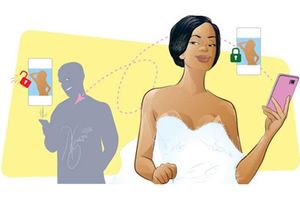
A university student, Jane had been tricked into joining a house party in one of the high-end estates in Nairobi. Her friend called it a social night out with friends. The party was held in a three-bedroom furnished apartment which they rented for the night.
“Boys paid 3K to join the party while girls entered for free,” she explained. “This worried me because there is never a free thing in this world.”
There was music and dancing. Food was delivered by a rider from one of the fast-food places. People ate, talked and laughed freely.
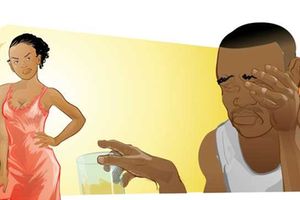
“Then the men each produced the drinks they had brought to the party, real hard stuff; whiskies and other expensive alcohol that I did not know,” she explained. “We started drinking and dancing, and along the way people started puffing weed.”
Long story short, everyone was high and what followed was a sex orgy— everyone having sex with everyone. Many people used condoms. Jane did not know who had sex with her and whether it was one or more people. She did not know if condoms were used on her.
“So, as you check for infection and give me emergency contraceptives, I just need to know what this means for my future,” she said, “I may not get the immediate problems because you are treating me but will I be fine in future?”
Jane was 18 years old. She had been a virgin until this incident. She lived in a conservative family in the village, learnt about life and relationships while in high school where she was a boarder with no chance to try out anything.
Then, set herself loose to mingle and try out things after she joined the university in the city. It was her first semester in campus. She met former high schoolmates who introduced her to the city life.
Jane’s question about the future was a significant one. Everyone warns of infection and pregnancy, and possibly disruption in education when adolescents engage in sex. Many times, it is negative messaging passed down from generation to generation, because Kenya lacks age-appropriate sexuality education.
Adolescents are, however, exposed to many sources of information. Their peers are, for them, the most trusted source of information. They also interact with social media. Further, they research things disturbing them on the internet and get solutions. Sometimes, this learning process, which is many times experiential, comes with risks, and they get their own solutions. They rarely involve their parents in difficult decisions, noting that hitherto parents have let them down by not exposing them to the full sexuality education.
Back to Jane’s question, it reminded me of a report published this year in the Journal of Sexual Medicine. In this study, Huang and his colleagues looked at the association between the interval of starting periods and first sexual intercourse and related this to mental and sexual health outcomes. They looked at data of 7,685 women over a 10-year period.
Strikingly, girls who had sexual intercourse within two years of their first menstruation had high rates of depression later in life. One out of three of them ended up with depression at some point. These rates reduced progressively the longer it took between first menstruation and first sexual intercourse so that those who waited for eight years or more had the lowest rates of depression.
These findings, and others which have previously been published, are important in understanding the price we pay by not providing structured sexuality education to children and adolescents.
Depression is just one among the many mental health problems that we are exposing young people to by denying them structured capacity development on their sexuality. The mental health problems come later in life, and, in many cases, people may not even link them to sexual experiences in early life.
Huang’s study further confirms what is already known about chronic viral infections that accompany early sexual debut. Herpes simplex is common leading to repeated painful genital wounds later in life. Then there is Human Papilloma Virus (HPV).
Early infection increases chances of lifelong career status which is linked to development of cervical cancer much later in life. Unlike HIV, these viral infections cannot be averted even if one sought care immediately after sexual exposure.
“Are you implying that I am a gone case now; that my future is doomed because of this one mishap?” Jane interjected, her eyes welling up with tears.
Well, there is need to get mental health support if you have been under similar circumstances as Jane. It may be that you started sex early and that it was voluntary, but it is still important to get assessed and supported.
Biologically, early sexual debut interferes with psychosocial development and may alter brain development, and this is what leads to vulnerability to mental health problems in future.
Should you go for psycho-sexual assessments, remind the doctor to also check for the presence of chronic viral infections for appropriate follow up to avert complications that may come later in life.