Four proposals contained in the Finance Bill, 2026, risk sinking President William Ruto’s Bottom-up Economic Transformation Agenda (BETA), according to Auditor General Nancy Gathungu.
Ms Gathungu, in her presentation to the National Assembly Finance and Planning Committee over the Bill, said unless Parliament makes targeted and necessary changes to the proposed legislation, Dr Ruto’s plan will not be realised with the proposals as currently contained in the Bill.
The Auditor General warns that without urgent remedial actions on revenue administration, internal controls, and structural inefficiencies, the Bill may not achieve its intended purpose of raising revenue to finance the Ruto administration agenda.
Ms Gathungu has taken issue with clause 31(a)(vii) of the Bill, which proposes the deletion of paragraph 109 of the First Schedule to the Value Added Tax (VAT) Act, which covers goods imported or bought locally for use in the construction of houses under the affordable housing scheme approved by the Cabinet Secretary.
According to the Auditor General, the import of this proposal is that the goods imported or purchased locally for affordable housing projects will now be subjected to VAT at 16 per cent, thereby increasing construction costs.
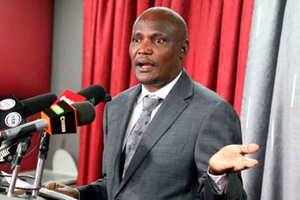
Auditor-General Nancy Gathungu has weighed in on President William Ruto's bottom-up agenda and the Finance Bill.
Photo credit: NMG
“This is likely to make affordable housing units more expensive for Kenyans, with developers expected to pass the additional costs to buyers. The amendment also appears inconsistent with the objectives of the Government’s affordable housing agenda under the Bottom-Up Economic Transformation Agenda (BETA),” says Ms Gathungu.
Ms Gathungu has also raised concern on Clause 31(a) (ix) paragraph 160 and First Schedule to the Value Added Tax Act Animal feed inputs/raw materials of the Bill. This proposes a change from zero-rated to exempt status for inputs or raw materials locally purchased or imported for the manufacture of animal feeds, upon the recommendation of the Cabinet Secretary for the time being responsible for matters relating to agriculture.
The import of this proposal, according to Ms Gathungu, is that farmers will not be able to claim input VAT upon purchase of animal feeds and that will be passed to the consumers, increasing the price of animal feeds
“This is a threat to an enabler of sustainable economic transformation highlighted in the Budget Policy Statement and agricultural transformation under the BETA pillar,” Ms Gathungu said.
According to Ms Gathungu, the inputs or raw materials locally purchased or imported for manufacture of animal feeds should be zero-rated.
Of concern also to the Auditor General is clause 31(a) (ix) [paragraph 161 of the First Schedule to the Value Added Tax Act Pharmaceutical manufacturing inputs, where the Bill proposes a change from zero-rated to exempt of pharmaceutical manufacturing inputs.
According to Ms Gathungu, this means that manufacturers will no longer deduct and claim VAT refunds, a move she says is a threat to achieving Universal Health Coverage (UHC), one of the pillars of the BETA plan.
“Although the proposal is in line with the Medium- Term Revenue Strategy that aims to progressively strengthen tax revenue mobilisation as outlined in the Budget Policy Statement, the move will also impact on the production cost of substances used for medical treatments and that would negatively impact on achieving Universal Health Coverage of the BETA pillar,” Ms Gathungu says
According to the Auditor General, inputs or raw materials locally purchased or imported for manufacture of pharmaceutical products should be zero-rated.
In addition, Ms Gathungu has also raised concerns on clause 31(b) Part II paragraph 1 (b) of the first Schedule of the Bill on exemption of financial services where the Bill proposes to remove existing VAT exemptions on money transfers and payment processing.
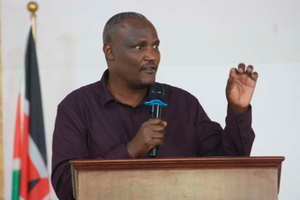
Auditor-General Nancy Gathungu.
Photo credit: Dennis Onsongo | Nation Media Group
According to the Auditor General, this goes against the transformation of Micro, Small and Medium Enterprises (MSME) economic agenda under the Bottom-Up Economic Transformation Agenda as outlined in the Budget Policy Statement.
In the run-up to the 2022 General Election, Dr Ruto, while seeking to be President, anchored his campaign on BETA projects. This was reaffirmed after he took over in September 2022.
The BETA plan is premised on five pillars which include Agricultural Transformation, Micro, Small and Medium Enterprise (MSME) economy; healthcare; housing and Settlement; and the digital Superhighway and creative Industry.
The BETA plan has been designed to address the current challenges facing the country’s economy, stimulate economic recovery and bolster resilience.
It places special emphasis on priorities that target reduction in the cost of living, creation of jobs, achievement of more equitable distribution of income, enhancement of social security, expansion of the tax base and increase of foreign exchange earnings.
The key enablers for these pillars include blue economy, education and training, environment and climate change, foreign policy and regional Integration. Others are governance, infrastructure, manufacturing, service economy, women agenda, social protection, sports, culture and arts and youth empowerment and development agenda.
The fertiliser subsidy programme, for example, was introduced as an intervention to cushion farmers against high prices. In the BETA plans, the Kenya Kwanza administration also prioritised the establishment of County and Industrial Parks (CAIPs) in each county with the main aim of growing the manufacturing sector and investment through Agro-Industries.
However, Ms Gathungu now says that without addressing the compliance and fiscal sustainability risks as contained in the Finance Bill, 2026, financing the BETA plan may not be possible.
“Without urgent remedial actions on revenue administration, internal controls, and structural inefficiencies, the Bill may fall short of delivering the expected revenue outcomes and could undermine the objectives of the Bottom-Up Economic Transformation Agenda (BETA),” Ms Gathungu says.
She added: “Without addressing the structural drivers of underperformance, the ambitious revenue uplift anticipated from the Bill may not materialize, further widening the fiscal gap and undermining the BETA implementation goals outlined in the Budget Policy Statement.”
Ms Gathungu has urged Parliament to demand realistic, verified revenue forecasts for each new provision and link their approval to measurable improvements in tax base expansion and formalization.
“I urge Parliament to address the recommendations above to safeguard public finances, support BETA objectives, and protect citizen welfare,” Ms Gathungu says.
The committee is expected to table its report next week on its consideration of the Finance Bill, 2026.