Parliament has extended the Kenya-United Kingdom Defence Cooperation Agreement (DCA) by one year, allowing the British Army Training Unit Kenya (Batuk) to continue training in Laikipia County as the two countries seek to resolve outstanding concerns over the conduct of British soldiers.
The extension, approved by MPs on Tuesday night, gives the UK government 12 months to address issues raised by Parliament, including the prosecution of British soldiers accused of committing crimes in Kenya and the introduction of a corporate social responsibility component for Batuk.
The decision came despite unresolved concerns raised by the National Assembly’s Committee on Defence, Intelligence and Foreign Relations, which recommended a conditional extension to allow continued defence cooperation while pressing for progress on the outstanding issues.
In its third progress report on the DCA, the committee, chaired by Belgut MP Nelson Koech, recommended that the Ministry of Defence issue a conditional one-year extension of Batuk's training licences.
“The committee therefore recommends that this House authorise the Ministry of Defence to issue a conditional one-year extension of the Batuk training licences,” the report states.
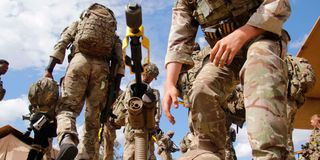
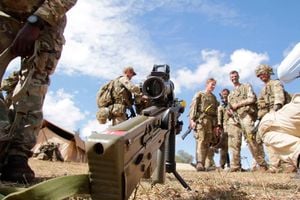
British Army soldiers during a training exercise in Lolldaiga, Laikipia County. on November 14, 2022.
Photo credit: File | Nation Media Group
The committee said the extension was a temporary measure intended to give the government time to address outstanding parliamentary resolutions and issues arising from the defence agreement.
“The committee further considered the request for a conditional one-year extension of the Batuk training licences as a temporary arrangement within which the outstanding House resolutions and DCA matters should be substantially addressed,” the report adds.
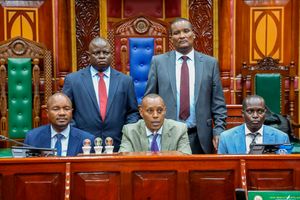
Moving the report, committee vice-chairperson and Mandera North MP Major (Rtd) Bashir Abdullahi said the extension would allow defence cooperation to continue while providing a defined period for resolving Parliament’s concerns.
The committee had held three engagements with the Ministries of Defence and Foreign Affairs, as well as the Attorney-General, before meeting the UK Minister of State for Defence to discuss the outstanding issues.
Mr Abdullahi said the extension would cease to be operational if the outstanding matters were not addressed within the stipulated period.
“It is our hope that within the lapse of the one-year period, all the issues will have been resolved,” he said.
Kinangop MP Kwenya Thuku said the committee remained committed to securing justice for Kenyans who had suffered at the hands of British soldiers.
He said Kenya had maintained cordial relations with the UK despite concerns that the British troops could withdraw from Nanyuki, insisting that economic benefits should not take precedence over human rights.
“We have had a cordial relationship with the UK despite facing threats of the soldiers withdrawing from Nanyuki. We stood our ground and said no economic benefits supersede human rights. We are still seeking justice for the atrocities committed by British soldiers, especially in the death of Agnes Wanjiru,” Mr Thuku said.
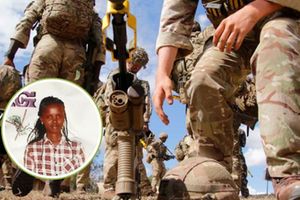
Agnes Wanjiru was reportedly killed by a British soldier in Nanyuki in 2012.
Photo credit: File | Nation
Ms Wanjiru was killed in Nanyuki in 2012. Her death has remained a major point of contention in discussions over the accountability of British soldiers operating in Kenya.
Mr Thuku said the committee had met the British High Commission and was informed that the soldier alleged to have killed Ms Wanjiru was facing judicial proceedings. He expressed hope that the one-year extension would provide sufficient time to address the outstanding concerns.
Majority Leader Kimani Ichung’wah said the extension should not be interpreted as Parliament abandoning its demand for accountability.
“As much as we are giving this extension, it does not mean that we have forgotten the crimes committed against the people of Laikipia,” Mr Ichung’wah said.
Molo MP Kimani Kuria said Kenya should use the extension to secure greater authority to prosecute British soldiers accused of committing crimes on Kenyan soil.
“There must be a balance on immunity privileges. If they commit a crime on Kenyan soil, why do they have to be repatriated back to their country?” he posed.
Under the current agreement, certain serious offences are excluded from the definition of “official duty”, allowing Kenya to exercise primary jurisdiction over those cases. However, murder is not expressly included in the list, leaving room for disputes over which country has jurisdiction to prosecute British soldiers accused of the offence.
Parliament has insisted that Articles 6(5) and 23 of the agreement be amended to expressly include murder among offences falling under the jurisdiction of Kenyan courts. It has also called for the inclusion of a corporate social responsibility component for Batuk.
Section 8 of the Treaty Making and Ratification Act requires the National Assembly to consider and approve treaties proposed for ratification. Section 8(9) provides that the House shall not approve the ratification of a treaty, or any part of it, if its provisions are contrary to the Constitution.
Batuk has operated in Kenya under the UK-Kenya Defence Cooperation Agreement, which was ratified in 2016.
A new agreement was submitted to Parliament for ratification on September 6, 2021, by the Cabinet Secretary for Defence. However, the term of the 12th Parliament ended before the House could approve it.
The agreement was subsequently resubmitted to the 13th Parliament in November 2022. Following public participation, the committee recommended its ratification on condition that Articles 6(5) and 23 were amended.