The Kenya Defence Forces (KDF) will play a major role in determining whether Kenya enters into a Defence Cooperation Agreement (DCA) in future if Members of Parliament approve the various proposals under consideration.
Following the recent stalemate with the United Kingdom over the jurisdiction for trying foreign soldiers who commit offences while training on Kenyan soil, lawmakers are considering giving the KDF more power to approve such agreements after scrutinising the terms of engagement.
The proposals, which are still in the drafting stage, will see the KDF inspect the weapons that foreign soldiers are bringing into the country and make the final decision on whether the training will have a devastating effect on neighbouring communities.
Kenyan soldiers will also have the power to determine where such training takes place, with the draft proposals indicating that no foreign country will be permitted to set up a training camp in any border area.
For example, visiting troops would not be permitted to set up a training camp between Kenya and Somalia, as this would hinder the KDF's ability to secure the country's borders effectively.
There are also concerns that setting up training camps near the border could give Kenya's perceived enemies access to the territory, or cause the visiting troops to cooperate with the enemy.
The Kenya Defence Forces soldiers during a past function.
Photo credit: File | Nation Media Group
Further, KDF will also ensure that there is no major disparity in payment agreement between visiting troops, private ranchers and the land of the host community. This meant to cure the situation where visiting troops pay more to private ranchers and peanuts to the locals.
“These are the templates that the Defence, Intelligence and Foreign Relations committee will be working on in determining future Defence Cooperation Agreements,” said an officer working on the document to be tabled in the House soon.
The National Assembly is currently embroiled in a standoff with the UK over the renewal of the Defence Cooperation Agreement to allow the British Army Training Unit in Kenya (Batuk) continue training in the country in future.
Parliament has insisted that Articles 6(5) and 23 of the cooperation must be amended to include murder as one of the offences within the jurisdiction of Kenyan courts and include a Corporate Social Responsibility component by the British Army Training Unit in Kenya (Batuk).
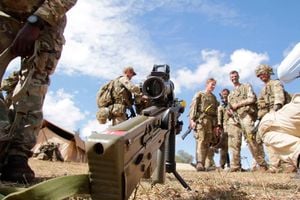
British Army soldiers during a training exercise in Lolldaiga, Laikipia County. on November 14, 2022.
Photo credit: File | Nation Media Group
As currently drafted, the agreement excludes certain serious offences from the definition of “official duty”, giving Kenya primary jurisdiction over those cases. However, murder is omitted from that list, leaving room for Britain to claim jurisdiction over such cases — a loophole Kenyan lawmakers’ want closed.
The House is currently examining three DCAs-which includes the agreement between the government of Kenya and the government of the Republic of Angola which was signed on May 25, 2026 by the Cabinet Secretaries for Defence of both countries.
The Agreement provides for areas of cooperation which include military training and exercises; exchange of information and intelligence, maritime security, cyber security, counter-terrorism and counter-violent extremism; and humanitarian operations, among other areas.
The second DCA is the agreement between the government of Kenya and the government of the Republic of Turkiye.
The agreement seeks to provide a framework for relations and develop cooperation between the Parties for several areas of cooperation which include military training and education, exchange of military intelligence and mutual participation in exercises and training, among other areas.
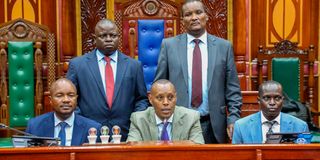
The National Assembly in a past session.
Photo credit: File | Nation Media Group
The committee undertaking a critical analysis of each of the Defence Cooperation Agreements and considering submissions from the public and all relevant stakeholders in accordance with the requirements of section 8 of the Treaty Making and Ratification Act, Cap 4D.
Borrowing from its experience with the Defence Cooperation Agreement between the government of Kenya and the UK government, the Committee already has defined parameters that it will be considering in making its recommendations on the two Agreements, for adoption.
In examining the agreements, the committee will seek to safeguard the interests of the country and the local communities by ensuring that the jurisdiction provisions under which personnel of sending states can be charged for criminal offences committed in the country are watertight.
The Committee will also be examining provisions on compensation of local communities in case of damage or loss of property; and provisions on enhancing community relations through corporate social responsibility activities that may be undertaken by the sending states.