Kenya’s transition from the 8-4-4 education system to Competency-Based Education (CBE) a decade ago was meant to usher in a new era of inclusivity, skill-based learning, and equity.
The reforms promised to unlock potential by focusing on what learners can do rather than what they cannot. Yet, for thousands of children living with disabilities, that promise remains elusive.
Instead of opening doors, the transition has exposed deep cracks in the system that risk leaving them behind.
Nominated Senator Catherine Mumma recently laid bare the personal struggles of parents raising children with severe disabilities. She revealed how her family had to fund the running of a private school because no public institution could accommodate her child.
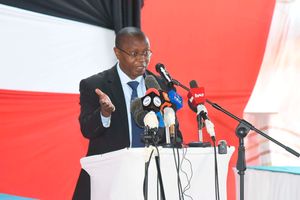
“CS Julius Ogamba, I declare my interest; I am a parent of a severely disabled child. That child could never find a public school. Parents have had to find their own school, and for some years my husband had to fund its running because we could not find a school suitable for her,” she said during a meeting with Education Cabinet Secretary Julius Ogamba and other stakeholders.
Her testimony stunned the room into silence. For Ms Mumma, the issue is not just personal, it is systemic. She questioned why special needs schools receive minimal funding compared to regular schools.
“The special needs schools require about Sh39 million, yet only one million shillings has been disbursed per school. Do we really care about children with disabilities? Is one million shillings enough to sustain a school catering for learners with special needs? Can we tell the country that this is all we have allocated?” she challenged the CS.
Her remarks exposed the stark underfunding of public Special Needs Education (SNE) institutions.
The Ministry of Education headquarters Jogoo house Nairobi.
Photo credit: File | Nation Media Group
Senate Education Committee Chair Betty Montet urged the Ministry of Education to collect data on public SNE schools and learners, insisting that funding gaps must be corrected to ensure equity and equality for all Kenyan children.
While Ms Mumma has the privilege of a good medical cover and political influence, owing to the nature of her job, for ordinary parents like Jannat Naim, the struggle is raw and relentless.
Motherhood for Ms Naim came with a silence she never expected. Raising three children with hearing impairment broke her at first not because she did not love them, but because she could not understand them.
Her home was filled with silence, unanswered questions, missed expressions, and moments that should have been simple but felt painfully complicated.
“My husband left us, saying I was only giving birth to disabled children. I have four children but three have hearing impairment. Instead of wallowing in self-pity, I picked myself up and decided to be their mother and father. But I am going through a lot of challenges, especially in paying their school fees,” she says.
Ms Naim pays Sh20,000 per term for her children in PP1, PP1 and Grade 1 at Ziwani School for the Deaf in Mombasa. Unlike many parents who hide their disabled children, she refused to give up, insisting her children must go to school no matter their ‘disabilities’.
She also attends the same school, to learn sign language, in order to communicate better with her children and help them with their homework.
At Ziwani, children once hidden at home, have found their voice. The school hosts 192 learners and 20 teachers, including caregivers. But for Ms Naim, the journey has been lonely after her husband deserted the family.
“As mothers with special needs children, we go through a lot from stigma, to being deserted by spouses. I am jobless but I work as a mama fua (casual laundry lady) to make ends meet. I source bursaries for my children to access education, but it is tough having three children with hearing impairment,” she told Nation during the interview.
“Many disabled children do not go to school because it is expensive. Some are being used [by some people] to beg in the streets; this is inhumane. Once my children complete primary and junior school, they will have to go outside the Coast region for senior school because there are no such schools in this region,” she explains.
At Ziwani, teachers are not just educators, they are interpreters, caregivers, and mentors. But for them, it is not a walk in the park.
“It is so interesting interacting with our SNE learners. If you are passionate about these children, it becomes easy to teach them,” says Ms Esther Njoki, a teacher at the school.
With the transition to CBE, learning is now centred on each child’s ability.
Yet challenges persist. “Teaching materials are expensive. These learners need videos, projectors, and specialised resources. Currently, we don’t have enough we are trying to cope with what we have,” teacher Njoki adds.
Technology is at the heart of modern education, but here, access is limited.
Despite the challenges, local initiatives are making a difference. Ms Naim credits Mombasa Governor Abdulswamad Nassir’s “No Child Left Behind” programme, which includes free feeding schemes, for keeping her children in school.
“The feeding programme has come in handy to ensure my children are fed while in school,” she says.
“Through the County Government, a school feeding programme is helping keep children in class,” says Dr Mbwarali Kame, the county executive member for education.
Ms Njoki adds that the feeding programme ensures learners get enough food, which makes the transition to primary school seamless.
While the Teachers Service Commission (TSC) has deployed over 9,000 teachers trained in Special Needs Education, critical areas such as deaf-blindness and multiple disabilities have only a handful of specialists. This leaves many learners without the tailored support they require.
According to the latest data, 1,035 teachers currently in service have specialised SNE training. The highest number are trained in Intellectual and Developmental Disabilities (555), followed by Hearing Impairment (131) and Emotional and Behavioral Difficulties (130). But critical areas such as Deaf-Blindness have only five trained teachers nationwide.
“As of March 2026, there are 9,437 teachers in SNE schools and units, supported by 1,184 curriculum officers. Most are based in primary SNE schools (4,917) and units (3,524), with fewer in junior (511) and senior schools (485),” said acting TSC CEO Evaleen Mitei.
She acknowledged that cerebral palsy and multiple disabilities remain constrained by limited availability of trained teachers.
“We are working with the Kenya Institute of Special Education to train around 200 teachers in specialised areas to fill these gaps,” she added.
Behind the statistics are families like Ms Naim’s, struggling against stigma, poverty, and systemic neglect. Her story illustrates the resilience of parents who refuse to hide their children, even when society turns away. It also underscores the urgency of government action.
“Kenya’s education reforms were meant to unlock potential, not deepen exclusion. Yet for children with disabilities, the promise of CBE remains distant. Without adequate funding, infrastructure, and specialised teachers, these learners’ risk being sidelined,” said Ms Naim.