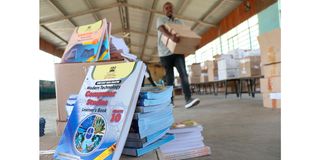
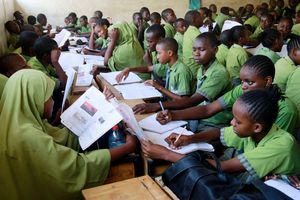
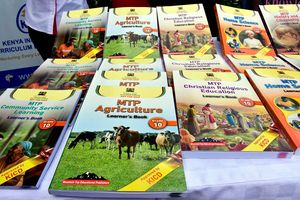
Learners transitioning to Grade 11 in January may start the new class without key materials as publishers delay the printing and distribution of textbooks over Sh7 billion owed to them by the government for previous supplies.
Grade 11 will be the newest class under the competency-based education (CBE).
School principals now fear a repeat of textbook shortages and delays that disrupted the start of senior school (Grade 10) in January this year.
Publishers who were awarded contracts to print the books have not begun doing so, citing unpaid bills.
The companies say they published books and supplied them to the government for distribution to schools countrywide but were never paid in full.
“The Grade 10 experience was a warning. Teachers had to cope with gaps in learning materials, and students could not access the books required. Headteachers are worried the same thing could happen at the beginning of next year,” a senior school principal in Bungoma County told the Daily Nation .
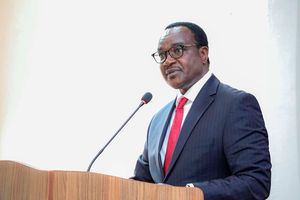
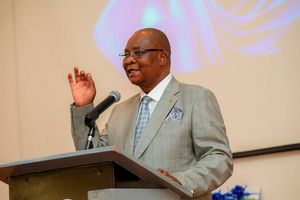
Kenya Publishers Association Chairman Musyoki Muli in Meru County on May 28, 2026. He says the government has promised to pay the bulk of what it owes publishers in November, with the balance to be released in January next year.
Photo credit: David Muchui | Nation
The rollout of Grade 10 in January was affected by shortages of teaching and learning materials. Thousands of students remained without textbooks until second term.
Publishers delayed supplying the books to the government, demanding that they be paid for the books bought earlier.
For principals, the prospect of another transition has revived memories of learners beginning a new level while schools are still grappling with textbook shortages.
Usually, the Kenya Institute of Curriculum Development (KICD) begins distributing books to schools in August or September.
“What heads, teachers and school managers worry about is the timing. The books need to be in school before teaching begins,” another principal said.
Education Cabinet Secretary Julius Ogamba before the flagging off of the distribution of Grade 10 textbooks at English Press Ltd offices on January 22, 2026.
Photo credit: Francis Nderitu | Nation Media Group
The distribution might also be affected by limited access to schools during the administration of national examinations, leaving publishers with a limited window to complete deliveries before the end of this academic year.
“Once the national examinations begin, movement in and out of schools becomes restricted. That means there is a very small window to ensure these books are delivered,” the principal added.
Kenya Publishers Association (KPA) Chairman, Musyoki Muli, said the outstanding debt is down to Sh7 billion after the government released Sh2 billion last week.
“We are in contact with Ministry of Education officials and they have indicated that the bulk of the amount will be released in November and the balance in January next year,” Mr Muli told the Daily Nation.
“ The outstanding debt has not yet affected our ability to print and distribute textbooks, but if the government does not pay the balance by the promised dates, publishers will have to revisit the matter.”
The KICD also evaluates the suitability of school textbooks. The evaluation was completed in May and the institute has already advertised tenders for the supply of Grade 12 learning materials.
“We are not asking for much. We simply want the books made available before learners start Grade 11. We don’t want Grade 11 to become another textbook crisis,” a principal said.
A teacher collects newly arrived Grade 10 textbooks from the collection centre in Nakuru Day Senior School on February 3, 2025.
Photo credit: Boniface Mwangi | Nation Media Group
Mr Ndung’u Wangenye, the chairperson of the Education Stakeholders of Kenya, said delays in distributing textbooks could disrupt preparations for the rollout of Grade 11.
Mr Wangenye added that students, teachers and schools need the books early to prepare for what lies ahead.
“These students will have completed Grade 10 by the end of this academic year. Timely distribution of books will help schools prepare for the implementation of the curriculum, bearing in mind that this is the CBE pioneer class,” he said.
He criticised the Ministry of Education, saying the books should be sent to schools before the national examinations begin.
“It is unfortunate that the ministry is responsible for all this. We shouldn’t always be rushing to do things when we had all the time. We are likely to make mistakes when we do things hurriedly,” Mr Wangenye said.
He added that rushing the distribution could lead to some schools receiving the wrong textbooks or some getting more than what is needed as cited by the Auditor-General in her recent report.
“A school could be specialising in chemistry, but ends up getting physics books,” he said.