Large admission capacities, diversified academic programmes and expanded facilities are the key reasons Kenya's biggest public universities once again dominated this year's Kenya Universities and Colleges Central Placement Service (KUCCPS) placement, according to the agency.
However, several smaller and specialised universities filled more than 90 per cent of the places they declared for placement, with KUCCPS saying their lower admission numbers reflect limited programme offerings and capacity rather than a lack of demand.
The 2026 university placement results show that Kenyatta University admitted the highest number of students at 11,224, followed by Maseno University (9,196), Moi University (8,869), the University of Nairobi (8,604), Chuka University (7,946), Kisii University (7,903) and Masinde Muliro University of Science and Technology (7,586).
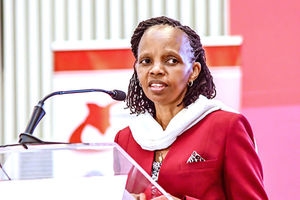
According to KUCCPS Chief Executive Officer Dr Agnes Mercy Wahome, the answer lies largely in capacity.
Entrance to Maseno University's main campus.
Photo credit: File | Nation Media Group
Established universities offer significantly more degree programmes and declare far more student places for placement than smaller or specialised institutions.
“The number alone does not tell the whole story. Large universities naturally admit more students because they offer many more programmes. A specialised university may have only a few courses but still fill more than 90 per cent of the capacity it declared to KUCCPS. Looking only at absolute numbers can therefore be misleading,” Dr Wahome said.
She said older universities continue attracting more students primarily because they have diversified academic offerings built over decades.
“Almost all public universities filled more than 50 per cent of the capacities they declared. Older universities attract more students because they offer many more programmes—not necessarily because they are more preferred,” she said.
The Chairman of the Committee of Vice-Chancellors of Public Universities, Prof Daniel Mugendi said the latest placement follows a pattern that has remained largely unchanged over recent years, with established universities consistently attracting the highest numbers of students.
“There is really nothing surprising. If you look at the trend over the last three years, it has remained almost the same. The bigger universities continue to be on top, followed by the medium-sized institutions, while the newer universities are still building up their numbers,” Prof Mugendi told the Nation.
The Vice-Chancellors' chairman agreed, saying student numbers are determined largely by the range of academic programmes offered and the facilities available.
"Numbers are a function of programmes and facilities. As universities develop more programmes and expand their facilities, they are able to admit more students. Bigger universities have more programmes and more facilities, so naturally they attract larger numbers," he said.
The diversity of programmes also means students have a wider range of options within the same institution. Comprehensive universities offer everything from medicine and engineering to education, business, law, agriculture and the arts, allowing applicants with different grades and career interests to secure placement in one institution.
By contrast, specialised universities tend to admit fewer students because many of their courses require expensive laboratories, specialised equipment and professional training facilities that naturally limit class sizes.
“Most of these programmes require laboratories, so class sizes are naturally smaller. Science-based universities will therefore admit fewer students," Dr Wahome said.
The entrance to the University of Nairobi, main campus.
Photo credit: File | Nation Media Group
“The numbers should therefore be interpreted in context. A university admitting more students is not necessarily more preferred. In many cases, it simply has more programmes and greater capacity to admit learners," she said.
KCSE performance also shapes admission patterns. Science and engineering programmes require strong grades in Mathematics, Chemistry and Physics, reducing the pool of qualified applicants.
"If only a small percentage of candidates attain the grades required in subjects like Chemistry and Physics, naturally those programmes will have a smaller pool of students to admit," she said.
The committee chairman said newly chartered universities should not be expected to attract the same numbers as older institutions because growth in enrolment depends on gradual expansion.
"Being granted a charter does not automatically translate into high student numbers. Numbers increase as universities introduce more programmes and develop more facilities," he said.
He cited the University of Embu as an example, saying its enrolment has steadily grown over the years, from fewer than 1,000 students in its early years to more than 4,200 in the latest placement, with further increases expected as new academic programmes are introduced.
Dr Wahome said reforms to the placement process have also contributed to more balanced admissions. Unlike in the past, when students selected degree programmes before sitting the KCSE examination, applicants now make their choices after receiving their results.
“In the past, everybody believed they would do well and therefore applied for the premium courses. Now they apply after getting their results, so the choices are based on reality,” she said.
The change has reduced placement revisions and increased the number of students securing their preferred programmes during the first application. It has also been supported by greater transparency, including publication of previous years' cut-off points, improved applicant information and opportunities for course revision and inter-university transfers.
Placement trends further show that students are increasingly choosing programmes linked to employment opportunities. Health sciences continue to attract strong demand because of local and international job prospects, while teaching courses remain popular due to growing opportunities in Kenya and abroad. Technology-related programmes are also gaining traction as learners respond to changes in the labour market.
At the Technical and Vocational Education and Training (TVET) level, agriculture-related courses that once struggled to attract applicants are now filling to capacity. Programmes such as agricultural extension and animal health have become increasingly popular as more young people view agribusiness as a commercial venture rather than a retirement occupation. Overseas employment opportunities for TVET graduates have further boosted demand.