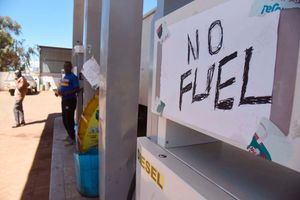
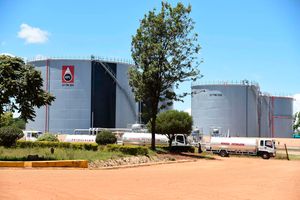
A consignment of substandard fuel is already in the market after the Kenya Pipeline Company (KPC) said the petroleum was mixed with the remaining stocks and released to Oil Marketing Companies.
This contradicts assurances by the government a week ago that the 60, 000 tonnes of fuel with high levels of Sulphur- four times about accepted limits- was withdrawn from the market.
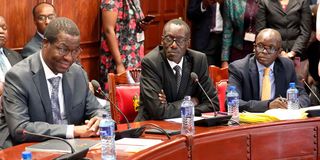
Kenya Pipeline Acting Managing Director Pius Mwendwa told the Senate Energy committee on Tuesday the consignment that had failed quality tests was nonetheless allowed into the country’s fuel distribution system following a waiver from the Trade ministry.
His disclosure sharply contradicts earlier public assurances by the Ministry of Energy that the consignment had been blocked from entering the market and would instead be removed from the country.
Mr Mwendwa told senators that the country had only experienced two instances where substandard fuel shipments were intercepted at the point of entry.
In 2019, 108,203 tonnes of fuel onboard a vessel, MT Ocean Tiara, was rejected for failing to meet the standards.
On 27th March 2026, the company received 60,000 tonnes aboard MT Paloma. The fuel was tested to ensure compliance with the standard and rejected due to high levels of sulphur but later allowed into the country for the oil marketers following a waiver granted by the Cabinet Secretary for Trade Lee Kinyanjui.
“We received the consignment on 27th March 2026 but after measuring it we realized there were high levels of Sulphur. It had a sulphur content of 43ppm against the requirement of 10pm,” he told senators.
“We received a waiver letter from the cabinet secretary of Trade to allow the consignment into the country and into our systems as per his instructions. The fuel was allowed into the KPC system and later released to oil marketing companies pursuant to the waiver,” he added.
Documents tabled before the committee show that the instructions were contained in a letter dated March 28, 2026, from Mr Kinyanjui to Energy Cabinet Secretary Opiyo Wandayi.
Investment, Trade and Industry Cabinet Secretary Lee Kinyanjui.
Photo credit: Dennis Onsongo | Nation Media Group
The letter directed that the 60,000 tonnes of the substandard petrol be blended with existing stocks to dilute the excessive manganese and sulphur levels detected in the consignment aboard MT Paloma.
“The Premium Motor Spirit (PMS) onboard MT Paloma be comingled with the current stock to mitigate excess manganese,” read the letter by Mr Kinyanjui.
The letter further instructed Kenya Pipeline Company and the Energy and Petroleum Regulatory Authority (Epra) to control distribution of the blended fuel while awaiting another consignment expected in early April.
“That Kenya Pipeline Company Limited, working in conjunction with the Energy and Petroleum Regulatory Authority, to control the distribution of the comingled PMS awaiting arrival of the next PMS consignments,” read the letter tabled before the committee.
The contaminated fuel was also to be mixed with the consignment on early April to mitigate the effects of the excess sulphur in the fuel.
The shipment expected in early April was a 96,000 metric tonne consignment by Oryx Energies Kenya.
However, Oryx Energies Kenya Chief Executive Officer Angeline Maangi told the committee that the vessel carrying the fuel was diverted to another destination after the government cancelled the tender under which the supply had been arranged.
The revelations triggered concern among senators who questioned the safety implications of releasing the contaminated fuel into the market.
Narok Senator Ledama Ole Kina raised concern regarding the quality of the fuel supplied to the consumers.
“We are already seeing instances of vehicles already burning on our roads and you have come across this. How would we allow all this to continue and endanger the lives of Kenyans?” he questioned.
Mr Mwendwa told the senators that although there was a directive by Mr Wandayi to exit the substandard fuel from the KPC system, discussions were still ongoing on how to implement the order.
“The owner of the Cargo was however, instructed to exit the product from the KPC system. So far, we are in discussions on the modalities of effecting the directive,” he said.
He also distanced the pipeline company from the responsibility of disposing of the contaminated fuel, saying the mandate lies with the State Department for Petroleum and sector regulators.
The disclosures emerged even as the government had earlier insisted that the consignment would not enter the local fuel market.
CS Opiyo Wandayi when he apeared before the National Assembly Departmental Committee on Energy on Monday, April 13, 2026.
Photo credit: Dennis Onsongo | Nation
In a press statement dated April 7, Energy Cabinet Secretary Opiyo Wandayi said the shipment had been imported outside the government-to-government fuel supply framework and risked disrupting the pricing system.
“Consequently, the Government, through the Ministry of Energy and Petroleum, and in addition to the measures already undertaken, has now directed that: One Petroleum Ltd, the company that imported the said product and invoiced Oil Marketing Companies, immediately withdraw all invoices issued and raise credit notes; Oil Marketing Companies should neither pay the invoices nor uplift product from this consignment; One Petroleum Ltd is directed to exit this product out of Kenya as soon as possible; and Energy and Petroleum Regulatory Authority is directed to subsequently exclude this product from the monthly computation of petroleum product costs,” he said.
He directed One Petroleum to withdraw its invoices and ordered oil marketing companies not to uplift the product while the company arranged to remove the cargo from Kenya.
Shortly after, One Petroleum Limited also issued a statement saying it was taking steps to ensure the fuel does not enter the Kenyan market.
“In March, One Petroleum Limited, was one of four bidders that successfully responded to an emergency request issued by the Kenya Ministry of Energy and Petroleum… One Petroleum Limited confirms that it has taken steps to ensure that the cargo brought in on 27th March 2026 via MT Paloma does not enter the Kenyan market,” the company said.
However, testimony before the Senate committee suggests that the fuel had already been blended with existing stocks and released into the market before the government announced the withdrawal directive.
One Petroleum Limited declined to appear before the committee and instead questioned the mandate of the Senate to investigate the matter.
Documents tabled before the committee also showed that Kenya received unusually high volumes of fuel imports in March.
According to data from Kenya Pipeline Company, the country received 403,343 metric tonnes of fuel during the month, significantly higher than the 277,920 metric tonnes recorded in February.
The figures were presented even as officials maintained that the country had sufficient fuel reserves to meet local demand. However, documents presented to senators indicated that KPC currently has only 16,995 metric tonnes of diesel only in stock for the month of April, raising questions about the country’s supply levels.
The paperwork tabled before the committee also exposed what senators described as inconsistencies in the approval process that allowed the disputed fuel consignment into the country.
Records show that the then Principal Secretary for Petroleum, Mohammed Liban, requested a waiver on March 26 to allow the cargo into the country. KPC admitted the consignment into its system on March 27, yet the formal approval letter authorising the waiver was only written a day later on March 28.
Former Energy Principal Secretary Mohamed Liban
Ole Kina questioned the sequence of events, suggesting the move appeared to legitimise a decision that had already been taken.
“On the 26th, the former P.S. asked for a waiver, on the 27th, you waived it, and then on the 28th, a letter comes approving the waiver. We have asked you clearly to explain the procedure. Does this not raise your eyebrows that KPC was trying to regularize an irregularity,” Mr Ole Kina questioned.
This even as a parliamentary committee has demanded documents related to the government-to-government (G-to-G) fuel procurement framework as it widens its probe into the fuel scandal.
The National Assembly Energy Committee said it wants to scrutinize the agreement to establish whether loopholes in the arrangement allowed the importation of a 60,000-metric-tonne cargo of Super Petrol outside the government-sanctioned system. The importation of the fuel outside the G-to-G framework is cited as the origin of the Sh4.8 billion scandal now under investigation.
Committee chairman David Gikaria said lawmakers want to review the regulations guiding the arrangement to determine whether weaknesses in the framework enabled the landing of the illegal consignment at the Port of Mombasa.
“We need to look at the G-to-G thing and see if there are loopholes that we need to tighten. We will look at the regulations and see what we can tighten,” Mr Gikaria said.
Awendo MP Walter Owino, who also sits on the committee, said Parliament had never been furnished with the documents governing the arrangement despite repeated requests.
“This G-to-G thing, we have never had an opportunity to look at it. As Parliament we have been asking for these documents but have not been given,” Mr Owino said.
“We don’t know what is contained in it since we have never seen the documents—how does it look and why did some people bring in fuel outside the government to government arrangement?” he added.
Government-to-government procurement refers to a system where Kenya enters into bilateral or multilateral agreements with foreign governments or their agencies to secure the supply of strategic commodities such as fuel.
Lawmakers believe the arrangement may contain legal gaps that could have been exploited to import substandard petroleum products, prompting calls for a review of the framework.