A parliamentary committee has heard of how the management of the Kenya Sugar Board usurped the powers of the board to grant licences to firms that imported toxic sugar into the country.
During a meeting with the Kenya Sugar Board management, the National Assembly Committee on Trade, Industry and Cooperatives was told that, despite there being no functioning board in 2024, the Kenya Sugar Board management allowed the importation of raw sugar.
Despite the law stipulating that only the board has the power to grant licences for the importation of sugar, the management of the Kenya Sugar Board moved to issue such authority, acting in direct contravention of the Statutory Instruments Act governing state cooperation.
The Kenya Sugar Board's acting chief executive officer, Jude Chesire, was put on the spot after failing to identify the specific law that permitted the management to issue a licence for the importation of sugar.
Documents presented to the committee on Tuesday show that from 2024 onwards, the Kenya Sugar Board had only three members of the required eleven. Nevertheless, the management proceeded to issue licences to firms for the export of raw sugar.
According to the law, the quorum for the board to conduct business is eight members.
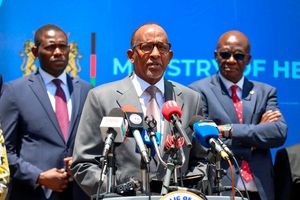
Mr Marianne Kitany, the Aldai Member of Parliament and vice chairperson of the committee, challenged Mr Chesire to provide a letter from the board delegating their power to the management to issue a licence for the importation of sugar.
Mathare MP Anthony Oluoch pointed out that according to the Statutory Instruments Act, it is only the board that has the power to issue a license to any firm to import sugar.
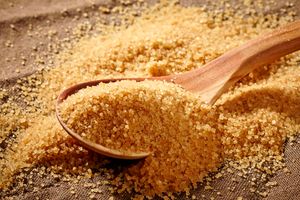
Suspected harmful sugar is said to be in circulation.
Photo credit: File | Nation Media Group
“Power to make law cannot be delegated. That power can only be delegated by parliament to a specific entity, not from one entity to another,” Mr Oluoch said.
Gichugu MP Robert Gichimu pointed out that by 2024, when the management issued license for sugar importation, only three board members were in place hence it was not quorated to transact any business.
“Even if there was delegation of powers from the board as claimed by the management, the three members did not have a quorum hence no power to delegate any power,” Mr Gichimu said.
“Someone purported to have the power of the board when the board itself was not there,” he added.
The committee is investigating the importation of 26,220 tonnes of sugar from Mombasa Sugar Refineries following concerns over the product’s safety, documentation and movement within the country.
The movement of 26,220 bags of harmful sugar from Mombasa depot to Nairobi via Standard Gauge Railway (SGR) has raised eyebrows among MPs who have expressed concern that the consignment might be in market circulation.
The consignment is part of the 27, 839 metric tonnes sugar imported by Mombasa sugar refineries in raw form on January 15, 2026 and now MPs want answers from the Kenya Sugar Board on whether it is already in the market or not.
Documents presented before the committee indicates that the Mombasa based obtained customs clearance on April 24, 2026 and the loading commenced on May 2, 2026
The first batch of 19 SGR wagons carrying a total of 26,220 bags arrived in Nairobi on May 3, 2026.
According to Sugar Board, the consignment of the 27,000 metric tonnes in question was imported in raw form and is currently securely stacked and stored in a Customs Bonded warehouse inside the Kenya Ports Authority (KPA) in Mombasa pending the conclusion of the customs processes.
In March 2026, the Cabinet Secretary for National Treasury John Mbadi constituted a multi-agency team comprising of Kenya Sugar Board, Kenya Revenue Authority (KRA), Kenya Bureau of Standards (Kebs), State Department of Industry (SDI) and the National Police Service (NPS) to develop conditions for release of the consignment and monitoring framework to prevent diversion at any stage and ensure that the sugar is utilized for its intended purpose.
Industrial sugar is not safe for human consumption and is not the same as table sugar. It is a product that is used for manufacturing in bakeries, beverage plants, and large scale food processors.
Importation of white refined sugar for industrial use is strictly restricted to industrial manufacturers only.
Kenya produced 472, 773 metric tonnes of sugar in 2023, 815,454 metric tonnes in 2024 and 611,576 metric tonnes in 2025 against consumption of 1,152,205 metric tonnes in 2025 alone.
Consequently, Kenya imported a total of 608,178 metric tonnes, 338,345 metric tonnes and 477,551metric tonnes in 2023, 2024 and 2025 respectively.