Kenya’s electoral map is shifting faster than anticipated after the electoral agency registered 1.37 million new voters in under a month—an early surge that is already reshaping the arithmetic of the 2027 presidential race.
In a country where the last presidential election was decided by slightly over 200,000 votes, the addition of 1.37 million new voters in three weeks could prove decisive —resetting the balance of power ahead of 2027.
The 2022 presidential election was one of the closest in Kenya’s history, according to the results by the Independent Electoral and Boundaries Commission (IEBC).
President William Ruto won narrowly, securing 7,176,141 votes (50.49 percent) against the late ODM leader Raila Odinga’s 6,942,930 votes (48.85 percent) in the results announced by then IEBC chairman, the late Wafula Chebukati.
With IEBC netting 1,370,930 new voters under the ongoing Enhanced Continuous Voter Registration (ECVR) exercise, analysts say that it signals a profound shift in the country’s democratic participation ahead of the 2027 General Election.
Launched on March 30, 2026, the 30-day exercise is targeting 2.5 million new voters in its first phase.
With 11 days remaining as at April 16, the Commission has already crossed the halfway mark, raising the likelihood that the initial target could be met—or even exceeded.
IEBC chairman Erastus Ethekon describes the current phase as “a nation rising”—and the data appears to support that claim.
Since the last update on April 9, an additional 495,429 voters have been registered, pointing to accelerating momentum as awareness spreads and political mobilisation intensifies.
The exercise has also recorded 92,602 voter transfers and 1,969 updates of voter details, suggesting not just new participation but active engagement by existing voters seeking to reposition themselves within the electoral map.
“The influx of new voters, particularly young Kenyans registering for the first time adds an unpredictable dimension to the 2027 presidential race. These voters are less bound by historical loyalties and more responsive to contemporary issues, making them a key target for all candidates,” says Prof Gitile Naituli of the Multi Media University of Kenya.
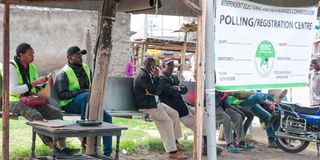
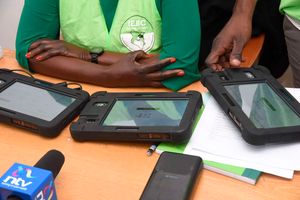
An Independent Electoral and Boundaries Commission (IEBC) staff register a new voter at the Nakuru-East registration office on March 31, 2026. IEBC has launched a 30-day exercise targeting new 6.3 million voters.
Photo credit: Boniface Mwangi | Nation
The turnout reflects a broad national response, according to IEBC.
Notably, the Commission highlighted the participation of elderly citizens—some over 80 years old—alongside a wave of young, first-time voters.
“This convergence of generations underscores a wider democratic impulse and a recognition across age groups that the 2027 election will be consequential,” says Mr Dismas Mokua.
In the past, Kenyan elections have largely been shaped by ethnic arithmetic and regional bloc voting.
But the emergence of a large, youthful electorate could dilute these patterns, making elections more fluid and less predictable.
“Political actors who fail to adapt to this shift risk losing relevance,” adds Mr Mokua.
The distribution of new voters across counties offers critical insight into emerging political battlegrounds.
Nairobi City County leads the pack with 150,166 new registrations—more than double the next county. This reinforces Nairobi’s position as the country’s most consequential electoral arena.
Its size, diversity, and high concentration of young voters make it a microcosm of national politics—and a decisive swing zone, projected to have 3.1 million total voters if IEBC meets its targets in this and next mass voter listing.
Other top-performing counties in the last three weeks include: Kiambu County (72,055), Kakamega County (61,797), Nakuru County (57,068), Machakos County (47,348), Bungoma County (43,488), Kilifi County (40,665) and Meru County (41,946).
In Mt Kenya region, counties such as Kiambu (72,055 new voters), Murang’a (30,537), Nyeri (29,376), and Kirinyaga (22,902) continue to register strong numbers.
This reinforces Mt Kenya’s status as a key electoral prize, even as internal political dynamics shift.
In the Rift Valley, Nakuru (57,068), Uasin Gishu (30,644), Nandi (29,301), and Narok (28,375) highlight the region’s continued demographic strength.
However, growing diversity in counties like Kajiado and Narok suggests increasing competitiveness.
In Western region, Kakamega (61,797), Bungoma (43,488), Busia (22,358), and Vihiga (15,611) underscore Western’s rising numerical weight.
The Chairperson, Independent Electoral and Boundaries Commission (IEBC), Erastus Ethekon addressing at Shimoni Fish Port during the Launch of Enhanced Continuous Voter Registration (ECVR) Exercise in Kwale County on March 30, 2026.
Photo credit: Kevin Odit | Nation
In Nyanza, Kisii (37,187), Migori (25,956), Kisumu (26,538), Siaya (24,476), and Homa Bay (23,877) reflect steady growth.
However, the absence of a unifying political figure following the death of Raila Odinga introduces uncertainty.
At the Coastal and Northern Kenya counties, Kilifi (40,665), Mombasa (32,625), Kwale (18,901), and Garissa (16,813) indicate moderate but steady growth.
The data on voter transfers—92,602 in just three weeks—offers another layer of insight.
Advocate Chris Omore says this reflects a mobile electorate, with citizens shifting registration to align with where they live and work rather than their ancestral homes.
The IEBC has reinforced this trend by encouraging voters to register in their current locations, eliminating the need to travel back to rural constituencies.
Urban centres, particularly Nairobi and its satellite counties such as Kiambu, Machakos, and Kajiado, are likely to see an even greater concentration of voters.
This could weaken the traditional dominance of rural voting blocs and elevate the influence of urban voters, who tend to be more issue-driven.
While new voter registration is reshaping the landscape, traditional regional blocs remain important—but are evolving.
The IEBC projects that it will need at least 6.3 million new voters to reach its target of 28.5 million registered voters by 2027.
If the current pace is sustained, that target appears achievable.
Total number of new voters per county
Nairobi City – 150,166 Kiambu – 72,055 Kakamega – 61,797 Nakuru – 57,068 Machakos – 47,348 Bungoma – 43,488 Meru – 41,946 Kilifi – 40,665 Turkana – 39,014 Kisii – 37,187 Kitui – 37,162 Kajiado – 33,095 Mombasa – 32,625 Uasin Gishu – 30,644 Murang’a – 30,537 Nyeri – 29,376 Kericho – 29,465 Nandi – 29,301 Narok – 28,375 Kisumu – 26,538 Migori – 25,956 Makueni – 25,800 Trans Nzoia – 25,124 Siaya – 24,476 Bomet – 24,836 Homa Bay – 23,877 West Pokot – 23,311 Kirinyaga – 22,902 Busia – 22,358 Baringo – 21,542 Kwale – 18,901 Garissa – 16,813 Tharaka-Nithi – 16,485 Vihiga – 15,611 Taita Taveta – 15,720 Elgeyo/Marakwet – 15,483 Laikipia – 15,036 Marsabit – 14,747 Embu – 14,007 Wajir – 13,865 Tana River – 13,410 Samburu – 13,185 Nyamira – 12,573 Mandera – 11,455 Nyandarua – 11,440 Isiolo – 7,380 Lamu – 6,785