Persistent boardroom coups at the Kenya Tea Development Agency (KTDA) Holdings Limited have resurfaced with the ouster of Chairman Chege Kirundi.
A board chairman holds office for three years, but in the last four years there have been four changes in the chairmanship – one of the highest in recent times.
In the latest changes, former board chairman Enos Njeru has made a comeback, pointing to a leadership crisis at the board charged with steering the affairs of the 700,000 small-scale tea growers in the country.
The move also saw the removal of vice-chairman James Ombasa Omweno, who was replaced by Engineer Samson Mosonik Menjo, a director from Zone Nine in the West of Rift region.
The changes were announced by KTDA on March 4, with the intrigues behind the move now coming to light.
Mr Omweno held the position for only five months, having replaced former office holder Erick Chepkwony, who collapsed and died in Nairobi on May 21, 2026.
Ousted KTDA Holdings Limited Board Chairman Chege Kirundi addresses journalists at Kiru Tea Factory in Murang’a County on October 7, 2025.
Photo credit: Joseph Kanyi | Nation
The internal wrangles among the directors of the agency come at a time when the tea industry faces a myriad of challenges, including low green leaf prices, as farmers demand better pay.
Mr Njeru said after taking over that his team would seek to steer the affairs of the agency to the benefit of small-scale tea growers and stakeholders in the industry.
“There is a lot that needs to be done to turn the tide, and we will require all the support we can get from stakeholders and the government to expand export markets for the produce,” Mr Njeru said.
Engineer Menjo said: “It is important as a board, zonal directors and stakeholders to put politics and divisions on the back burner and focus on embracing modernisation of the factories, value addition and branding so as to fetch higher prices in the market.”
KTDA directors have come under scrutiny over the manner in which operations and marketing were conducted in the 2024/2025 financial year, with Sh69 billion paid compared with Sh89.29 billion in the previous financial year (2023–2024).
There is uproar on the board over the payment of Sh24 million taken by a board member from Green Fedha contrary to regulations. A member is only allowed to get a loan of Sh1 million from the outfit, with shares provided as security.
An alleged claim for a refund of Sh38 million by directors in a factory in the East of Rift, which has been described as irregular, is among the issues that have also caused friction on the board.
Challenges in the international market due to political upheavals in the Middle East, the economic embargo imposed on Iran by the United States, recent bombings and a change of government, the Russia-Ukraine and Israel-Palestine wars, and political upheavals in Sudan have negatively impacted traditional export markets for Kenyan tea.
James Omweno (centre), who was removed as the Kenya Tea Development Agency (KTDA) board national vice-chairman, addresses the media in Kisumu last year.
Photo credit: Alex Odhiambo | Nation
Former Deputy President Rigathi Gachagua led reforms in the tea industry with a conference in Kericho in 2023 that eventually led to the removal of Mr Ichohi as the KTDA board chairman and the replacement of Mr Njeru, in what was seen as having government backing.
Mr Njeru was re-elected as the board chairman on August 23, 2024, in Mombasa, having ascended to the position through a coup against Mr David Muni Ichohi on July 17, 2023.
However, Mr Njeru was later kicked out by fellow board members on January 23, 2025, paving the way for Mr Chege Kirundi, a Nairobi-based advocate and long-serving zonal director, to be elevated as board chairman.
Mr Kirundi said in a recent interview that KTDA had initiated a number of reforms in the last year that were beneficial to farmers, including streamlining management structures and cost-cutting measures.
“We have put in place austerity measures that will ensure that money saved is channelled to paying farmers for their green leaf supplies while seeking to expand the export market,” Mr Kirundi said.
In the latest changes, Mr Njeru was backed by eight directors, while three rallied behind Mr Kirundi and one abstained.
Former chairman David Ichoho has appealed to President William Ruto to disband the board and put in place structures to reconstitute it to properly serve the farmers.
“The President should issue an executive order that dissolves the board, restructures it and enables us to move forward,” Mr Ichoho said.
“We cannot afford to have a dysfunctional board like the one we have at this point in time when there is an international market crisis. We require steady leadership, which I do not think will happen as the current board is conflicted,” Mr Ichoho said.
He also called on chairpersons of KTDA factories to push for the convening of a conference to address the issues bedevilling the agency and the tea sector as a whole and find tangible solutions.
“Times of crisis require steady leadership, yet there is neither an executive CEO nor a united board. Unfortunately, there is a problem in the value chain and politics within the board,” Mr Ichoho said.
A section of members of the board have claimed that the office of the chairman has lately overstepped its mandate, leading to conflicts with management.
“The position of the chairman is non-executive, but the office has been operating as if it were an executive role. It did not sit well with board members and management, as it caused conflicts in the agency and its subsidiaries,” a board member said.
The fallout on the board had reached a point where members deliberately skipped committee meetings as the deliberations and recommendations were not followed or were altered.
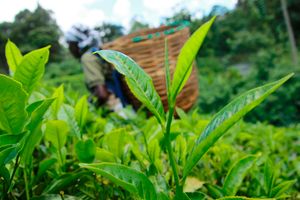
Tea pluckers at a farm in Silibwet village, Bomet Central constituency in Bomet county on December 17, 2025.
Photo credit: Vitalis Kimutai | Nation Media Group
“We have come from a regime where unilateral decisions were made, senior officers were sent on leave, yet the board had recommended that they take their accrued leave days, in what has attracted court cases,” a board member said.
The removal of audit firm KPMG, which board members had resolved would steer the process of hiring a new Chief Executive Officer, is among the issues that have fuelled the fallout.
According to multiple sources on the board, a company that was handpicked to take charge of the ongoing process of recruiting a new CEO had slapped the agency with a Sh9 million bill.
“We shall be demanding that the process of hiring a CEO starts afresh with reputable audit firms – KPMG, PricewaterhouseCoopers (PwC), PKF or Ernst & Young, among others,” Mr Gabriel Kagombe, a board member and Gatundu South MP, said.
Engineer Francis Miano was on January 16 appointed acting CEO following the retirement of Wilson Muthaura, pending the competitive appointment of a substantive office holder.
The process of appointing a CEO has caused ripples among stakeholders, with demands for transparency amid claims of efforts to entrench tribalism and nepotism.
“We must recruit a CEO in a competitive process, advertise, get a competitive firm to shortlist, before the board can pick the best candidate for the position. The process should be credible from the outset,” Mr Kagombe said.
Mr Kagombe, who is also the Gatundu South MP, said: “Recruitment of a CEO must be sanctioned by the board; there are no shortcuts. One cannot disregard the board input as there are minutes to that effect.”
“Since a vote of no confidence was moved against the chairman, matters were subjected to a vote and approved, we need to move on and avoid conflicts. We must work with all stakeholders to turn things around,” Mr Kagombe said.
Mr Cheruiyot Baliach, a KTDA director for Kaptebengwet Zone in Konoin Constituency, said the agency’s board should focus on resolving issues relating to marketing and prices and put aside their differences.
“There is a lot small-scale tea growers expect from the directors and we should direct our efforts towards ensuring that issues of quality and better prices are addressed,” Mr Baliach said.
He said: “The frequent changes at the helm of the KTDA board do not inspire confidence among shareholders, and there is an urgent need to steady the ship and focus on deliverables.”
President William Ruto has said his administration was working with KTDA to embrace value addition in the industry and branding of Kenyan tea before it is offloaded to the export market.
Recently there was a crisis at the Mombasa Tea Auction, with 100 million metric tonnes of tea from KTDA factories remaining unsold, caused by unfavourable prices set by the government in the Tea Act 2020.
The government has as a result suspended sections of the Tea Act, 2020, to allow individual factories to directly export made tea to various markets without going through the Mombasa Auction, which was a mandatory process.
KTDA is pushing for increased production of orthodox tea with huge market potential in Japan, Russia, China, Germany, Iran, France, and countries in the Middle East and Eastern Europe.
Over the years, Kenya has been dependent on black CTC (cut, tear and curl) tea to feed traditional export markets – Pakistan, the United Kingdom, Egypt, Sudan, Kazakhstan and Poland.
China, India, Korea, Australia, Switzerland, Iran, South Africa, Ghana, Nigeria and Morocco, among others, are new market frontiers for the produce.
Recently, the Tea Board of Kenya (TBK) directed tea auction organisers, brokers and buyers to deposit money from sale proceeds to KTDA factories within 14 days after the sale of tea.
Mr Willy Mutai, the TBK Chief Executive Officer, in a memo dated January 16 to the agency and tea brokers, noted that players in the sale of the produce were not complying with the law and regulations and that corrective measures were being put in place.