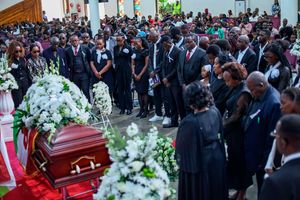
Cyrus Jirongo shot to national prominence through the notorious Youth for Kanu 92 (YK92), the vehicle that former President Daniel Moi used to campaign for re-election into office following re-introduction of multiparty democracy in the country. To many, he stood as the epitome of all that was wrong and rotten with Kenya’s politics.
The mention of his name stirred the bitter memories of the economic decadence triggered by the printing of campaign funds to finance Moi’s re-election in 1992, triggering massive inflation. To his family and friends, however, he was a brilliant businessman and dealmaker who sniffed out opportunities from a mile, and generous to a fault.
Hounded by powerful interests in government whose paths he had crossed and fearing for his life, Jirongo, who was the subject of court cases for years, decided to write his personal account of how the infamous Sololo Outlets Limited which nearly bankrupted the National Social Security Fund (NSSF) was formed. In a two-part series, we publish excerpts of this personal statement.
In 1987 I planned a major housing development for middle-class residents in Nairobi and identified land for the purpose measuring approximately 23 acres in Nairobi’s South B Estate. Dr (Davy) Koech and I became partners in the development. His remit would be to use his contacts to sell the estate to the government or government institutions.
Former Kemri Director Prof Davy Koech.
Photo credit: Pool I Nation Media Group
Since I had no previous experience in this area, I was to concentrate, inter-alia on securing bridging and long term finance, and on marketing the estate to the general public. We agreed that we would develop the estate with a 50 per cent interest for each person.
On Dr Koech's suggestion, it was proposed that we use our company, Sololo Outlets, to carry out the venture. It is necessary to explain how and why I got involved with Dr Koech.
In 1986, I had started the construction of another housing project situated on Mbagathi Road. One day, while I was on the site, Dr Koech came to the site and expressed an interest in the property on behalf of the Kenya Medical Research Institute (Kemri), of which he was the director, for staff housing.
We struck a rapport and began to do business together. At this time, he was in the process of buying his house in Lavington and was short of finances.
Dr Koech, in gratitude, undertook not only to ensure that Kemri purchased my project, but also introduced me to a cross section of very well-placed people who would later be instrumental in the launching of my Sololo project.
As our relationship grew, Dr Koech was able to lobby for a friendly company, Njama Limited, to get construction projects that were sponsored by the Head of State. These were: the construction of a school canteen at Kenya High School and a tuition block at Moi Education Centre.
It was the success of these projects that convinced me of the effectiveness of Dr Koech. During the early stages of our relationship.
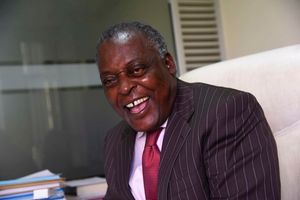
Former Lugari MP the late Cyrus Jirongo during an interview in Nairobi on October 28, 2021.
Photo credit: Evans Habil | Nation Media Group
I met highly placed persons, who, as expected, were invaluable in the lobby process for Sololo. The unspoken agreement between Dr Koech and I was that I would raise the funds, and he would use his contacts to see to the success of the project.
In a letter dated October 18, 1990, I wrote to the managing trustee of the National Social Security Fund (NSSF) giving a description of the housing units and various facilities to be developed on the proposed site in South B, Nairobi. I also informed him that our consultants were finalising the cost of development, but the drawings and artistic impressions of the project were ready. I, at the same time, requested a meeting to discuss the matter further. The letter was copied to the permanent secretary, Ministry of Labour, under which the NSSF falls. This letter was written after several consultative meetings between the Head of Civil Service, Mr Joseph arap Leting, and the Labour PS. However, in a letter dated November 7, 1990, NSSF sought to have a more explicit explanation as to the role it was expected to play in the project. I intended to sell the whole estate to the Fund at a cost of Sh960,000,000.
The Fund was to be the end financier of the whole project as well as the end owner. The Fund was to pay 50 per cent or Sh480,000,000 to Sololo Outlets on execution of the sale agreement, 40 per cent or Sh384,000,000 on completion of 50 per cent and thereafter 10 per cent or Sh96,000,000 to be paid six months after delivery of the Certificate of Completion. The Fund would have the liberty to purchase the entire complex or could opt to purchase the housing units only and leave out the social and commercial buildings for the retention of Sololo Outlets for commercial purposes. This was followed by a chain of meetings between myself and the managing trustee of NSSF together with senior managers of the Fund including Mr Odera, who was then the legal officer at NSSF. It was then established that NSSF could not invest in real estate as the law governing the Fund did not allow this kind of investment.
I was at the same time pursuing a loan from City Finance Company Limited to undertake the same development. The Institution was in principal willing to advance the monies required by Sololo Outlets Limited for the development but was, however, unable to handle the financial requirements due to the huge liquidity required. The institution was, however, willing to advance money to the company if arrangements were made by the company to have deposits placed with the bank to help in its liquidity for it to agree officially to help in financing the Sololo Project.
I discussed with the managing trustee of NSSF the idea of placing its funds with the City Finance Company Limited in order to assist Sololo to commence the work as we pursued the required changes in the NSSF Act to allow the institution to invest in real estate among other investments. We had agreed with the NSSF management that we would combine forces to push the government to amend the NSSF Act with regard to its investment policy in order to accommodate other areas of investment that would include projects such as the one Sololo had proposed to the fund.
Sometime in February 1991, a suggestion was made to NSSF by Sololo that they could deposit funds in City Finance to enable City Finance to lend the same to Sololo in line with the earlier discussion.
However, NSSF declined to accept this suggestion saying it would amount to lending the money directly to Sololo Outlets Limited NSSF, however, advised that the request for such placement could only be done by the financial institution requiring the 'deposit. I communicated this to City Finance, who agreed at this time to give me the funding of the project.
They were to commence on the relevant documentation for their board, and at the same time write to the NSSF to request for the deposit. The NSSF had reasoned that if the request had come from my company the way I had done, then it would imply that NSSF was in effect lending directly to me.
This revised project had the effect of increasing the housing units while maintaining the project cost at a figure that was then roughly Sh950,000,000. in addition, a very tight working schedule was put in place, which would lead to the completion of the whole project within 24 months from the date of signing the agreement.
To ensure a quick return on the investment, we planned to hand over some units every four months for immediate occupation until the final units were handed over. The foregoing together with adequate supervision arrangements made this, in our view, a very attractive and viable commercial investment.
In the months between July and October 1991, there was no response from NSSF so we wrote to the legal officer proposing that, while still awaiting the Cabinet ratification of the Investment Committee recommendations, we should finalise the issue of security bonds and draft sale agreements for the property. We received no response to this suggestion. I decided to discuss the issue further with the NSSF managing trustee, who advised that I should write to him and indicate the rising costs.
Through a letter dated December 17, 1991, we wrote to NSSF informing them that the project cost had risen to Sh1.2 billion. The purpose of this letter was to suggest to the board that this project should start as soon as possible due to this rising cost.
National Social Security Fund building in Nairobi
Photo credit: Sila Kiplagat | Nation Media Group
We also suggested payment of the project on a drawdown basis, namely 25 per cent of the purchase price to be paid on signing of the agreement; 50 per cent of the purchase price to be paid on completion of 50 per cent of the project; a further 20 per cent on total completion and hand-over of the houses.
We suggested that the Fund retains five per cent of the purchase price for a period of six months, as discussed and agreed with the managing trustee, instead of the earlier proposal of 10 per cent retention.
Understandably, the managing trustee of NSSF, in response to the letter of December 17, 1991, stated that the board could not enter into any agreement for sale until the necessary legal, policy and operational charges had been made. He further stated that the project's financial viability and risk had been appraised, considered and approved by the Board of Trustees. As agreed in our meeting with the managing trustee, this persistence was necessary in persuading the chief secretary to urgently ratify the investment policy recommendations.
Finally, the investment policy of the NSSF was approved in the Cabinet meeting of December 4, 1991. The details were communicated to me verbally by both Mr Hezekiah Oyugi and the chief secretary, Mr Joseph Arap Leting, who was also the Secretary to the Cabinet.
Around the time, during the month of December 1991, both Mr Leting and Mr Hezekiah Oyugi, the then-Permanent Secretary Provincial Administration and Internal Security, were sacked.
The board had not received the communication from the Cabinet as at December 24, 1991 as per the letter by new Managing Trustee Martin Kunguru.
I waited until the month of January 1992 to follow up on the implementation of the project through the new officers at the Office of the President. In the meantime, I continued to pursue the matter through the permanent secretary Ministry of Labour as well as the new managing trustee. But they insisted that they needed official communication either from the Office of the President or from the National Treasury.
I decided to make an appointment to see the new chief secretary, Mr Philip Mbithi. I discussed the progress with him but he indicated to me that the former officials in the ministry had done a shoddy job and that he would look into the matter further. I had sent him an expensive painting as a Christmas gift at the time. When I went to his office, one of the secretaries jokingly asked me why I had sent them nothing for either Christmas or New Year. I decided to give her Sh20,000 and Sh20,000 to the new one who had come with the new boss.
The new secretary, as I learnt, was also a girlfriend of the new chief secretary, back from the University. She decided to discuss the issue with her boyfriend.
The secretary left behind by Mr Leting was also my girlfriend, who ended up giving birth to my son Edward.
Mr Mbithi, after the discussion with his girlfriend, developed inexplicable bitterness against me and decided to change the whole story and report the matter to the director of the CID (Criminal Investigations Department), Mr Noah arap Too, claiming that I was corrupting his officer.
I was called by the CID director to give my version of the story as to why I gave the Sh20,000 to each one of the two secretaries. I explained my case but he advised me to find a way of explaining the incident to the Head of State as he was under instructions from the chief secretary to charge me with corruption.
I refused and insisted that the chief secretary should first return the painting I had given him and then I would explain to the Head of State. Somehow the issue ended but I was in the bad books of the chief secretary, whose title was now Head of Civil Service and Secretary to the Cabinet. The title of chief secretary had been scrapped before the former PS, Mr Leting, took office from Mr Simeon Nyachae.
With this kind of officers in place, it became very difficult for me to move forward with my project. It forced me to write a very long letter to the Head of Civil Service, Prof Mbithi. I clearly pointed out to him that malice would not help him in handling official issues. He of course used his office to the maximum in frustrating the project and he fought me personally throughout the entire period all the way to the NSSF board.
I had to then find alternative ways to ensure the project went on as planned. All my efforts engaging in discussions with NSSF officials and officials of the Ministry of Labour were frustrated by Prof Mbithi's office.
Finally, l decided to explain the whole episode and details of the project to the Head of State. I pointed out that the issue had been discussed and sanctioned by the Cabinet.
After the president intervened, Prof Mbithi resorted to recruiting board members to frustrate the project and ensure that the board did not approve the project. ln the meantime, the project continued in various aspects such as drawings and other preliminary works.
Having obtained written approval for my project from Treasury, which was the final authority for the disbursement of public funds, I proceeded aggressively in a bid to realise my project. My aggression at this time was motivated by the fact that unfavourable economic and political conditions were threatening to precipitate conditions that would have made my project economically unviable due to high inflation and price variations.
Former Member of Parliament for Lugari Constituency the late Cyrus Jirongo.
Photo credit: File
Sololo Outlets Limited opened its account with a deposit of Sh7,000. This was as a follow up to lengthy discussions with the PS Treasury, NSSF managing trustee and the general manager Post Bank Credit Limited. Post Bank Credit had been introduced into the discussions as it had been agreed that they would be the bankers of the project on behalf of NSSF. The bank had also been directed to release funds to Sololo on behalf of NSSF by the managing trustee NSSF and the PS Treasury.
It then become apparent that Post Bank Credit could not just remit funds to Sololo Outlets as directed. At this time, although the NSSF had clear instructions on the purchase and financing of the project, they needed to clear certain formalities for the approval of the board and its Investment Committee.
I was requested by the general manager Post Bank Credit to write an application letter for bridging finance. The letter would form the basis for him to release the funds to Sololo Outlets Limited while awaiting the board’s ratification of Treasury’s directive. The NSSF managing trustee requested me to ask Post Bank Credit to seek placement of a deposit by the Fund for onward transmission to Sololo as the other formalities for the purchase and financing were being worked out.
On September 22, 1992, I received an official communication from the Fund informing me officially that the Board of Trustees had finally approved the project.
The two letters mentioned here are what formed the basis of the contract between Sololo and NSSF. Because of the magnitude and complexity of the project, this agreement would later be turned into a more comprehensive document contract known as the development agreement but, given the progress and the relationship of all the parties concerned at time, we were quite happy to proceed with the project in the confidence and trust that all the legal documentation and formalities were being taken care of by able lawyers. There was no doubt in my mind, nor in the mind of the parties to this transaction, that the deal had been sealed and was going ahead. More so, given that Sh300 million had already been disbursed.
Prof Mbithi, having been ignored by everyone concerned, recruited the chairman of Post Bank Credit, the late Stephen Kositany, and a clerk in the bank, Mr Sett, to help in frustrating the project through bad press publicity, and also politically. Mr Kositany and Prof Mbithi himself led the political battle against the project, while a director of Post Bank Credit and a bank clerk concentrated on the collection of documents with the aim of giving a distorted view of the project to the public through the press.