The Salaries and Remuneration Commission (SRC) has warned that judges' taxable car allowance, which was upheld by the Court of Appeal early this year, could trigger a ripple effect across the public service, increasing the taxpayer’s compensation bill by billions.
In submissions filed at the Supreme Court, the commission estimated that the benefit would cost taxpayers Sh9.8 billion per four-year term, with additional expenditure arising from similar claims by other State officers and accounting officers in public institutions.
The SRC moved to the Supreme Court after the Court of Appeal upheld a judgment restoring a Sh10 million car grant for judges, ruling that the benefit was constitutionally protected and could not be withdrawn to their disadvantage.
The case will be heard on Wednesday, October 14.
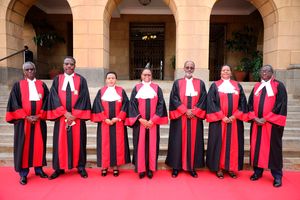
In a judgment delivered in March, a five-judge bench upheld earlier High Court findings that the grant, payable periodically, was an accrued benefit attached to the office of a judge.
The dispute arose from a 2021 SRC directive seeking the withdrawal of the allowance on grounds that the commission alone has the constitutional mandate to set and review the remuneration and benefits of State officers.
SRC has termed the decision on judges' car grants as an unconstitutional overreach.
Photo credit: shutterstock
The SRC argued that the executive introduced the benefit irregularly through circulars issued by the Head of Public Service on July 7, 2011, and later reviewed it in June 2015 and June 2018.
It said the circulars bypassed its constitutional mandate, undermined fiscal discipline, widened disparities among State officers and increased the public wage bill.
The commission also argued that judges already benefit from official transport and a car loan scheme, making the additional allowance inequitable.
“The power and function to set and regularly review the remuneration and benefits of judges is not vested in the President, Judicial Service Commission (JSC) or the Treasury Cabinet Secretary,” the SRC said.
It added that its constitutional mandate requires it to ensure that public compensation remains fiscally sustainable while enabling public institutions to attract and retain skilled personnel, recognise productivity and promote fairness and transparency.
The commission said it had reviewed judges’ remuneration and benefits in 2013, 2014, 2017 and 2018 without being informed by the JSC that judges were receiving a taxable car allowance.
“In all the consultative meetings held, JSC never disclosed to SRC that judges were being paid a taxable car allowance,” it said.
The SRC further maintained that the Head of Public Service lacked the legal authority to introduce or vary remuneration and benefits for State officers in 2011. It said the circulars referred only to High Court judges, yet judges of the Court of Appeal and Supreme Court had also received the allowance.
The commission said it had established transport benefits for State officers through government-provided vehicles, reimbursement arrangements, car maintenance and mileage allowances, or commuter and transport allowances.
It also provides a car loan scheme at an interest rate of three per cent annually for all State officers, including judges.
However, the appellate court rejected the argument that the car grant was a new or irregular benefit, finding that it was a continuation of an entitlement enjoyed before the promulgation of the Constitution.
Evidence before the court showed that judges previously enjoyed a duty-free car grant under the repealed Constitution, which was later converted into a taxable allowance through government circulars.
“The benefit existed prior to the Constitution 2010 and continued thereafter,” the court observed.
The judges held that the transition to the new constitutional order did not extinguish accrued benefits and that withdrawing the allowance would violate Article 160(4), which protects judges’ remuneration and benefits against reduction to their disadvantage.
The bench agreed with the High Court that arbitrary changes to judges’ benefits could undermine judicial independence by exposing them to financial vulnerability controlled by another arm of government.
The case followed a 2023 public interest petition filed by advocate Peter Mwangi Gachuiri, who challenged the SRC’s directive.
The appellate court also rejected the commission’s argument that the dispute should have been heard by the Employment and Labour Relations Court, finding that it raised constitutional questions falling within the High Court’s jurisdiction.
It further dismissed the SRC’s bid to disqualify judges from hearing the matter because of their financial interest, invoking the doctrine of necessity.
Each judge is entitled to a taxable car grant of up to Sh10 million, payable every four years to purchase a personal vehicle, making the benefit a recurring expenditure for the exchequer.