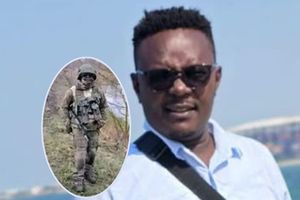
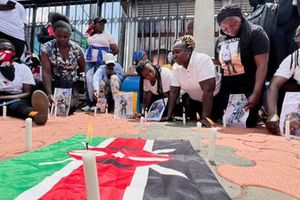
Even before Nelly Wambui* could confirm whether her son was still alive or had been killed on the war front in Ukraine, a private Russian intermediary was offering to help her collect compensation for his death.
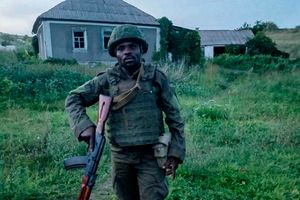
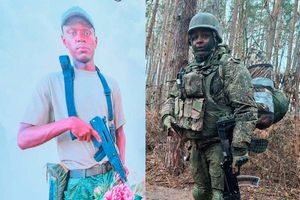
Her son was among the roughly 1,000 Kenyans whom the Kenyan National Assembly was told had been recruited to fight for Russia, citing information from the National Intelligence Service.
The family says he was lured by the promise of civilian work, but instead ended up fighting. Wambui last heard from him in November 2025. Since then, the family says, neither Kenyan nor Russian authorities have provided reliable confirmation of his whereabouts or status.
Then a Russian man, known to the affected families only as Alexey or Alex, claimed he could secure as much as $150,000 (about Sh19.4 million) for each family within 60 to 90 days. His fee is 30 per cent. Based on this information, Alex would receive $45,000 (about Sh5.8 million) from each claim before any additional costs for lawyers, travel, or the return of a body. With about 100 affected families organised in Nairobi, Alex could stand to earn as much as $4.5 million (Sh582 million) in commissions, assuming each claim reached the maximum amount and every family used his services.
Our enquiries revealed that Alex and his associates are not waiting for the families to approach them. They already have the names of people identified as next of kin in the recruits’ military contracts and are contacting them, assembling potential beneficiaries into a group to pursue compensation.
Alex is a largely anonymous figure. None of the family members interviewed said they have seen his face. During the last virtual call held on the afternoon of June 18, 2026 and attended by several affected families, Alex kept his camera off, even as he asked relatives to surrender sensitive records. From the outset, the families asked Alex for any official communication from Russia’s Defense ministry or military confirming their eligibility for compensation and how to file a claim. He produced none.
Nor did he have an official letter authorising him to act on behalf of the Russian government or military, a registered business address or verifiable credentials for the Moscow lawyer he claimed would handle the cases.
Kelvin Ochieng has been identified by some of the families as the Kenyan intermediary working with Alex, communicating with families in Kiswahili and Sheng. A Kenyan woman identified only as Winnie is also said to be working with them behind the scenes, although her precise role remains unclear.
To test how the proposed arrangement is presented to an individual family, our reporter contacted Ochieng' on July 22, 2026, posing as a relative of a Kenyan man who had travelled to Russia and stopped communicating.
The journalist wanted to find out why Ochieng and Alex were seeking sensitive records from affected families and discussing substantial payments while providing little verifiable information about themselves, and how families could confirm that the promised compensation process was legitimate. Ochieng spoke confidently as he described Alex as a commander in Russia who could help trace the men and process claims.
“He is a commander there, so he has been helping us know the people who are there and helping in the compensation process,” he said without providing Alex’s full name, rank, unit, or official authority to handle compensation claims.
According to Ochieng, families would be required to provide passports, birth certificates, identification records, and proof of their relationship to the missing men. Some relatives would have to travel to Moscow and stay there for as long as three months and provide DNA samples to help identify their kin’s remains.
Ochieng said the documents were intended to establish a claimant’s relationship to the deceased recruit. If they were accepted, he said, the kin could qualify for a visa to travel to Russia. He said Winnie acted as a go-between.
Ochieng said Alex, who is based in Russia, would cover the cost of flights and accommodation, while the families would be responsible for preparing and notarising required documents and paying their own legal fees. The families could hire their own lawyer to represent them during this process.
“Once you have received your funds, you give us our share,” Ochieng said.
His team in Kenya would take Sh2 million after the money reached the family’s bank account. If Alex took the 30 per cent commission described by families, the Kenyan fee would amount to an additional deduction.
Ochieng also said his group could arrange, for a fee, release of a Kenyan held as a prisoner of war in Ukraine. He first quoted a fee of Sh1 million. He later referred to a current case that he said would cost Sh3.2 million, without identifying the prisoner involved. A list provided to the investigative team by Ukraine’s Coordination Headquarters for the Treatment of Prisoners of War identifies five Kenyans in Ukrainian custody: Evans Kibet, Willy Muniu Macharia, Joseph Kabuga, Francis Ndarua and Aaron Pachenje.
Former Kenyan athlete Evans Kibet.
Photo credit: Pool
Since 2022, Ukraine’s prisoner exchanges have been handled through state institutions. Ukrainian officials have also publicly warned families against sharing personal information with unauthorised people or paying to secure a place on an exchange list.
In a phone interview on August 1, after being formally contacted for comment by the Nation, Ochieng said he did not seek to profit from the proposed compensation arrangement.
“I’m only trying to help,” he said. “The only part I’m playing is that these are families who had reached out and maybe I had a network that could help.”
He also gave a different account of Alex’s fee, saying he might only earn about one per cent after being reimbursed for travel and accommodation.
“Even if I wanted a token, how much would they pay me at the end of the day?” Ochieng said. “There’s no benefit in somebody’s son or relative who has died. For me, the only thing is just networking.”
He added: “I’m only doing my civic duty as a Kenyan in helping them because one way or another, the (Kenyan) government has failed us.”
Given the global financial restrictions affecting Russia institutions, neither Ochieng nor Alex identified the Russian institution that would release the compensation, or payment channel through which it would reach Kenya.
Evidence gathered in a forthcoming report by Journalists for Justice, a Hague based media investigative team, documents that Kenyan recruits who travelled to Russia through alleged recruitment agencies such as Global Face Human Resources Limited or individual brokers in 2025 were passed on to handlers in Russia who supervised the opening of their Russian bank accounts.
They retained access to them through powers of attorney, raising the question of whether families being promised a trip to Moscow to process these payments would have any control over any bank accounts.
Ochieng, who claimed Alex had helped people in many African countries, said the first group of Kenyan claimants could begin travelling in August because many families had already submitted their documents.
Ochieng also said relatives who travelled to Russia might be able to recover the bodies of family members, if they were available, after DNA samples are taken.
Asked whether this meant there was an official process for compensation and repatriating bodies, Ochieng said there might be, but claimed that the Kenyan government either did not want to make it public or was not interested in helping its citizens.
Sri Lankan media reported in April 2026 that Russia had agreed to begin procedures to compensate the families of Sri Lankan nationals who died while serving in the Ukraine war. Alex and Ochieng are not the only ones offering families a private route to information about their kin’s whereabouts and possible compensation for their loss. In communications reviewed by the Nation, Festus Omwamba offered to connect a representative of several affected families with people he said could help them obtain information about their relatives and pursue compensation.
Festus Arasa Omwamba, the 33-year-old man whom the National Intelligence Service has accused of recruiting 1,000 Kenyans to fight for Russia in its invasion of Ukraine.
Photo credit: Pool
Omwamba already has a case pending in court, in which he has been charged with trafficking 25 Kenyans to Russia through deceptive job offers. He has pleaded not guilty and was on March 24, 2026, released on a Sh5 million bond.
The court ordered him to surrender his travel documents and barred him from leaving Kenya while the case is pending. Omwamba did not respond to questions from the Nation about his role in the discussions with the representative of the families, the basis for the compensation process he described, whether he had been authorised to assist with such claims, or whether he stood to receive any payment or other financial benefit.
His legal problems seemed not to have deterred him, only prompting him to insist to a family representative that his role should remain secret. Speaking at times in English and at times in Sheng, he told the representative he could connect him with someone in a Russian department that handles compensation.
He seemed keen to establish the scale of the group. After being told that the group included about 100 families, he asked: “Are they all united?”
Omwamba urged the representative to organise the relatives, who were said to be about 100, under a chairman and submit their cases collectively. He said doing so could bring the matter to a conclusion, and argued that negotiation rather than litigation offered returnees and families a better prospect of obtaining information or payment.
He said relatives would have to travel to Russia to complete the process in two weeks through a contact only identified as Sasha.
When the representative asked why the families could not rely on the process being handled by Kenya’s Department of Diaspora Affairs, Omwamba questioned whether the official route had produced any results.
In a subsequent call with the family representative, a man who identified himself as Sasha said compensation would be transferred through cryptocurrency because it was “the only possible way”.
Public scrutiny, including media coverage, and seeking legal redress was also discouraged. The Russian authorities, it was made clear, did not want to be publicly associated with the recruitment of foreign fighters. This month, a new intermediary, a man who identified himself as Igor, approached several families whose relatives died in Russia, saying he represented a Moscow company and could help secure compensation. Communicating from a Kenyan number, he said the family could receive between Sh10 million and Sh15 million.
He said the money would be paid within three to four months and assured the family: “This is not a scam.” The company’s public website primarily advertises travel and concierge services, and the Nation found no public indication that it was authorised to handle such compensation claims. Calls to the Kenyan number went unanswered.
Private offers have gained traction to fill the vacuum left by the Kenyan government’s failure to provide families with timely and reliable information about their relatives’ fate after their recruitment into Russia’s war. At a closed-door meeting with the families’ representatives on July 14, 2026, Roseline Njogu, Principal Secretary responsible for diaspora affairs, acknowledged that officials had not responded adequately to enquiries.
Principal Secretary State Department for Diaspora affairs Roseline Njogu takes oath of office at Statehouse, Nairobi on December 2, 2022.
Photo credit: Sila Kiplagat | Nation Media Group
She said Kenya was still depending on Moscow to confirm whether individual recruits were alive, injured, detained, missing, or dead.
She also confirmed that an official compensation process had begun for some families, even though the government had not published any clear rules or timelines.
Rules governing payments to military families in Russia require documentary confirmation of death or, in cases involving a missing serviceman, a court decision recognising the person as missing or declaring him dead. They also require records establishing the claimant’s relationship to the serviceman.
Russia also introduced an expedited court process in 2023 in which a person who disappeared under circumstances suggesting death may be declared dead after six months without information. A person already recognised by a court as missing may be declared dead three months after that ruling. The process still requires a legal application to a court and supporting evidence about the disappearance.
Istories , an independent Russian investigation outlet, estimated that courts declared 921 military personnel missing in Ukraine legally dead during the first two years of the war. It was common for relatives to tell courts that they needed the ruling to obtain Defence Ministry payments, pensions, or inheritance rights. In one case, a Russian family said it had been denied payments without a death certificate.
The existing rules do not identify “probably killed in action” as a final legal status that, on its own, guarantees payment.
Njogu did not clarify whether the letters the Kenyan families had received from her office represented only the preliminary collection of documents or whether compensation could be approved before their deaths were legally established. Officials also declined to provide the families with copies of the original communications received from the Russian authorities on which the compensation notifications were based.
Peter Kamau, a spokesperson for affected families in Nairobi, said the meeting focused on explaining the government’s position rather than addressing the concerns raised by the families. “Going forward, the families remain committed to constructive engagement,” Kamau said. “We will continue pursuing every available avenue, including the public petition placed before the Senate by Senator Edwin Sifuna, to ensure that justice is served for all affected families.”
Without a publicly announced official decision and communication from Russia’s Defence Ministry or the Government of Kenya, a family might never know the full value of its claim. It might know only the figure disclosed by the intermediary and the deductions said to have been incurred.
Elsewhere, governments have taken a more active role in helping families navigate the same problems. India has taken a more direct approach. On July 31 2026, the country’s Supreme Court ordered the Ministry of External Affairs to appoint an official to assist the families of those who had been killed, injured or gone missing after joining the Russian military. The court also directed the government to help them pursue compensation.
Meanwhile, Wambui is still in the dark about her son’s wellbeing.
*Nelly Wambui is not her real name. Her identity has been withheld because she fears that speaking publicly could jeopardise efforts to obtain information or assistance concerning her son.