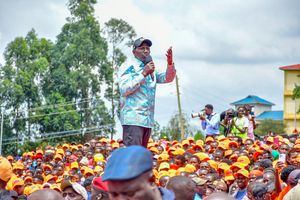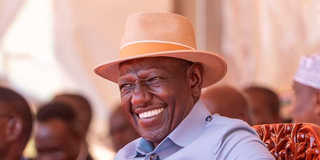
President William Ruto.

Kenya’s previous presidents presided over corruption scandals, political repression, extrajudicial killings and abuses of power, yet few have faced the intensity of public criticism currently directed at President William Ruto.
Kenya’s presidents have faced scandals, repression and political assassinations, from Jomo Kenyatta to Uhuru Kenyatta. Why, then, does Ruto attract greater public anger?
Political scientist Gasper Odhiambo blames unfulfilled promises rather than corruption. “They hate this one because it promised to be different but proved it was the same,” he says.
Dr Ruto campaigned on dismantling state capture, ending abductions and challenging entrenched political interests. According to Mr Odhiambo, those promises raised expectations, making the gap between campaign rhetoric and the experience of governing particularly damaging.
“When you promise heaven and deliver the same hell, you look worse than the man who promised nothing,” he says.
He also argues that Dr Ruto’s outspoken leadership style has become a political liability, citing remarks about shooting protesters in the leg and dealing with critics through imprisonment, exile or death.
Unlike his predecessors, whose excesses were often concealed from public view, Dr Ruto operates in an environment where controversial statements are recorded, shared and scrutinised almost instantly.
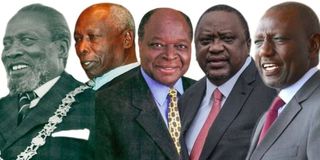
President William Ruto (right) and his predecessors (from left) Mzee Jomo Kenyatta, Daniel Arap Moi, Mwai Kibaki and Uhuru Kenyatta.
Political scientist John Okumu, however, argues that the administration has registered economic and development gains that deserve recognition.
He says inflation fell from about nine per cent when Dr Ruto took office in September 2022 to 3.8 per cent at one point, while foreign exchange reserves more than doubled to $10.3 billion and the shilling stabilised. Inflation subsequently rose to 6.8 per cent in September 2026.
Mr Okumu also cites reduced fertiliser prices, the recruitment of nearly 100,000 teachers, construction of 23,000 classrooms and increased technical and vocational education enrolment.
These achievements, however, have not necessarily translated into public goodwill, particularly among Kenyans struggling with taxation and the cost of living.
Laikipia East MP Mwangi Kiunjuri offers a different explanation, arguing that Dr Ruto is being judged more harshly because modern technology has made it difficult for governments to control the public narrative.
“If someone disappeared in 1984, you heard about it three weeks later in a whisper. If a minister stole money in 1992, the media would write one story, and then it died,” he says.
Today, a young Kenyan with a smartphone can livestream a police shooting, exposing an incident to millions within minutes. Mr Kiunjuri argues that Dr Ruto is consequently judged in real time, unlike his predecessors.
Murang’a Senator Joe Nyutu rejects this explanation, saying the President has failed to appreciate changing voter expectations.
He argues that Dr Ruto’s outsider image was central to his 2022 victory, but his subsequent actions undermined his promises to dismantle state capture and challenge political dynasties.
Political commentator Gitile Naituri similarly says the President continues to communicate like a campaigner rather than a Head of State.
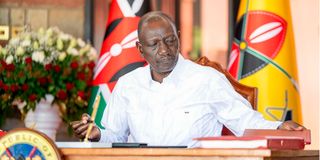
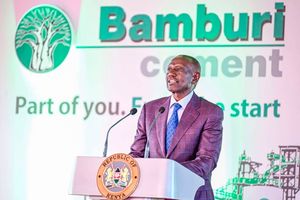
President William Ruto assents to the County Governments Additional Allocations Bill, 2026, at Eldoret State Lodge, Uasin Gishu County on October 19, 2026.
“Ruto makes power loud, and loud power scares people. This is political illiteracy – not understanding that in the age of TikTok, every word you say becomes evidence,” he says.
Long-serving administrator Joseph Kaguthi attributes the President’s difficulties partly to weakening political alliances.
He argues that previous presidents enjoyed the protection of influential political, business and security interests, while Dr Ruto has alienated several centres of power.
He cites the fallout with former president Uhuru Kenyatta, the impeachment of former Deputy President Rigathi Gachagua, disagreements with the business community over taxation and the 2024 Gen Z protests.
“No president can survive when every centre of power feels threatened at the same time,” he says, adding that the fallout with Mr Gachagua has weakened Dr Ruto’s support in Mt Kenya.
Difficult economy
Health Cabinet Secretary Aden Duale, however, defends the President, arguing that he inherited an exceptionally difficult economy and had to make unpopular decisions to avert a deeper crisis.
He says public debt exceeded Sh10 trillion, the shilling was under severe pressure and the International Monetary Fund was demanding higher revenue collection.
Mr Duale maintains that raising taxes and reducing subsidies were necessary to prevent sovereign default and stabilise public finances.
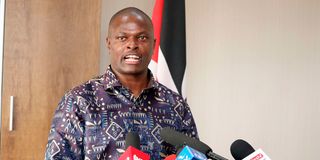
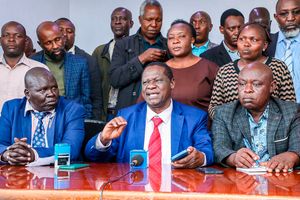
Kiharu MP Ndindi Nyoro addresses the media at his office at KICC in Nairobi on June 27, 2026.
But Kiharu MP Ndindi Nyoro believes Dr Ruto underestimated the difficulty of governing after winning an election.
“He did not understand that in modern Kenya, governing is harder than campaigning because campaigning rewards noise, and governing rewards silence,” he says.
Ultimately, Dr Ruto’s challenge is not simply to demonstrate his administration’s achievements or explain the difficult circumstances it inherited. It is to convince Kenyans that the change he promised is reflected in how the country is governed.
His predecessors left controversial legacies, but today’s electorate has greater access to information and fewer barriers to challenging official explanations. For a president who campaigned on being different, the gap between promises and performance may be his greatest political liability.
Follow ourWhatsApp channel for breaking news updates and more stories like this.