The Lake Victoria economic corridor — comprising Migori, Homa Bay, Kisumu, and Siaya counties — has huge economic potential that remains largely under-exploited, despite being Kenya's gateway to East Africa.
At the dawn of independence in 1963, the region contributed upward of 10 per cent of the national wealth despite little support from the colonial administration. The main sources of wealth were fishing, agriculture (sorghum, millet, cotton), livestock, artisanal mining, black-smithing, and cross-border trade with the neighbouring Tanzania and Uganda, partly across Lake Victoria.
Today, the region contributes around 6.4 per cent to the Gross Domestic Product (GDP), indicating a decline in economic and political influence over the last six decades. However, the corridor boasts a significant latent asset base across several industries, including fisheries, aquaculture, the blue economy, agriculture and agro-processing, digital services, logistics, business services, and tourism and culture.
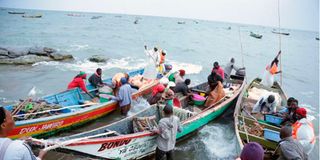
The Kenyan portion of Lake Victoria, which represents 6 per cent of the lake’s total water volume, has an annual sustainable capture fishery capacity of over 100,000 metric tonnes. Additionally, the potential for cage aquaculture across the 1.14 million hectares of viable regional waters is an impressive 11 million tonnes per year under full commercialisation. While the national blue economy targets Sh400 billion, the region’s specific aquaculture and cage farming potential is valued at Sh750 billion per year.
Immense agricultural potential
Regarding logistics and trade, the region is projected to handle over 700,000 metric tonnes of cargo this year up from about 459 tonnes recorded in 2025. It is forecast that once the Naivasha-Kisumu SGR is fully integrated with lake transport, the region will be positioned to tap into East Africa's multi-billion shilling transit market, cutting regional road freight costs by up to 40 per cent.
The region also features immense agricultural potential, with adequate land to support commercial production of sugarcane, cotton, sunflower, sweet potatoes and horticulture.
Driven by a Sh117 billion government bailout and leasing program for state-owned sugar factories (Muhoroni, Chemelil, Miwani, SONY), the agro-processing potential scales past Sh200 billion per annum. As an academic and technology hub, with 87.5 per cent literacy level, and a prime landing zone for underwater broadband (fiber optic) infrastructure, the region has massive potential for digital and business services.
Commuters wait for a ferry to arrive at the shores of Lake Victoria in Mbita.
Photo credit: File | Nation Media Group
As an emerging ICT hub, the Business Processing Outsourcing (BPO) and digital services sector holds a potential market valued at about Sh50 billion annually, positioning Kisumu as a secondary business node to Nairobi. Besides, the region has a rich cultural heritage and ecological biodiversity, presenting extensive circuit options from eco-tourism in Rusinga, Ndere, Mfangano, Kiwa, Ngodhe and other islands, bird watching, water sports, football and conference tourism
It is estimated that this circuit can capture up to 25 per cent of Kenya's domestic and niche international tourism spend, translating to over Sh30 billion annually. Last but not least is the massive under-exploited mining in greenstone gold belts and copper-zinc deposits, sand harvesting and limestone potential.
Formalising the extensive artisanal mining corridors into structured commercial concessions could elevate the sector's value to about Sh60 billion in annual revenue. Despite the multi-billion shilling resource endowment, the region's economic potential remains about 75 per cent under-utilised. The gap between the region's rich resource endowment and its actual economic status is driven by systemic bottlenecks.
The region was among the earliest victims of the “Sessional Paper No. 10 of 1965: African Socialism and its Application to Planning in Kenya” which argued for government investments to be prioritised in areas with high potential.
The “high potential” was euphemism for areas under tea and coffee, which were mainly in the former “White Highlands” in Central Kenya. In addition, the 1966 political disagreement between President Jomo Kenyatta and Jaramogi Oginga Odinga, led to deliberate starvation of the region of development resources. Decades of under-investment left the lake transport reliant on silted channels and aging piers.
Modern passenger terminals
The dredging and construction of modern passenger terminals has only recently begun to scale up. The region has traditionally suffered up to 40 per cent post-harvest losses in fisheries due to a critical lack of adequate localised cold-storage units (fish landing bays) and processing plants, which has stripped local producers of bargaining power.
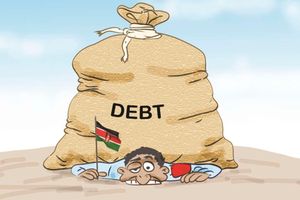
Over 40 per cent of the lake’s trade remains confined to informal, small-scale operations that bypass formal port infrastructure. Agro-processing remains crippled by historical debt burdens and stalled construction of key industrial parks, leaving farmers heavily reliant on raw sales with high post-harvest losses.
Lack of strong frameworks for flexible credit schemes for local small-scale operators, and bureaucratic delays in land and mineral formalisation choke off private investments. The failure to harness this huge potential has severely dented the socio-economic welfare of local communities. Consequently, the region is largely in a state of devastation.
Rural poverty, youth unemployment and environmental degradation remain alarmingly high. Household incomes and daily calories intakes are below national averages. Infant mortality rates (53 per 1000 live births) are higher than the national average that stands at 32.
On the other hand, the region's lifespan (50.5 years) is way below the national average of 67-68 years. Transforming Nyanza to achieve its full economic potential will require a different type of leadership for the region.
Firstly, prioritise economic technocracy over populism. Secondly, prioritise policy formulation, investor matching and fiscal discipline over political rhetoric. Thirdly, adopt a collaborative, inter-county governance approach to development. Fourth, embrace the private-public partnership framework.
Fifthly, establish working frameworks with the current government. Sixth, promote value chains and bottom-up inclusion. Seventh, prevent political infighting; leaders should embrace goal congruence irrespective of their political affiliation. This will create the necessary synergy to drive the region forward.
Professor Ongore is a Public Finance and Corporate Governance Scholar based at the Technical University of Kenya. [email protected]