I recently watched a documentary on BBC’s Africa Eye titled '‘Abandoned: Looking for Soldier Dad”.
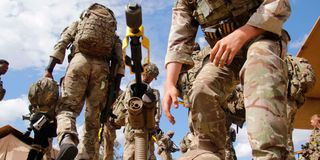
The documentary aims to make a case for children who were abandoned by British soldiers based at the British Army Training Unit, Kenya (Batuk) near Laikipia. The mixed-race children were being helped to trace their fathers through DNA.
It is alleged that the mixed-race children were abandoned by their soldier father after their return to the United Kingdom. The recent documentary follows another case in the same area where women were allegedly raped by British soldiers at Batuk, resulting in the birth of mixed-race children.
Naturally, I was sympathetic, but I also had a lot of questions. I know Laikipia and Isiolo very well. These two towns have been significantly impacted, both negatively and positively, by the presence of Batuk.
My concern is with historical rape cases. As a woman, rape allegations should make me shout from the rooftops in support of victims. But I am very cautious when it comes to historical rape cases.
The first challenge is the time factor, and the second is where monetary gains are pursued over criminal culpability. The civil element of many historical rape cases seems to take place before perpetrators are found guilty.
There has been a rise in the number of men, mostly with means and in the public eye, accused of rape. In many instances, it only takes “trial by media” for them to be found “guilty” and forced to pay up before such cases are heard in criminal courts. Less reliance on material and scientific facts has made it easier for women with ulterior motives to rush to court and accuse men of rape.
I am not suggesting there are no men or women who use their positions of power to take advantage of their victims sexually. I believe there are many factors that are ignored when it comes to historical rape cases, especially if the end game is financial gain.
In the case of Kenya, my concern centres around a problem that affects women from low-income areas—prostitution. Nanyuki and the Coast are beleaguered by prostitution. Both areas are known for their large population of white, wealthy men, be they soldiers or tourists. Coastal areas of Kenya attract their fair share of sex tourists.
Falling pregnant is one of the risk factors of prostitution. Is there a possibility that some of the mixed-race children in Laikipia are a result of this? If so, is it fair to accuse men who buy sex of abandoning their responsibilities when they were unaware of children born in their absence because of prostitution?
Historical rape cases and human rights violations are not only affecting Batuk, but many multinational companies based in Kenya have come under the spotlight, with their workers accused of rape and human rights violations.
Class suits targeting multinational companies are on the rise in Kenya. It appears that Batuk and multinational companies have become targets of historical injustices, and I am wondering what is inspiring such allegations if not monetary gain?
Large plantations are sitting on large tracts of land, and knowing Kenya’s politicians’ hunger for land, it makes me wonder whether the aim is to try and force these companies out so that they can lay their hands on the land.
I am not suggesting that multinational companies and Batuk do not have individuals who commit rape or human rights violations. The timing is what I find intriguing.
The whole exercise is even more suspect with foreign lawyers now being involved. Incidentally, a lot of historical human rights violations that occur in Kenya are taken to courts outside the country when Kenya has jurisdiction over crimes that happen within its territory.
If money is not the motive, then what is?
Poverty has left many Kenyans vulnerable to all manner of abuse. Their vulnerability may also be used or exaggerated for the benefit of corrupt individuals, charities and lawyers ready to capitalise on the desperation of poor Kenyans.
There is need to tread carefully, or this trend may just lead to more companies leaving Kenya and making unemployment worse.